What’s threatening crops around the world?

If you’re into the pests and diseases of wheat, soybean, potato, maize or rice you may want to consider taking the Global Crop Health Survey.

Quantification of the importance of crop diseases and pests is a necessary first step towards better understanding of crop health and its management. However, the information pertaining to the losses caused by plant diseases and pests in agriculture is fragmented, heterogeneous, and is very incomplete. Undertaking this survey is a project that has been considered for a long time. It has first been discussed by the Crop Loss Subject Matter Committee of the International Society of Plant Pathology during its first meeting in August 2013 in Beijing. Documenting the importance of crop diseases and pests is also one goal of several international research networks, such as AgMiP and MacSur.

Very simplified information is being sought, so it shouldn’t take long. You have until 31 January. The results should be useful in setting breeding priorities, among other things.
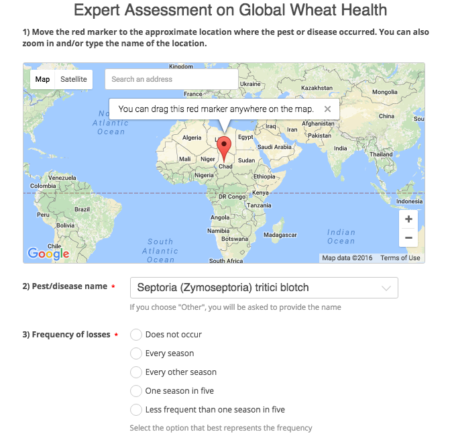
screen-shot-2016-11-08-at-10-14-55-am

I’m with them

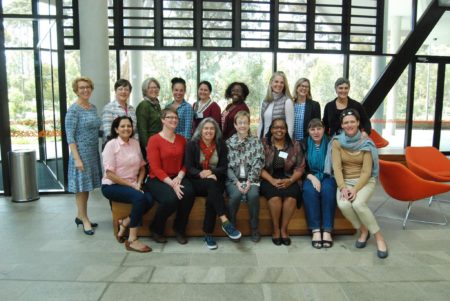
genebank-ladies

A very unrandom selection of participants at the latest Annual Genebanks Meeting of the CGIAR, which took place at the Australian Grains Genebank in Horsham and AgriBio, La Trobe University, Melbourne last week, and is the reason for our silence lately. Dr Sally Norton, our host, and the director of the AGG, responsible for over 100,000 accessions, is sitting down, second from left. Thanks, Sally. And thanks to Mellissa Wood on Facebook for the photo.

Farmer-saved seeds: to sow or not to sow?

When a harvested material from a protected plant variety, such as seeds, is used for further sowing and cultivating, royalties need to be paid to the breeder of this protected variety. However, according to breeders, farm-saved seeds are sometimes used as an excuse to avoid paying royalties, and clear definitions should be established internationally. Conversely, small farmer associations think that once farmers buy a protected variety, they should be able to re-use those seeds, exchange or sell them.

That’s the topic of an UPOV seminar held a couple of days ago, as summarized by IP-Watch. It’s one of those things, I think, where any reasonable person should be able to see both sides of the argument. Which are eloquently presented in the extensive materials provided.

In the end, though, I was particularly encouraged by this statement:

Axel Metzger of the University of Humboldt, Germany, said not many cases about breeders’ right infringement have been brought to court in Germany.