Frozen fruits

A recent Nibble describing work in South Dakota to extend ever northward the range of the grape, including using wild relatives to breed new cold-tolerant varieties, brought back childhood memories for one of our readers:

Hansen was a proponent of stretching agriculture for the harsh northern environments. My grandparents lived in northern South Dakota and hence Hansen was one of the horticultural heroes from my childhood.

Hansen is — or was — Dr Niels Hansen, “South Dakota’s Great Plant Pioneer.” He sounds a fascinating character:

Already in his senior year as an undergraduate in 1887, N.E. Hansen was writing to his father, “There is both money and honor to be gained by someone who succeeds in bringing out fruits, better than old ones.” The money seemed to elude Hansen, though – he never got wealthy from his work as a plant breeder. But he did win honor, and he cultivated it carefully.

As chance would have it, there was another article on a northern fruit yesterday, this time the blueberry. That also has a long history of breeding in the Great Plains, though it all really started in New Jersey, of all places, as the article describes. Perhaps not surprisingly, though, the blueberry has expanded more southwards than northwards recently.

No word on whether macadamia is next for the cold treatment.
Phenological diversity for nutrition

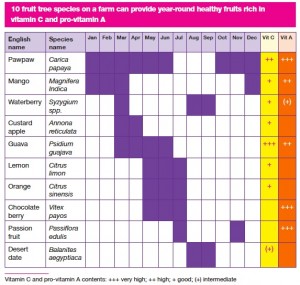
A recent blog post by the World Agroforestry Centre described their idea of a phenologically varied “fruit tree portfolio” to provide nutrition throughout the year. In Machakos, Kenya, where the portfolio is being tested out, these would be the species involved, a mixture of the local and the exotic:

Table-portfolio

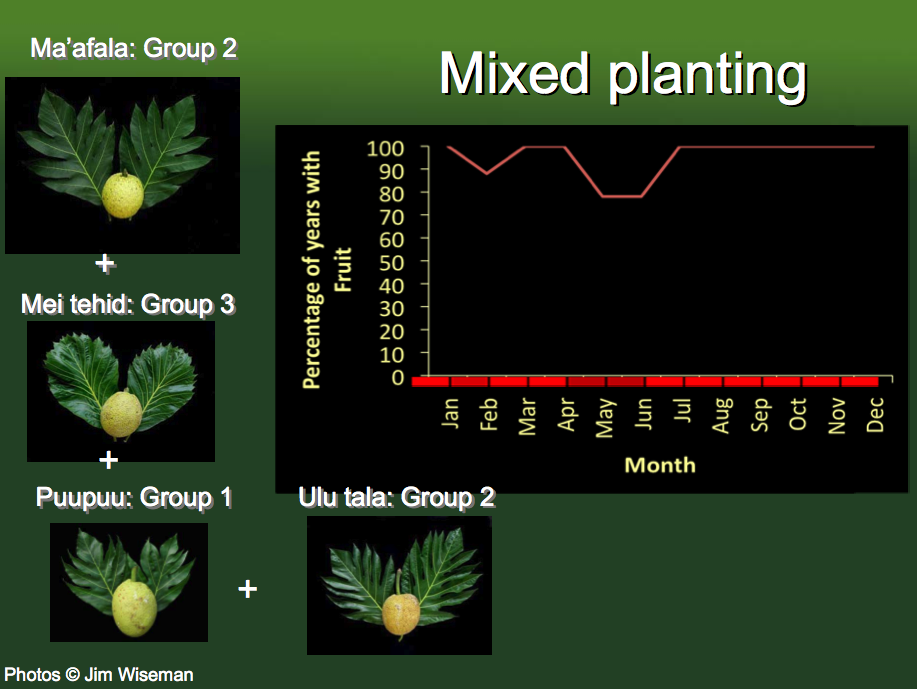
A nice idea, and it reminded me that you can also do something similar by exploiting within-species diversity in seasonality. The example I know best comes from Diane Ragone’s work on breadfruit. This is from a presentation she gave recently at USAID.

breadfruit

Planting multiple varieties carefully chosen from each of these different groups means you can count on having some fruit throughout the year, most years. Great to have diversity at multiple levels to play around with.

Agrobiodiversity illustrated then and now

There really is nothing like photos of agricultural biodiversity to set the pulse racing. Well, at least in our weird little corner of cyberspace. It’s been crazy over on Twitter and Facebook, what with frenzied sharing of, and commenting on, a couple of stories about, of all things, watermelons. Well, it is summer, I guess: they don’t call it the silly season for nothing.

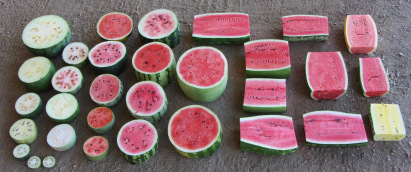
To recap for those who do not follow us on other media, 1 people seem to have really been impressed by the photos which accompanied a story on the sequencing of the watermelon genome. Although it dates back to three years ago, for some reason it resurfaced again last week.

Flesh diversity from undomesticated to domesticated watermelon. These watermelon plants were grown at Syngenta Woodland station in CA.

It may well have been resurrected because of a Vox.com story on how James Nienhuis, a horticulture professor at the University of Wisconsin, is using Renaissance paintings of watermelons and other produce to illustrate the changes that have been wrought by modern plant breeding. The story was later taken up by others, and bounced around a lot. And all long before National Watermelon Day. And also before the AoB post on watermelon origins.

Albert Eckhout 1610-1666 Brazilian fruits

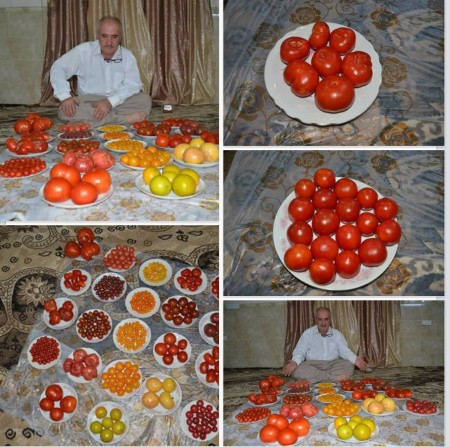
Well, let me add to the hysteria. Courtesy of my friend Dr Yawooz Adham, here’s another fantastic agrobiodiversity photo, of tomatoes this time.

11806841_837035336415287_1712742186_o

The farmer’s name is Shiek Jamally Karbanchi 2 and he lives in a village near the town of Chamchamal, between Kirkuk and Sulaymaniyah in Iraqi Kurdistan. He tends 22 different tomato varieties, and is clearly incredibly proud of them. Though I’m pretty sure he doesn’t charge Euros 20 each for them. I don’t know if they’re all commercial varieties or whether there’s a few local heirlooms in there, but either way it’s damn impressive.