- No, I don’t think the history of potatoes is at an end, but I know what they mean.
- The history of rubber in pics.
- The history of the wheat dwarfing gene.
- Svalbard makes history.
- Sicily goes back into its history for its daily bread.
- Another foothold in history for Gary Nabhan.
- History, shmistory, we need to look forward. Biohacking is the future of food. Say twelve year olds.
A valentine for a crop wild relative
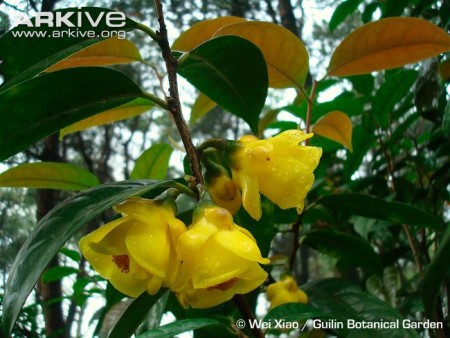
Kudos to Botanical Gardens Conservation International (BGCI) for nominating a crop wild relative as their favourite unloved species. I’m sure we can think of a few more…
Tweeting crops
Jack Grieve is a computational linguist at Aston University in Birmingham, England. I came across him on Twitter, where he occasionally posts fun maps showing the geographic distributions (usually within the USA) of different words, usually dialectical variants, based on their appearance in geocoded tweets. He very kindly ran a couple of crop names through his magic box for us, and this is what he got. I wanted to know if the distribution of crops could be inferred from where people tweet about it more than the average. I’ve placed his map for each crop side by side with the relevant distribution map from USDA.
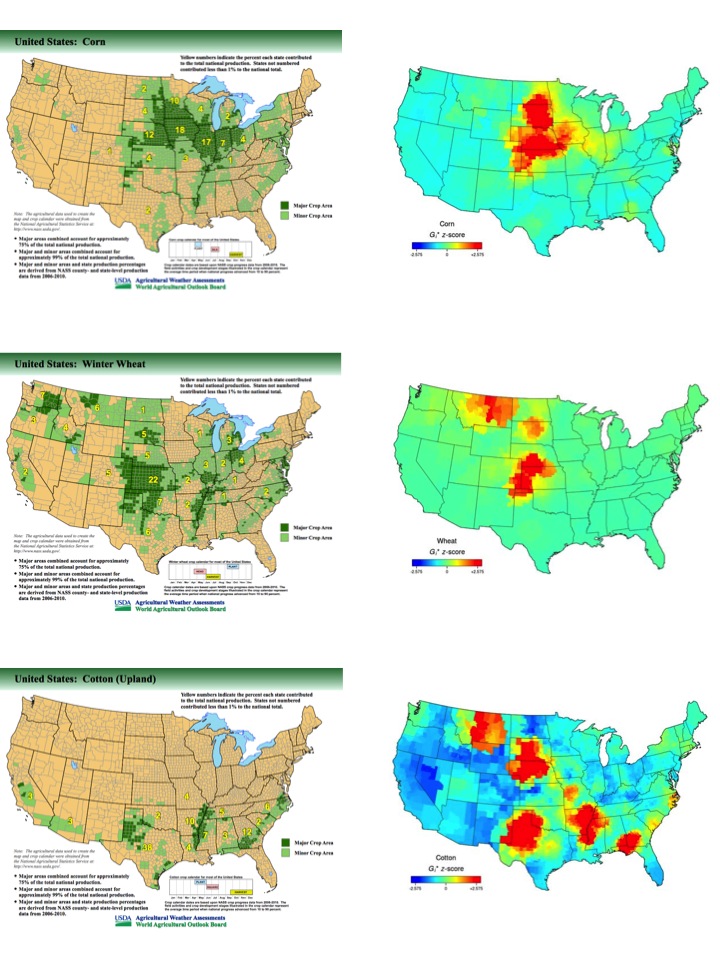
Not a perfect match by any means, but not too bad. Except for cotton, that is. Any ideas why people should be tweeting so much about cotton in the northern Great Plains? They’re certainly not growing it.
Jack’s dataset apparently only covers the US and the UK at the moment, which means I can’t check whether Kenyans, say, are tweeting about maize particularly assiduously where they’re growing it, or indeed about maize lethal necrosis where they’re worried about it. Google famously tried to predict flu outbreaks from search patterns, but that seems to have fizzled out. Could tweeting trends help pinpoint crops (or livestock?) and their pests and diseases in space and time? I don’t see much of that kind of thing in the discussion of ICTs in agriculture.
Featured: Data, data everywhere…
Cindy Cox of HarvestChoice sort of, kind of, maybe agrees with some parts of what we say in a recent post about the usability of data.
Although a new generation of development practitioners and analysts are increasingly taking advantage of so-called alternative data sources like we used in our paper, such resources are still underutilized in socio-economics. And without a story, data are meaningless.
Sure, and who has those stories? I suspect it’s not the people who can do the analysis.
Nibbles: Solutions edition
- No new salinity tolerance in cereals? You need to look at the right thing.
- No new crops? Focus on plants’ sex lives.
- No hope for drylands? Look to biodiversity.
- No new agricultural land? No problem.
- No data on neglected Himalayan crops? Got you covered.
- No way you’re drinking coffee from civet droppings? Chemistry to the rescue.
- No place for the offspring of F1 hybrids in your agriculture? Go apomictic.
- No new fruits left to try? Hang in there.
- No diversity in your Aragonese homegarden? There’s a genebank for that.
- No impact for your agricultural research. Try clusters.
- No agroecological patterning to your crop’s genetic diversity? It’s the culture, stupid.