News from IPK
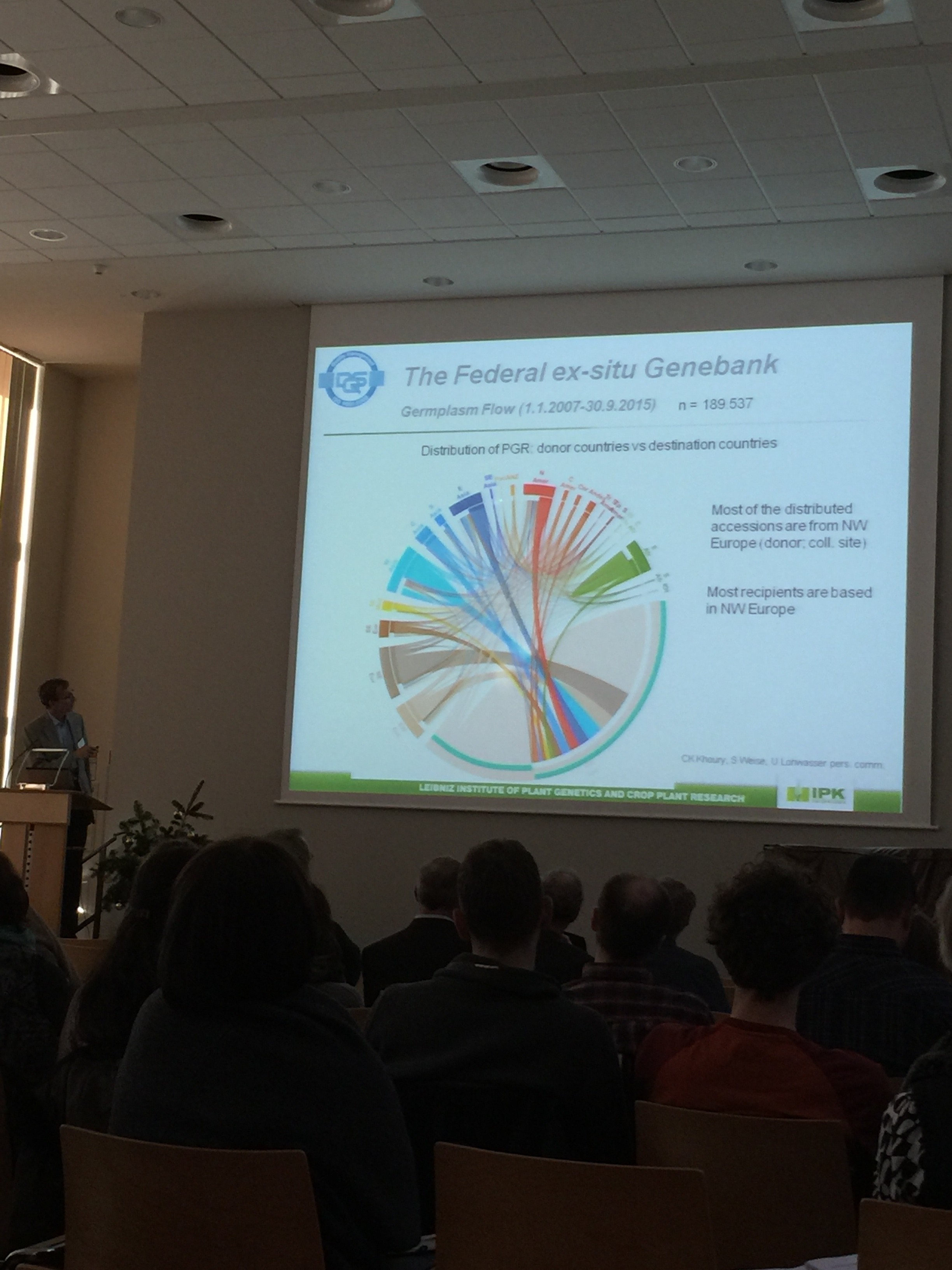 A workshop on “Genetic Resources: Conservation and Trait Improvement” is going on for the next couple of days at the German national federal genebank in Gatersleben. Our mole in the audience has just sent us the latest infographic on where IPK’s material goes. You saw it here first. Well, if you click on the photo you will see it here first.
DivSeek calling
Do you know of projects genotyping or phenotyping crop germplasm on a massive scale? Well, because the folks at DivSeek are collating that kind of info for a “landscape study.” Leave comments here and I’ll get it to them.
How long can rice seeds stay alive for?
Of course, the answer is what it always is: it depends. But you can hear (and see) all the details thanks to Mike Jackson, who has made available on his blog both an audio file and the PowerPoint slides pertaining to a recent seminar on the subject by Fiona Hay of IRRI’s genebank. Thanks, Mike. And thank, Fiona.
And if the subject really grabs you, there’s a post-doc position going in France.
Brainfood: Wild rice database, E Asian wheat diversity, Microbial terroir, Sesame breeding, Agrobiodiversity fairs, AnGR conservation, Rye diversity
- OryzaGenome: Genome Diversity Database of Wild Oryza Species. Well, only 2 species thus far, but it’s a start.
- Evaluation of East Asian landrace wheat revealed by high molecular weight glutenin and maturity period. The Chinese accessions are different to the Japanese-Korean, and 3 of the former have both good gluten composition and early maturity, making them attractive to Korean breeders.
- Sequence-based Analysis of the Vitis vinifera L. cv Cabernet Sauvignon Grape Must Mycobiome in Three South African Vineyards Employing Distinct Agronomic Systems. Even microbes contribute to terroir.
- Genetic Diversity, Population Structure, and Association Mapping of 10 Agronomic Traits in Sesame. Some markers will be really useful in breeding.
- The fairs of agrobiodiversity in the context of participatory plant breeding — Local Agricultural Innovation Program in Cuba. Meaning and impact. Diversity will find a way.
- Biobanking genetic resources: Challenges and implementation at the USDA National Animal Germplasm Program. Everything that’s not cattle and swine is a problem.
- Geography and end use drive the diversification of worldwide winter rye populations. There may have been multiple domestications, and improvement has not led to decrease in diversity.