In the footsteps of Vavilov…
It is an invisible, apolitical band of dedicated researchers around the world who maintain these gene bank insurance policies. They walk in the footsteps of Vavilov, who died of starvation in prison during World War II, while his staff suffered a similar fate during the Siege of Leningrad rather than compromise the seeds they had saved for humanity.
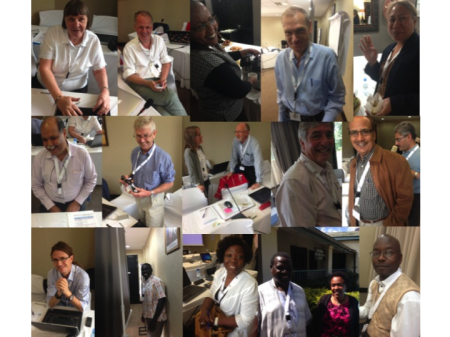
Here are some members of that band.
Catching up with CROPS 2015
The CROPS 2015 conference on Improving Agriculture Through Genomics in on. Actually it’s almost finished. Sorry. But you can read about the keynote. And follow what’s left on Twitter. Maybe someone will explain what’s wrong with China’s soybeans.
For all the soybeans in China
There’s a chart in last week’s issue of The Economist that really got my attention. Here it is:
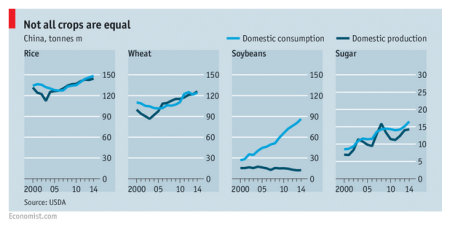
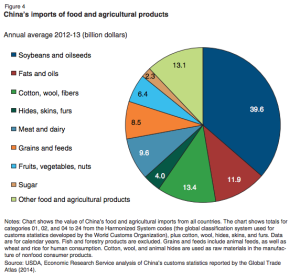
What in tarnation has been happening to soybean production in China? It looks really bad, especially compared to what’s happening to the other crops. And it’s important. Soybeans are now a big proportion of overall food imports.
So is it that Chinese farmers are just growing less of the crop? Well, FAOStat says no, it’s that yields have been stagnating of late:
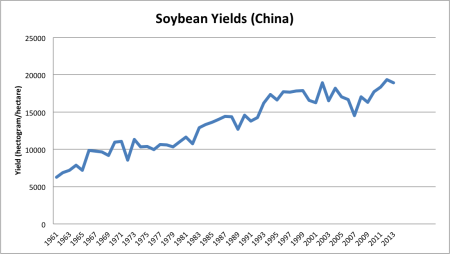
But this is a problem that, for example, the US and Brazil seem not to be having. It’s not as if Chinese breeders and gene-jockeys aren’t trying. And they have plenty of genetic diversity available. So what’s going on? Maybe one of our readers can explain.
Nibbles: Beer from fog, Ecoagriculture, Slow oil, Greek diet, Livestock history, Biofortified millet, Zambian crops, Wild tomatoes, Trees & drought, Global genebanks, Saving coconuts, Industrial crops
- Fogcatcher ale? Oh I think so!
- Greenpeace guides donors on ecological farming. Booklet on the preservation of historical monuments to follow.
- Slow Food launches olive oil presidium. Presidium?
- The ancient Greeks had wine for breakfast. Explains a lot.
- Livestock size changes through the ages.
- The sainted Lawrence Haddad on that biofortified pearl millet story from yesterday. Remember that variety can be traced back to a genebank. But not only millet.
- Zambians told to look to their neglected traditional crops. By their government. Which is surely complicit in their neglect. Maybe biofortify them first?
- Collecting tomato wild relatives.
- July drought stops pine trees growing in the SW US.
- Building a global genebank system. And again.
- Saving the PNG coconut collection from Bogia disease. We need a Svalbard for coconuts is what we need.
- Industrial crops and food security in sub-Saharan Africa: mainly complementary, but…