- The biodiversity and genetic structure of Balearic sheep breeds. 5 types, pretty well differentiated among themselves, and very different to the mainland breeds.
- Exploration of genetic diversity within Cichorium endivia and Cichorium intybus with focus on the gene pool of industrial chicory. Species reasonably, though not completely, differentiated. C. intybus division into 3 phenotypic cultivar groups (Witloof, root chicory and leaf chicory) confirmed. Leaf chicory division into 3 phenotypic subgroups confirmed (Radicchio, Sugarloaf and Catalogne cultivars). Modern industrial root cultivars have high phenotypic and genetic variability.
- The genome of cultivated sweet potato contains Agrobacterium T-DNAs with expressed genes: An example of a naturally transgenic food crop. No doubt it will soon be banned in Europe.
- Distributions, ex situ conservation priorities, and genetic resource potential of crop wild relatives of sweetpotato [Ipomoea batatas (L.) Lam., I. series Batatas]. 79% of species identified as high priority for further collecting. None of them GMOs. Yucatan is the place to go to get bang for buck.
- Complementary effects of species and genetic diversity on productivity and stability of sown grasslands. Species diversity increased productivity under drought, regardless of number of genotypes per species present. Genotypic diversity increased temporal stability of production under both drought and non-drought conditions, regardless of number of species.
- Exploiting Nutritional Value of Staple Foods in the World’s Semi-Arid Areas: Risks, Benefits, Challenges and Opportunities of Sorghum. Unbalanced amino acid composition, cyanogenic glycosides and antinutrients are obstacles to increased consumption, but can be overcome by: reduction of worrisome components (or their activity), good practices to minimise contamination and compensation by varied diet.
- Nutritional and Health Implications of Conventional Agriculture — A review. Only agricultural biodiversity can save us.
- Pollination services from field-scale agricultural diversification may be context-dependent. Hedgerows may not always be good for both crop pollination and wild bee conservation.
- Morphological, Physiological and Molecular studies on wildly collected Cordyceps militaris from North West Himalayas, India. You can cultivate it.
- Olive biodiversity in Colombia. A molecular study of local germplasm. 5 of the genotypes could not be identified with known varieties.
- A phylogenetic analysis of 34 chloroplast genomes elucidates the relationships between wild and domestic species within the genus Citrus. 3 main clades: citron/Australian species, pummelo/micrantha and papeda/mandarins. Lots of heteroplasy. 4 genes showing positive selection.
Nibbles: Heirloom apples, Cowpeas, Lettuces, Livestock, Taste, Soil, Nutrition, Meat, Malaria tea, SIRGEALC, ABS
- Is “heritage” just “heirloom” for “birds and animals”? I for one don’t think so. These apples are heritage, for example.
- Saving the Sea Island Red Pea. Which is a heritage cowpea, I think.
- 43 different types of heritage lettuce illustrated.
- Eat those heirloom pigs or lose them.
- Taste and nutrition go hand in hand.
- Soils are part of traditional agricultural heirloom systems.
- Heirloom shmeirloom, those food systems need some work if they are to deliver nutrition.
- The case for meat, heirloom or otherwise. And a whole series of posts on how to best feed all those cows.
- A herbal tea against malaria.
- The 10th SIRGEALC is on the horizon.
- A lot of people going to that will probably need these resources on implementing both the International Treaty and the Nagoya Protocol at the same time.
Dr Solh on the ICARDA genebank
“Even when the war was going on, they were managing to take seeds out of Syria…”
Nibbles: Grazing, Saving foodways, Amaranth, Fortification, Avocado threats, Kew job, Coffee photos, PhyloLink, Nutrition & ag, Remote sensing
- Grazing is good for grassland.
- Saving British food. And that of Ghana too, why not?
- Amaranth the next superfood? Maybe, but I vote we ban that silly term.
- The case for fortification: diverse diets are just too hard.
- And the latest fruit that’s in trouble is…the avocado.
- Wanna “[s]pend your summer in lovely Kew Gardens interacting with the public and opening people’s eyes and noses to the delightful world of spices”?
- Photographing the soul of coffee.
- Atlas of Living Australia adds nifty phylogenetic thingie.
- World Bank says “agriculture has a unique and critical role in improving nutritional status” so it must be true.
- Protecting forests from the air.
In memory of Mitsuaki Tanabe
Sad news from our friend Ruaraidh Sackville Hamilton, IRRI’s genebank manager.
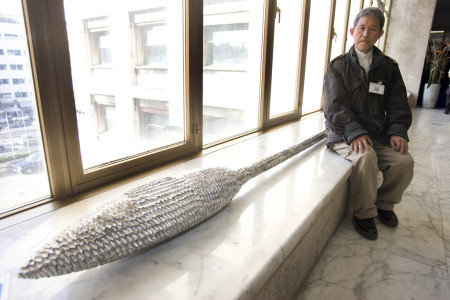
With sadness I [share] this news about the death of Mitsuaki Tanabe, famed for his lifetime of work promoting the conservation of rice diversity through sculpting and drawing huge grains of wild rice. Many of you frequently, perhaps daily, see the works that he donated to IRRI, FAO, the Crop Trust, the Svalbard Global Seed Vault and others. He is surely unique in the way he used his artistic talents to further the cause of rice conservation, and the dedication he showed to both.
My own strongest memory of him is his enthusiastic participation in a scientific meeting organized by the Green Energy Mission in Nepal in 2002 on the conservation of wild rice. He donated a 10 metre long drawing of a wild rice grain, which all participants signed. An exceptional person.
Mr Tanabe was 76. He established a museum for his work last year in Yokohama. This is him seated by the sculpture he donated to the Crop Trust in 2006. It’s on the second floor of the FAO building in Rome, facing the Viale Aventino.