- Sorry about the light blogging lately. I’m on leave and Jeremy is in the manure. Thankfully Robert has been picking up the slack lately, apparently because he has nothing better to do. Anyway, here’s a juicy roundup of Nibbles covering the past week and more. Starting with this stunner: Svalbard needs an adviser!
- Breeding better barley: The video. No videos, however, on breeding Africa’s orphan crops. Yet.
- Some of those are agroforestry species. Which is not confined to Africa, of course. But pomegranate is not included, alas for the Afghans. Nor the hazlenut, alas for the Australians, who will however admittedly probably sequence the thing themselves.)
- DivSeek does have a video, though.
- Even raspberry breeding has a video. But if this strawberry hack works for other plants, breeders might not be needed at all :)
- Orange-fleshed sweet potato folks meet in Ghana for annual jamboree.
- An insurance policy for agriculture? Yes, you guessed it.
- Recovering the NM chile. Hot stuff from a cold place. Yes, you guessed it. Again. (BTW, not only important in New Mexico.
- How to make a 17th century sallat. You heard me.
- CIAT on getting ahead of dietary trends. No, not from the 17th century. This being the current situation, however. And more specifically for dietary diversity among women. Yes, it’s all about diversification. Including in homegardens. Which were the great love of the great, late Olga Linares.
- The benefits would be so great to get nutrition right. And yet we haven’t. And without Olga it’s not going to be any easier. Maybe we could start by curing Indians of their pizza habit.
- The largest seed exchange in the world. It says here. There I was thinking it was the CGIAR genebanks.
- Rewilding Europe. Kinda sorta.
- The Dutch have new policies on conserving livestock genetic resources. At least yaks are not an issue.
- Meanwhile, the UK biodiversity indicators include one on crop genetic diversity.
- Maybe all it needs is better marketing, like these millets?
- Or perhaps a data portal, like wheat’s.
- Which may soon be out of date for the Punjab. Or should be, anyway, according to this IFPRI study. And also for the US, according to this maverick breeder getting a writeup in the NY Times.
- Be that as it may, help is on the way for wheat, in the form of its wild relatives. According to some people who should know.
- Interactive global deforestation map. Because we can.
- Black chicken? And why not? Not Icelandic, though, I’m willing to bet. Chickens? “…it was the forced opening of China by the West in the 1840s that made the modern [chicken] possible.” Not so the turkey, though.
- Ancient horse breeders liked spots. And then they didn’t. And then they did…
- Disease resistant Napier grass in Kenya. Must ask the mother-in-law whether she has some.
- Oh dear, Italian olives are in trouble. Again. Ah, yes, the olive, symbol of peace.
- Penang Botanic Gardens has a big birthday.
- Hope that keeps you going for a while…
Brainfood: Garden pollinators, Herbarium Analytics, Rice & nutrients, High altitude barley, Sunflower hybrids, Coconut pollen cryo, Evolution & dormancy, Evolution of C4, Maize landraces, Viruses
- Culturally valuable minority crops provide a succession of floral resources for flower visitors in traditional orchard gardens. Proper gardens better for pollinators than unmanaged plots.
- Trends in access of plant biodiversity data revealed by Google Analytics. No impact of social media on the use of plant data, and the future is mobiles.
- Worldwide Genetic Diversity for Mineral Element Concentrations in Rice Grain. Most, though not all, elements showed high heritability, which is good news for breeders.
- Agriculture facilitated permanent human occupation of the Tibetan Plateau after 3600 BP. No barley, no Tibetans.
- Seed fates in crop-wild hybrid sunflowers: crop allele and maternal effects. Having wild mothers helps wild-crop hybrids survive in the wild.
- Coconut (Cocos nucifera l.) pollen cryopreservation. Eureka!
- The evolution of seed dormancy: environmental cues, evolutionary hubs, and diversification of the seed plants. More dormancy, more speciation.
- The evolutionary ecology of C4 plants. C4 opens new niches, but it’s all a matter of contingency and you have to follow the whole evolutionary history of a group to understand its current ecological strategy.
- A Minor Role for Environmental Adaptation in Local–Scale Maize Landrace Distribution: Results from a Common Garden Experiment in Oaxaca, Mexico. It’s the social factors, stupid.
- Crop immunity against viruses: outcomes and future challenges. PAMP (pathogen-associated molecular patterns)-triggered immunity (PTI) may be the future.
Evaluating germplasm comes of age
Germplasm evaluation: yeah, sure, you can do it old-school style.
It was ascertained whether the collection of cucumber varieties of our Institute contained any non-bitter plants. At first no rapid chemical method was available for distinguishing the non-bitter plants from the bitter ones. Therefore tasting them was the only usable method. Although a large number of plants can be rapidly tasted, there are some drawbacks.
I bet there are.
A relatively small number of people working at our Institute was found to be capable of picking out correctly the plants that were non-bitter. As a rule a good taster cannot treat more than 20 to 30 plants at a time. The taster has to correct his taste now and then by consuming for instance a piece of toast or apple.
But our intrepid cucumber breeders persevered, and were suitably, if belatedly, rewarded (italics added).
When grown on in a glasshouse the vegetative parts of all plants but one were not entirely free from bitter principle. Although under our conditions none of these plants produced bitter fruits, all the plants that had traces of bitter principles in their vegetative parts were removed. At the end of the growing season only one out of the 15,000 plants tested remained.
But that was in the 1950s. And that’s a foreign country. This is how breeders roll these days:
Cucurbitacins are triterpenoids that confer a bitter taste in cucurbits such as cucumber, melon, watermelon, squash, and pumpkin. These compounds discourage most pests on the plant and have also been shown to have antitumor properties. With genomics and biochemistry, we identified nine cucumber genes in the pathway for biosynthesis of cucurbitacin C and elucidated four catalytic steps. We discovered transcription factors Bl (Bitter leaf) and Bt (Bitter fruit) that regulate this pathway in leaves and fruits, respectively. Traces in genomic signatures indicated that selection imposed on Bt during domestication led to derivation of nonbitter cucurbits from their bitter ancestors.
Which is cool, don’t get me wrong. But somehow seems to take the romance — and fun — out of it.
Incidentally, that one nice-tasting cucumber was an Improved Long Green.
Irish eyes smiling about apple conservation
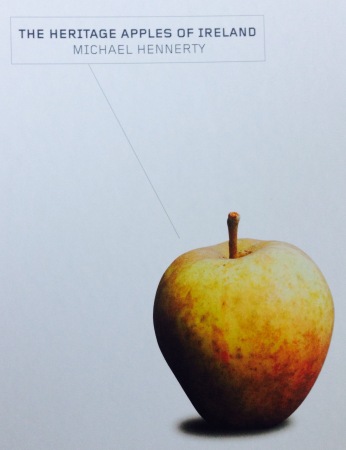 Our office complimentary copy of Michael Hennerty’s The Heritage Apples Of Ireland has arrived, and it’s a real beauty. We somehow missed the announcement of its publication back in the summer.
The book is written by Dr. Michael Hennerty, who for many years was Head of the Department of Horticulture in University College Dublin, and provides detailed genetic information of 68 different varieties of indigenous Irish apples using high resolution photographs. The descriptors used in the book utilise the current internationally recognised descriptor system and a key is also included to facilitate the identification of historical Irish cultivars by non-experts.
I particularly like the section on “finders and keepers”, people who have been involved in the conservation of Irish apples over the years. People like John George Dalkeith Lamb, who…
…collected old apples from 1945 to 1949 and established the UCD collection. Prof. E.J. Clarke maintained the collection until it was destroyed in 1970. Repatriated in 1996. Now planted at UCD, Belfield, Dublin.
That “repatriated” is intriguing, but I can find no further explanation of it online. Anyone out there know the details?
Brainfood: Daniel Zohary, Blue dates, Crop diversification, Tunisian oases, Cranberry diversity, Drought breeding, Seed-use watermelon, Cattle history, Apple conservation
- Daniel Zohary: Geneticist and Explorer of Plant Domestication. Nice profile of iconic explorer of agricultural biodiversity.
- The date palm with blue dates Phoenix senegalensis André (Arecaceae): A horticultural enigma is solved. A variety of P. canariensis, as it turns out.
- Crop diversification as a smallholder livelihood strategy within semi-arid agricultural systems near Mount Kenya. It will work better at higher elevations.
- Change of oases farming systems and their effects on vegetable species diversity: Case of oasian agro-systems of Nefzaoua (South of Tunisia). Not working at all in oases.
- Clonal diversity and genetic differentiation revealed by SSR markers in wild Vaccinium macrocarpon and Vaccinium oxycoccos. Cranberries have much more variation than previously thought.
- Two decades of InterDrought conferences: are we bridging the genotype-to-phenotype gap? Yes, slowly, but genomics will help. Eventually.
- Microsatellite Marker-based Genetic Diversity of Seed-use Watermelon (Citrullus lanatus ssp. vulgaris var. megalaspermus Lin et Chao) Collections. They’re all very similar.
- On the History of Cattle Genetic Resources. The loss of breeds adapted to local conditions and extensive management are the main threats to the genetic diversity amassed over the past 12,000 years.
- The vulnerability of US apple (Malus) genetic resources. Could be worse. Could be better.