- Agriculture and the SDGs in one nice infographic thingy.
- Seeds: The Book.
- Seeds like millets?
- Those medievals really knew how to eat.
- An obsessive botanist? Whatever next.
- Deconstructing chocolate, one gene at a time.
- Sake 101. And for a more in-depth look…
- Joseph Simcox, self-described “Internationally Renowned World Food Plant Resource Authority” takes you “on a World Adventure to learn about little known edible plants!” On Facebook.
- A journey into the heart of CIMMYT. They’ll even screen your maize for you.
- The people’s breeder.
- Tracing wine to its source: Georgia.
- Harvesting cinnamon. With video goodness.
- FAO unleashes its mighty comms machine on another poor neglected crop: yam bean. Not many people hurt.
- Watch out jackfruit, you’re probably next.
- Or maybe saskatoon berries (Amelanchier alnifolia).
A pioneer passes
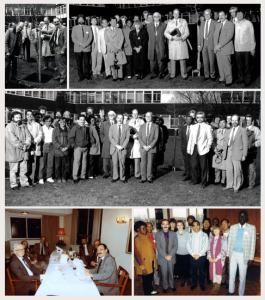 Trevor Williams, one of the key early figures in the movement to conserve crop diversity, has passed away at 76. Mike Jackson has done a great job of summarizing Trevor’s pivotal contribution to the field over at his blog. Many have left touching tributes, including a number of people whose careers Trevor was instrumental in getting off the ground. I’m proud to be in that category. Mike is also working on obituaries for the Daily Telegraph, and for Genetic Resources and Crop Evolution, to both of which I’ll be sure to link in due course. The funeral will be held on Wednesday 22 April at 13:30, at St Chad’s Church, Handforth, Cheshire. Trevor’s sister Wendy has asked that a donation be made to the Millennium Seed Bank at Kew in lieu of sending flowers. Further details on Mike’s blog.
DOI see the future of genebank documentation?
Mike Jackson, indefatigable blogger and former manager of the IRRI genebank (among other things), is on a mission.
I’m on the editorial board of Genetic Resources and Crop Evolution. I have proposed to the Editor-in-Chief that any manuscript that does not include the germplasm accession numbers (or provenance of the germplasm used) should be automatically sent back to the authors for revision, and even rejected if this information cannot be provided, whatever the quality of the science! Listing the germplasm accession numbers should become a requirement for publication.
Draconian response? Pedantic even? I don’t think so, since it’s a fundamental germplasm management and use issue.
As regular readers will suspect, we’re totally behind Mike’s pedantically draconian suggestion here. We’ve said much the same thing ourselves on occasion. We’ve even taken it a step further and suggested globally unique identifiers for each genebank accession. Well, not entirely coincidentally, Genesys has just announced a major new feature along these lines:
Genesys database was upgraded to allow for enhanced handling of archived accession data. Accession records in Genesys are assigned a Universally Unique Identifier and are accessible with Persistent Uniform Resource Locators.
A step in the right direction? Over to you, genebank data geeks.
Nibbles: Svalbard double, AgAtlas upgrade, Ornamental database, Wild apples, Genetic garden, Sandalwood trade, Amazon dams, Body bacteria, ICRISAT blog, African greens, Aquatic camel, Mujer empowerment
More of a proper catch-up Nibbles later, but these should hold you for a while.
- Le Figaro goes to Svalbard.
- But Wired goes into much more depth on the tragic situation in Syria.
- Many AgAtlas pages now include interactive mapping and data download, eg AEZ. About time :)
- Looking for information on varieties of ornamental plants? Look no further.
- Diversity in wild European apples: past, present and future.
- Genetic garden opens in Bangalore.
- The perils of sandalwood smuggling.
- Dam the Amazon, full speed ahead! What will happen to all that human body bacteria diversity?
- ICRISAT’s new DG has a blog. Looking forward to his first foray into the genebank.
- Lots of stuff on African traditional veggies in AVRDS’s latest newsletter.
- The swimming camels of Gujarat get protection. I’d pay money to see them, I really would.
- Patagonian women farmers are doing it for themselves, at last.
Vanuatu field collections survive cyclone
A smidgen of good news from the Pacific island country of Vanuatu, recently hit so cruelly by Cyclone Pam. This just in 1 from Roger Malapa, who’s in charge of the various field genebanks at the Vanuatu Agricultural Research and Technical Centre (VARTC) on the beautiful island of Santo, which was apparently less badly affected than others.
Minor damage to the banana collection but overall, everything is fine at VARTC and Santo. Yes there is enough material in the multiplication plots, mainly the root crops. I have just selected an early maturing variety on February: two-month harvest. We are harvesting our cassava now so cuttings can be prepared.
SPC’s Centre for Pacific Crops and Trees (CePaCT) does hold duplicates of some of these collections in vitro. But you can never have enough safety duplication in the Pacific.
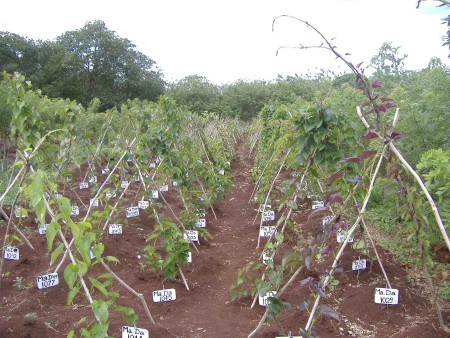
Here’s what a bit of the root and tuber crop collection at VARTC looked like a few years ago when I last visited.