- Harvesting wild flax in the Galilee, Israel and extracting fibers — bearing on Near Eastern plant domestication. The wild stuff was harvested before the Neolithic Revolution.
- Building resilience to water scarcity in southern Spain: a case study of rice farming in Doñana protected wetlands. Better to restore part of the rice fields to natural wetlands.
- Evaluation of rice dominance and its impact on crop diversity in north of Iran. Rice can’t catch a break in Iran either.
- Evaluation of four Mozambican cowpea landraces for drought tolerance. One of them is promising.
- Agro-Biodiversity Spatial Assessment and Genetic Reserve Delineation for the Pollino National Park (Italy). Somewhat gratuitous use of GIS, as far as I can see, but pretty maps.
- A comparative analysis of genetic variation in rootstocks and scions of old olive trees — a window into the history of olive cultivation practices and past genetic variation. Much more variation among rootstocks than scions.
- The diversity of local Georgian agricultural animals. I’d like to see a Megrelian horse one day, they sound cool.
- Crowdsourcing to create national repositories of microbial genetic resources: fungi as a model. Why just fungi, though?
Nibbles: Agave pollination, Sanjaya Rajaram, PGR policy history, Ex situ conifers, Botanic garden theft, Kyrgyz forests, Home nurseries, American chestnut, South Pacific action
- Tequila and bats. Two of my favourite things.
- Continuing the Mexican theme, we have a World Food Prize 2014 winner.
- I wonder what he thinks of the changes he’s seen during his illustrious career in the international system for PGR conservation and use.
- I bet there’s a few endangered conifers, and maybe some ex situ collections, in Mexico.
- I hope there weren’t any among the plants stolen from the RBG Edinburgh recently.
- But perhaps there were some fruits and nuts from Kyrgyzstan?
- Well, the way to go is home nurseries, clearly.
- Maybe even with the GM chestnut, why not?
- Meanwhile, in the South Pacific, CePaCT has been really busy.
Pisum phylogeny illustrated in really cool way
Yeah, sure, you can publish your Pisum phylogenetic tree the usual way:
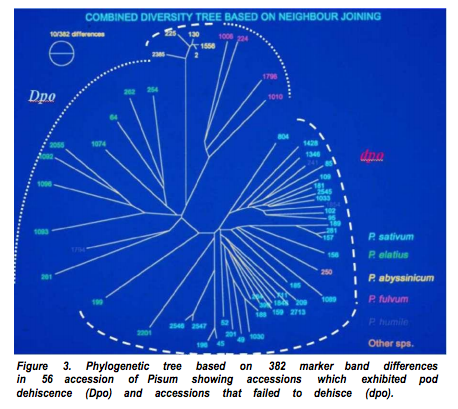
But isn’t it a whole lot better to do it like this?
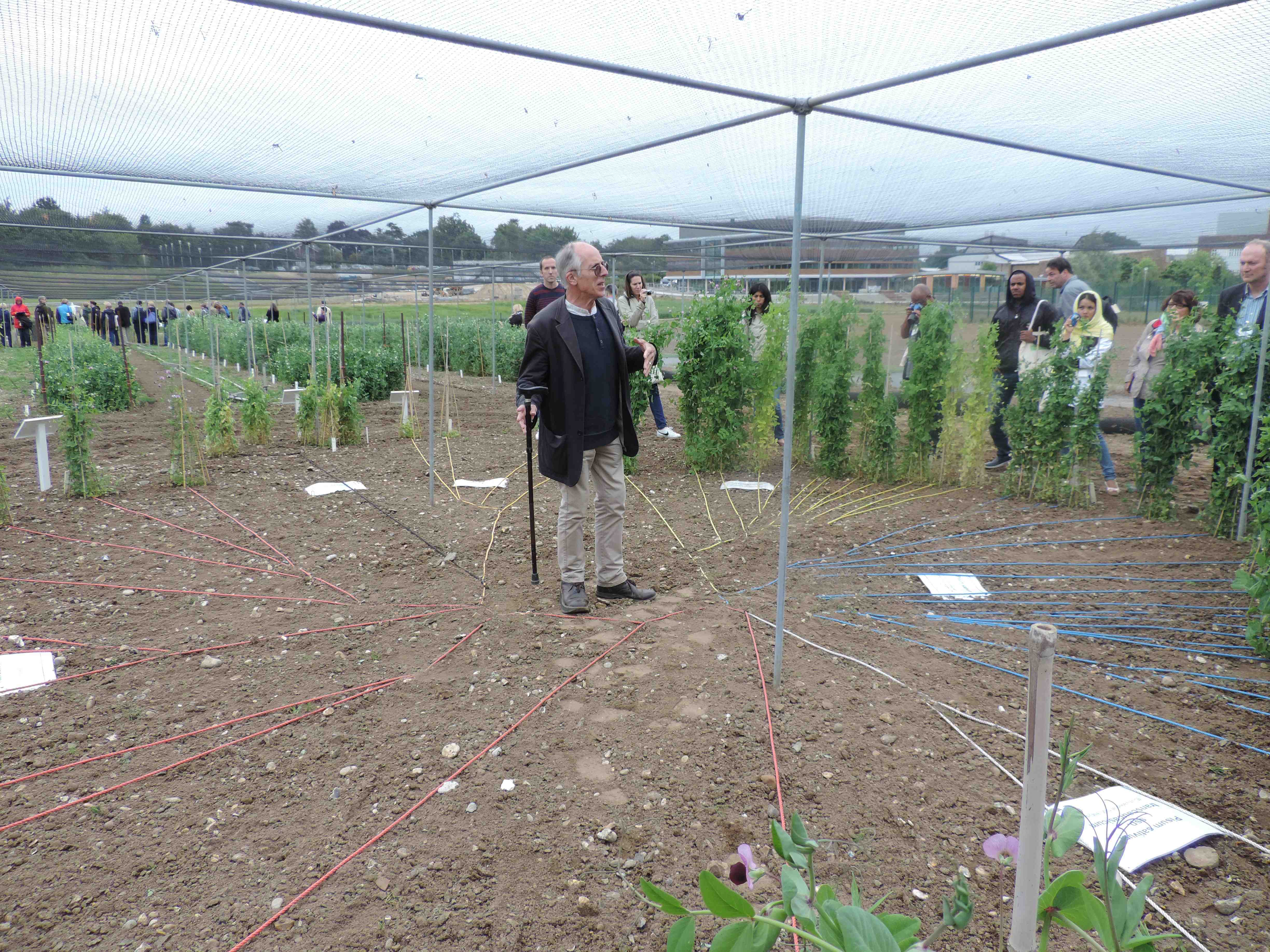
That’s the author, Mike Ambrose of the John Innes Centre Germplasm Resources Unit showing off his handiwork. Thanks to Nora Castañeda for the photo. It’s all happening because of the PGRSecure conference in Cambridge, UK. which you can follow on Twitter.
LATER: And thanks to Jim Croft for pointing out something similar from Down Under.
Food policy ignores genebanks, so what else is new?
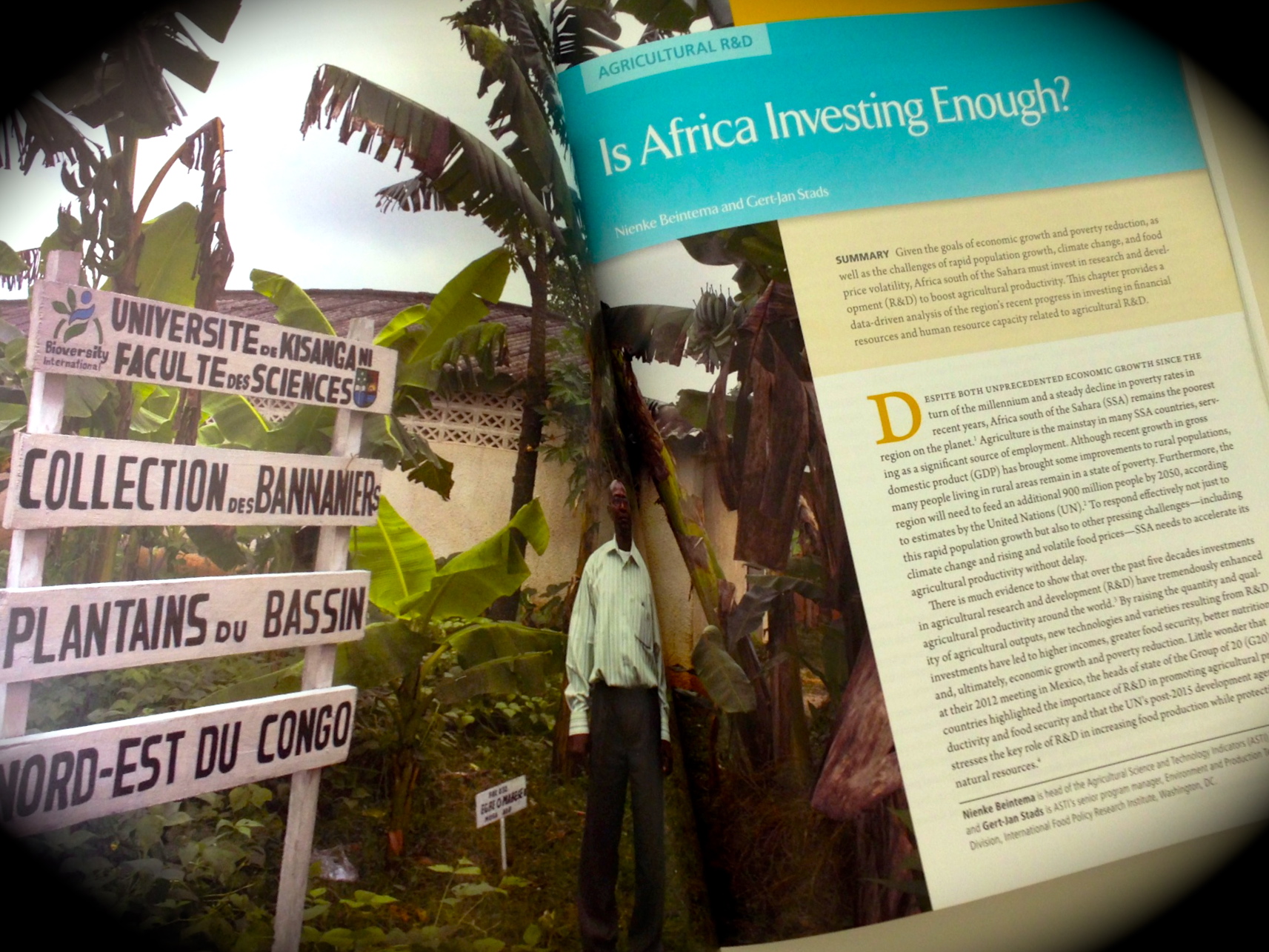 IFPRI’s latest Global Food Policy Report is out. I know because I was at the launch a couple of days ago in Berlin. Leafing through the hard copy while listening to IFPRI’s DG summarize the main findings, I was heartened to see the photo reproduced here, at the start of the section entitled “Is Africa investing enough?”. It’s a banana genebank! In a publication on food policy? Will wonders never cease?
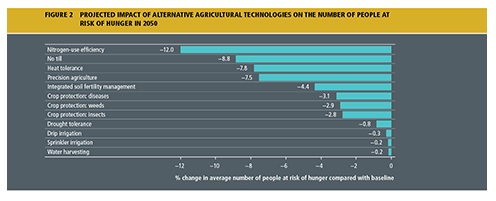
Unfortunately, they did. There’s nothing at all in the report about genebanks, apart from that photo. That’s despite the fact that another section, the one entitled “The promise of innovative farming practices,” did a great job of highlighting the importance of interventions that ultmately depend on the genetic diversity found in genebanks. IFPRI researchers used a geographically explicit modelling approach to predict the effect of 11 different agricultural technologies on yield, global harvested area and number of people at risk of hunger in 2050. They did this for three major staples: maize, rice and wheat.
It turned out that of the three breeding-based technologies included among the 11 — that is, new varieties that are more heat tolerant, N-efficient or drought-tolerant — the first two were consistently the ones resulting in the greatest impact. No-till agriculture was also up there. But really, if you were going to do just one thing to alleviate hunger, breeding for N-efficiency would probably be it, according to this analysis.
So why not mention the source of the raw materials for doing that? Especially as IFPRI’s fellow CGIAR centres manage global germplasm collections of these crops which have been formally recognized as fundamentally important to food security (check out Article 15 of the International Treaty for Food and Agriculture). It’s amazing how no opportunity is ever wasted of taking genebanks for granted.
Sergey Alexanian RIP
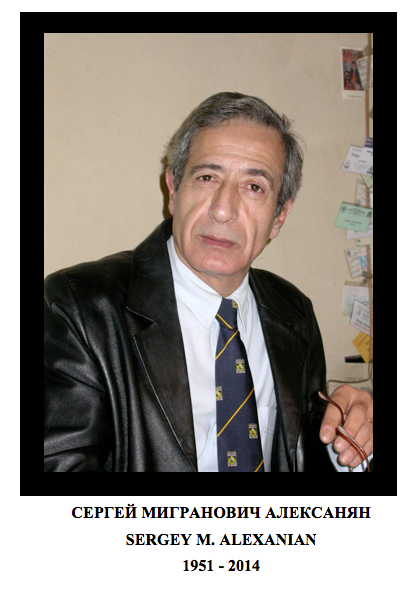 It is with great sadness that we received news of the death of Dr Sergey Alexanian, Deputy Director of Foreign Relations at the Vavilov Institute, Russia’s historic national genebank. Sergey was a friend as well as a colleague and collaborator. He will be much missed by the plant genetic resources community of which he was such a knowledgeable and active member. Funerals will be held on Wednesday, June 18, at the Smolenskoye Cemetery in St Petersburg.