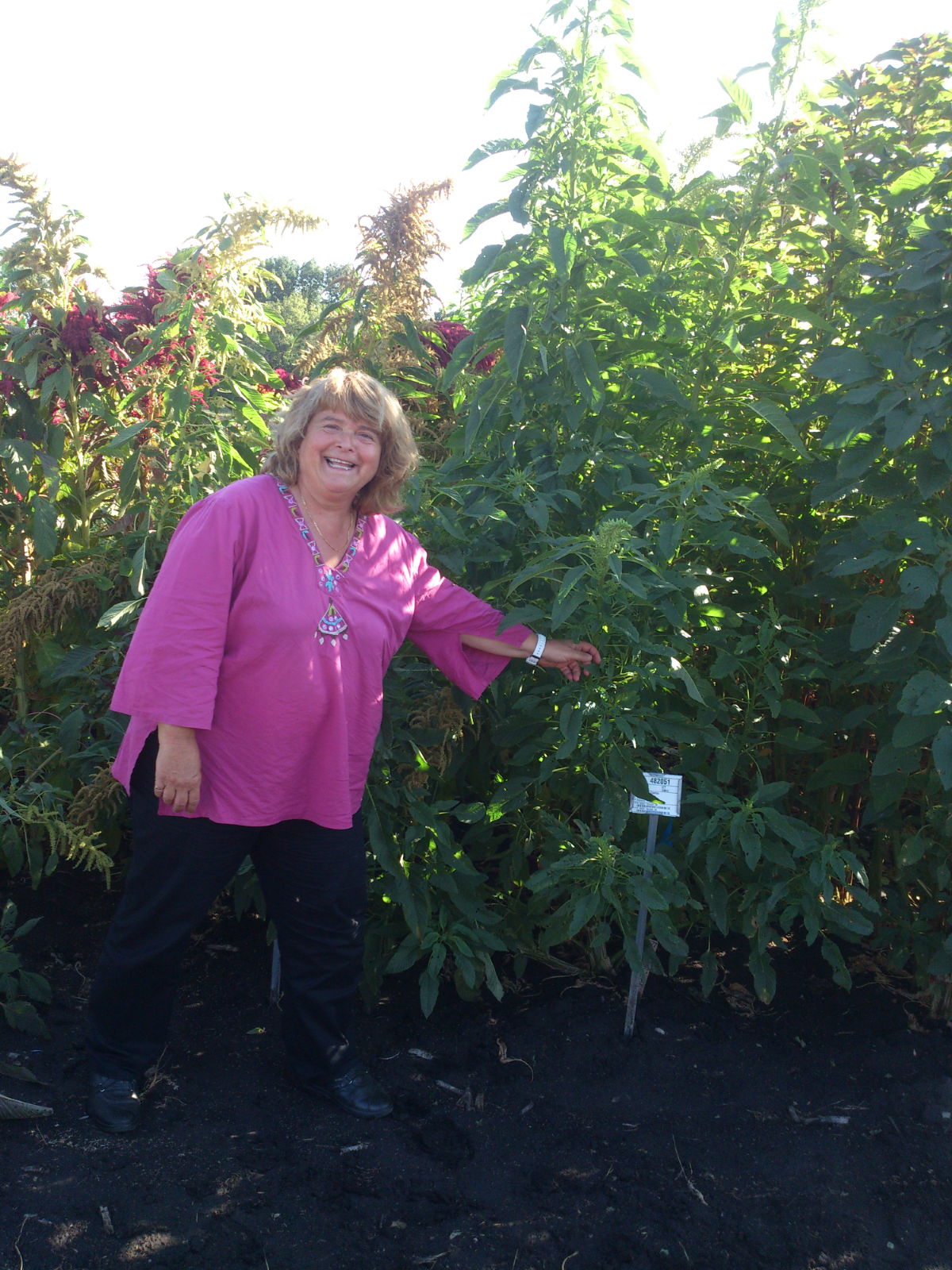
‘Nuff said.
Brainfood: Buckwheat crossing, Cedar restoration, Sustainable tapping, Indian goats, Indian horses, Kenyan yams, Lithuanian cranberry, Appalachian ethnobotany, AVRDC peppers, Chicken breeds
- Progress and prospects for interspecific hybridization in buckwheat and the genus Fagopyrum. Not easy.
- Mechanisms for the successful biological restoration of the threatened African pencilcedar (Juniperus procera Hochst. ex. Endl., Cupressaceae) in a degraded landscape. Needs help from local Acacia. Isn’t diversity wonderful?
- Tapping latex and alleles? The impacts of latex and bark harvesting on the genetic diversity of Himatanthus drasticus (Apocynaceae). Tapping latex leads to loss of genetic diversity, but they have a plan for sustainable harvesting.
- Analysis of genetic diversity in berari goat population of Maharashtra state. “Berari is not a recognized breed but a well established local population of goat which is yet to be fully explored for its phenotypic and genetic aspects.” So what would it take to recognize it? This paper?
- Molecular phylogeny of Indian horse breeds with special reference to Manipuri pony based on mitochondrial D-loop. It’s the most different of the 5 breeds of the sub-continent (yes, apparently only 5), and the most similar to the Thoroughbred.
- Estimation of genetic diversity of the Kenyan yam (Dioscorea spp.) using microsatellite markers. Most variation within provinces. And?
- Morphological and genetic diversity of European cranberry (Vaccinium oxycoccos L., Ericaceae) clones in Lithuanian reserves. Enough morphological variation to think about domestication; enough molecular marker variation to think about writing another paper.
- Down deep in the holler: chasing seeds and stories in southern Appalachia. It’s all about the friendships.
- Pepper (Capsicum spp.) Germplasm Dissemination by AVRDC – The World Vegetable Center: an Overview and Introspection. Here come the numbers: 8,165 accessions of Capsicum conserved, 11% of global total; 6,008 genebank accessions (20%) and 23,972 improved advanced lines (80%) distributed in 25 years; 51 open pollinated and hybrid cultivars of hot and sweet peppers commercialized by public and private sectors in South Asia, West Africa, Central Asia and the Caucasus since 2005.
- Genetic characterization of local Italian breeds of chickens undergoing in situ conservation. Breeds are breeds.
Nibbles: Apples, Aussie genebank, Ugandan coffee song, Biodiversity hotspots, CWR inventory, Ancient Amazon, Chestnut recovery, Mainstreaming nutrition
- Yet another blog post about heirloom apples. Why not heirloom, I don’t know, grains?
- Yet another genebank opens.
- On the other hand, can never have too many agrobiodiversity songs.
- Banks? someone mention banks? Biodiversity hotspots are like (some) banks. Too big to fail.
- Even crop wild relative hotspots?
- 1491: Amazon.
- 1493: New England. Hope Charles Mann won’t mind me borrowing his tropes.
- Interesting use of technology to deliver interesting presentation on mainstreaming of nutrition in agricultural development. Anyone know how it was done?
Nibbles: ITK book, Golden Rice, Indian census, School meals, Camels, Fermentation, CC comms, Eel aquaculture
- The Guide for the Perplexed Entering the Maze of Genetic Resources, Traditional Knowledge and Folklore. Great title.
- IRRI DG blogs about Golden Rice on World Sight Day. In other news, there’s a World Sight Day.
- Indian farmers ever more marginal.
- If they were in Africa, they’d be producing nutritious school meals.
- Book on camel biodiversity.
- Turns out Jeremy is part of a movement that he apparently didn’t even know existed.
- Are you involved in the UNFCCC agriculture negotiations? You’ll need this handy communications tool-kit. Agricultural biodiversity is in there somewhere.
- Not sure that eels are, but maybe they should be.
Agrobiodiversity meta-calendar needed!
Yesterday’s Nibble scared me, I don’t mind admitting. So many meetings and other events going on, all over the world, all the time. What is a poor boy interested in agrobiodiversity to do to keep track?
Here’s what, since you ask. What we need is an app — or a real live human being, I don’t care — to regularly go through the following online calendars, extract the events of most obvious relevance to agricultural biodiversity, and plonk them on another, bespoke online calendar:
- CGIAR
- Young Professionals for Young Professionals in Agricultural Research for Development
- Global Donor Platform for Rural Development
- Agrifeeds
- Convention on Biological Diversity
Now, you tell me, is that too much to ask for?
LATER: Cédric makes some additional suggestions in a comment, but I only really like these two: