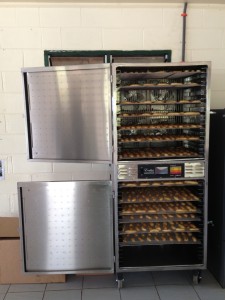
 My friend and former colleague Stephen Hazelman of the Secretariat of the Pacific Community (SPC) has been telling me about his new toy, a drier that an NGO in Samoa called Women in Business Development Inc. is using to process a local banana variety for export to New Zealand. You can see it on the left, thanks to Stephen. Drying overcomes the need for quarantine treatments in NZ. They harvest from certified organic farmers, ripen the fruits for 4-7 days, peel, soak in lime juice to stop blackening, then put in the drier for 15-20 hours, cool and pack in nice yellow 50g packages for export. They are also looking at teas, cinnamon, other fruits like pineapple and mangos, and also vegetables.
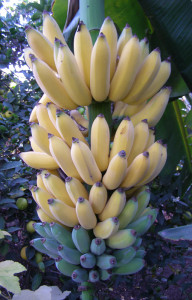 The variety involved is a small, sweet, high-altitude local type called Misi Luki. You can read all about its history and characteristics, and also see some pictures here. It’s listed in ProMusa’s checklist of banana cultivars as an AAB type. If the banana were a neglected or underutilized species (NUS), Stephen could have reported on this under the “upgrading value chains” theme of the recent conference in Accra. But of course what works for weird and wonderful local landraces of the staples could also work for NUS. No news on whether Misi Luki is on any gourmet menus. But that’s another story…
 The previous post about the International Treaty on ITPGRFA allows me to segue seamlessly to today’s World Cocoa and Chocolate Day event at the