The movers are packing up my office as I type this, and I don’t know how long I have before the computer is taken away from me, so let me quickly link to the (2018 PDF of the) Storify thing I did for the crop wild relatives genomics meeting last week, and also say that blogging might be a bit slow this week from my part, and non-existent next week as I take some well-deserved vacat…
Going wild at Asilomar
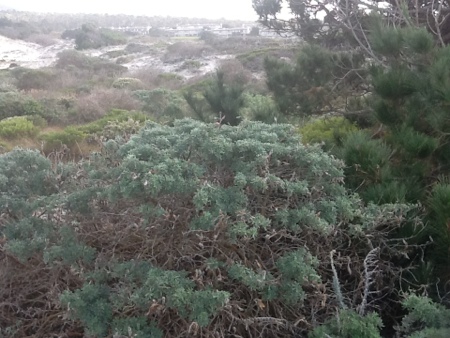
Breeders and genomics researchers are meeting at the Asilomar Conference Grounds, Pacific Grove, California to discuss how genomics can facilitate the use of crop wild in crop improvement. Follow on Twitter using #cwrgenomics. The wild lupin in the photo is found on the sand dunes just outside the conference facilities. There’s also a smaller, rarer one, but I haven’t found it yet.
Brainfood: Core collections, Romanian pigs, Commons, Valuation, Biofortification, Yam characterization, Pompeii diet, Rice grain genetics
- Maximizing genetic differentiation in core collections by PCA-based clustering of molecular marker data. It works. In simulations, to be fair.
- Study of rare traditional pork breeds concerning the aspect of biodiversity conservation. Mangalitsa is what you want, apparently.
- Open Variety Rights: Rethinking the Commodification of Plants. A “protected commons”? Sounds a bit like the ITPGRFA to me.
- Natural and cultural heritage in mountain landscapes: towards an integrated valuation. Yeah, but does your cultural heritage include things like agricultural biodiversity?
- Fortifying plants with the essential amino acids lysine and methionine to improve nutritional quality. Conventional breeding hasn’t worked. But has it been for want of trying? Just askin’.
- Genetic and phenotypic diversity in a germplasm working collection of cultivated tropical yams (Dioscorea spp.). Relationships among species, synonyms, duplicates, yada yada.
- Roman food refuse: urban archaeobotany in Pompeii, Regio VI, Insula 1. Romans ate a Mediterranean diet. Still no cure for cancer.
- Genetic bases of rice grain shape: so many genes, so little known. Why bother? Just askin’.
Man-tall wheats

Via CIMMYT’s Flickr page:
Bibiana Espinosa of the germplasm bank is one of two runners up this week in our photo competition for CIMMYT staff and friends, with this image showing very tall wheat being regenerated at Mexicali. Although keeping seeds at low temperatures extends their lives, the bank must sow and reharvest all of its thousands of incredibly diverse samples periodically to make sure the seeds remain viable. Says Bibiana: “It was amazing to see wheat plants taller than Tom Payne!”
Photo credit: B. Espinosa/CIMMYT.
Given to us this day
It will be a challenge and far more than a technical task to translate the book from Neo-Norwegian into English language, but we can hope that this will be done soon so many more readers can be inspired by the cultural dimensions of cereals and their diversity.
Axel Diederichsen’s wish at the end of his review last summer of Prof. Åsmund Bjørnstad’s magisterial Vårt Daglege Brød — Kornets Kulturhistorie has come true. Our Daily Bread — A History of the Cereals is out in English. And many more readers will indeed now be inspired.
LATER: And it’s on Amazon!