- Calestous Juma gives new FAO head some advice: find a role, build on what farmers do and know, engage civil society, help governments prioritize, and slash bureaucracy.
- Religion and conservation: friends of enemies?
- Eastern Africa Agricultural Productivity Project seems to be mainly about setting up regional centres of excellence in dairy, cassava, rice and wheat. Maybe ASARECA should ask for some advice from Prof. Juma?
- Land use map of the UK. Let the mash-upping begin.
- Training in sustainable conservation agriculture in India and Mexico. But how really sustainable is the whole thing if based on modern varieties? Oh, and Brazil too.
- Saving the Amazon for $33 a month.Or maybe just a buck?
- Local cooking a long way from home, Part I; from Colombia to Washington DC.
- Local cooking a long way from home, Part II; from everywhere to New York’s Lower East Side.
- Don’t worry, exploding watermelons are perfectly safe, and legal.
- FAO updates its webpage on “Implementing the Global Plan of Action for Animal Genetic Resources” and documents the fact by providing a time stamp. Jeremy chuffed.
Amazonian ethnobotany from the beginning
The main rubber tree, which the British took to Malaysia, was the basis of all plantations. There are nine other plants in that same group from which the Indians once got rubber. But the plantations had started to supply the world with better and cheaper rubber than the Indians had been producing under terrible — almost slave — conditions. So the Indians had three or four generations when they hadn’t tapped wild rubber, and we were sent into the various countries to try to stimulate this for the war effort. I had been in the Amazon of Colombia, so I went right back among my Indians, and I worked on that during the war.
That’s the Father of Modern Ethnobotany, Richard Schultes, in part of a long interview he gave in 1990 for something called the Academy of Achievement. You can read it, listen to it, or watch videos of it. Fascinating.
Vavilov on the Beeb
If you were intrigued by news of a BBC series on the history of botany, but could not see it because you don’t live in the UK, fear not, Jeremy has snipped out the bit about Vavilov that appeared in the third programme, which was all about crop breeding.
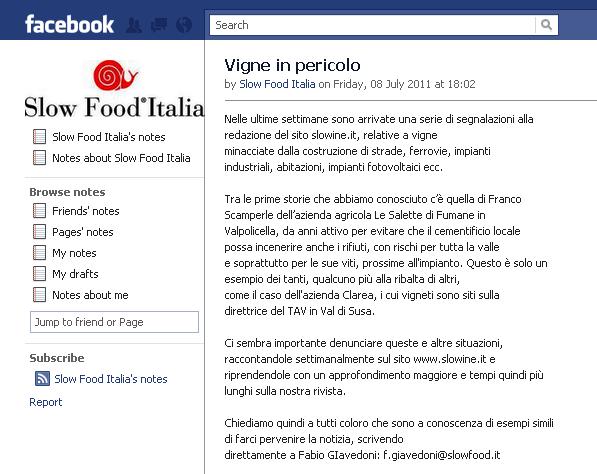
A call for information on threatened Italian vineyards
I suppose there’s some poetic meaning to the coincidence that it is while I’m travelling in the oldest wine-producing region of the world that I notice on Facebook a call from Slow Food Italia for information on vineyards threatened with destruction. Be that as it may, it will be interesting to see what response Slow Food get, and what use they make of it. We have blogged here on various occasions about the desirability of an early warning system for genetic erosion, and how one might go about setting one up. This might have the makings of one, at least for grapevine in Italy.
Nibbles: Pullman, Global Plant Conservation, Germination
- The USDA’s Pullman genebank gets a nice write-up.
- Live from The Missouri Botanical Garden and The Global Partnership for Plant Conservation conference. Crop wild relatives mentioned…
- Hints of a role for growth regulators in germination of recalcitrant seeds.