- Chinese ash seeds go to Ft Collins (et al.) to fight emerald ash borer.
- And also colonial sheep.
- One fish goes up, another down. That’s life, I guess.
- Potatoes fried by climate change?
- What chicken breed is right for you?
- Agrobiodiversity bears fruit at Eden!
- Fish and snail farming in West Africa.
- “The saliva microbiome does not vary substantially around the world.â€
- Mashed mashua, anyone?
- Earliest evidence of vine cultivation in China.
Millennial beans
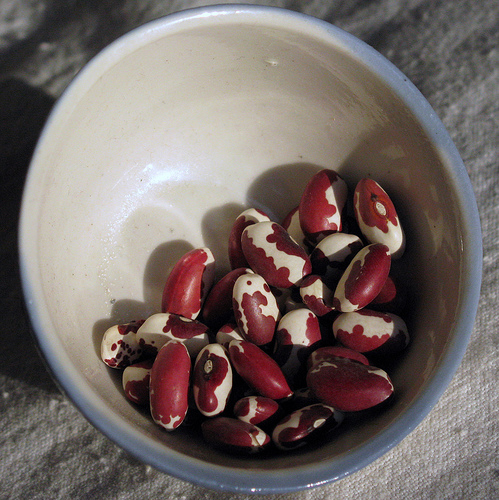
Nice enough beans, 1 but is the story circulating about them really true?
The story of Anasazi beans varies, depending on who is telling it. In popular mythology, the beans were uncovered by an anthropologist, who discovered a 1,500 year old tightly sealed jar of the beans at a dig in New Mexico. Some of the beans germinated, and the new variety of bean entered cultivation again.
I tried to track the story down, and the closest I got to paydirt, I think, was a passage in Beans: A History by Ken Albala. But even that is pretty vague really. Archaeologists from UCLA somewhere in the midwest in the 1980s, or maybe 1950s, uncover a clay pot sealed with pine tar which they carbon date to 500 BCE. Some of the beans sprout and an intrepid businessman markets them. Yeah, right. To go back to the source of the previous quote:
Since most botanists agree that most beans are unable to germinate after approximately 50 years, it is more probable that the beans remained in constant cultivation in the Southwest, probably in Native American gardens, and that they were picked up by companies looking for new “boutique beans.”
There are plenty of companies marketing Anasazi beans now. But actually it is not impossible for legume seeds to keep their viability for more than 50 years — that’s what genebanks are for. And the dry, relatively cool conditions of an Arizona cave might just be good enough to ensure the survival of a few beans for centuries.
Nibbles: Easter Island, Quail, Kimchi, Assisted migration, Solar, Training materials, Ancient wine squared, Economics, Wild food
- People of Rapa Nui innovated as they collapsed.
- “Extinct” Bird Seen, Eaten. Sorry, National Geographic, but I can’t better that headline. Worthy of Fark.
- Kimchi madness.
- Coming to a protected are near you: moving species to save them from climate change. CWR, anyone?
- Shrinking the C footprint of traditional peanut processing. Via.
- 15 Evolutionary Gems: alas, nothing from crops, livestock. Surely domestication could have made it in there.
- “Bulgarian wine cellars have already announced that they will plant vines with the mysterious and newly recovered variety of grapes near the Orpheus tomb.”
- And more ancient wine, this time from Malta.
- Bioversity International wises up on dismal science, launches new economics webpages.
- Wild forest foods big hit at FAO booth at Lao and International Food Festival last weekend in Vientiane.
Nibbles: Bees, Honey, Fertilizers, Desertification, Nutrition, Decor, Mobile phones
- Bees under lots of “sub-lethal stresses.” I know how they feel.
- Hadzabe, who have been doing it for thousands of years, to be trained in honey production.
- Chinese farmers to be taught law of diminishing returns.
- “Workers at the Egyptian Desert Gene Bank in Cairo harvest and grow threatened desert species in its laboratory before replanting them to their native soils, hoping to revitalize threatened desert species.”
- Lao National Nutrition Policy puts nutrition at the centre of development.
- Economic botany and architectural fripperies.
- Got milk?
Carciofo alla Etrusca?
Last Sunday’s outing to Cerveteri and its Etruscan necropolis included a visit to the town’s small museum. Where we saw the following terracotta figurine:
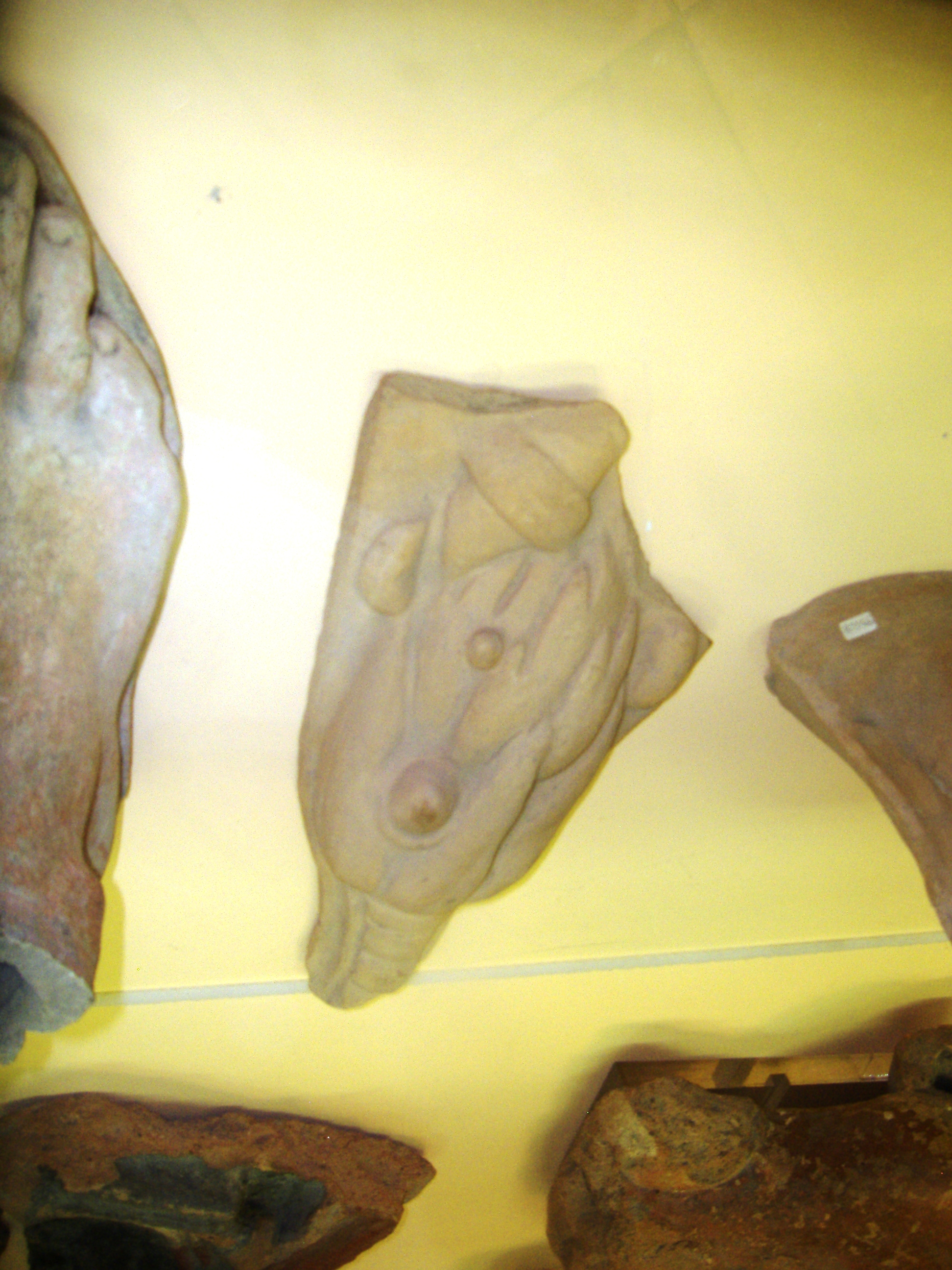
The piece wasn’t labeled, and I had to take the photograph at a weird angle through glass, so the quality is not great. But that looks like an artichoke to me, or maybe a cardoon. Unfortunately I wasn’t able to find much on the internet about the Etruscans and the artichoke, but they definitely had it. And it is still a big crop in the region. But I’m just not entirely certain. What do you think?