- Domestication, Conservation, and Livelihoods: A Case Study of Piper peepuloides Roxb. — An Important Nontimber Forest Product in South Meghalaya, Northeast India. Managed crop wild relative manages to turn a profit for Indian forest dwellers.
- Expression of 9-cis-EPOXYCAROTENOID DIOXYGENASE4 Is Essential for Thermoinhibition of Lettuce Seed Germination but Not for Seed Development or Stress Tolerance. Managed crop wild relative gene could eventually turn a profit for commercial lettuce growers.
- Evaluation of microsatellites of Catha edulis (qat; Celastraceae) identified using pyrosequencing. Can be used to trace origin. The Man exults.
- Date palm as a keystone species in Baja California peninsula, Mexico oases. Jesuit-introduced exotics can be keystone species too. The Pope exults.
- Ancient human agricultural practices can promote activities of contemporary non-human soil ecosystem engineers: A case study in coastal savannas of French Guiana. Formerly managed landscape now managed by soil organisms.
- A novel waxy allele in sorghum landraces in East Asia. Out of East Asia…
- Identification of new sources of resistance to Striga gesnerioides in cowpea germplasm. As ever, they are not the ones farmers actually like.
- Development of EST-SSR markers for diversity and breeding studies in opium poppy. And, they work on the related species! Afghans exult.
- Kunitz trypsin inhibitor polymorphism in the Korean wild soybean (Glycine soja Sieb. & Zucc.). In other news, there is wild soybean in Korea.
- Genetic diversity and phylogenetic relationship of kenaf (Hibiscus cannabinus L.) accessions evaluated by SRAP and ISSR. Originated in Kenya-Tanzania area.
Nibbles: Wine and climate change, Botanic gardens video, Forest restoration video, Deforestation live, European breeders meet, Yams and gender and insurance, N, Fish pots, Ancient ag books, Bioinformatics training, Sustinable ag
- Blogging machine Tom Barnett worried about effect of climate change on his favourite tipple.
- BGCI shell out for cool animation on social role of botanic gardens, and it’s totally worth it.
- As also, but differently, are IUCN’s videos on forest restoration.
- All the world’s forests, online, any day now, to monitor the opposite of their restoration.
- Europe tries to stimulate innovation in plant breeding. By holding a meeting. Ah, but there’s a hashtag.
- Development economists illustrate interesting point about gender and yam cultivation with photo of sweet potatoes.
- The organic attitude to inorganic nitrogen.
- Late Pleistocene hunter-gatherers ate fish. Well I never.
- Reviews of couple books on agricultural origins.
- Need bioinformatics training? Who doesn’t.
- ICRAF reviews efforts to monitor sustainable intensification. Somewhere. I can’t for the life of me find the actual document.
The grapevines of Pompeii
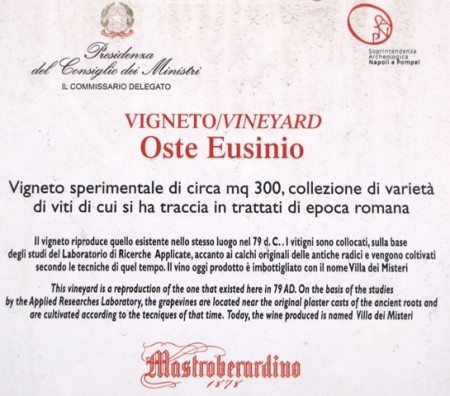
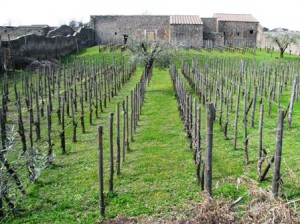
According to Mastroberardino, wine played a central role in the lives of the Vesuvian people. Archaeological excavations, botanical studies, and the discovery of casts of vine roots and their support stakes have confirmed that vines were grown within ancient Pompeii’s city walls, in the gardens and orchards which beautified villas, and especially in the quarters located on the outskirts of the city, near the amphitheatre.
Nibbles: Botanic gardens & forest foods, Militants against IRRI, Modern ancient farm, Conservation software, Urban mowing sheep, Agro-ecology, Beans, Value of genebanks, Seed savers, Video
- Botanic gardens get into the restoration business. So that people can again eat nutritious forest foods. No, really, even the BBC says so.
- Militant Filipino NGOs target IRRI. Not for the first time. And probably not the last.
- Anyone planning to go to the Beltain at Butser Ancient Farm? Only a month to go…
- You are probably already using at least one of these.
- Paris looking to go all sheepish.
- I don’t know about you, but I immediately turn off when somebody says that X is the only answer to Y. Even when the X is agro-ecology.
- Même s’ils le disent en français.
- Chinese “board beans” are actually lablab shock.
- You going to spend an evening at The Genome Analysis Centre discussing the value of genebanks? Tell us about it!
- Dutch seed savers looking to get organized.
- New York times goes overboard for Digital Green participatory video.
Nibbles: Property rights, Dryland crops, New tomato, CGIAR genebanks, Quinoa in US, Wasps and figs, Ancient New World agriculture, Allium CWR, SADC seed law, ESA, Coconut pollination
- Why tenure matters. And why it doesn’t.
- Book on alternative crops for dry areas. Not that alternative, settle down. And anyway, how do they do in mixtures?
- And the award for Best New Variety of the Year goes to…
- CGIAR Consortium hires private sector biotech expert to oversee genebanks et al.
- US set to grow more quinoa. Shame on you, taking the bread out of the mouths of Andean peasants!
- Save our figs!
- Malanga and cassava important on Mayan menu. And maize maybe not so much on Pueblan one as thought.
- New onion wild relative spotted in Central Asia.
- GRAIN objects to new one-size-fits-all SADC seed law.
- Ecological Society of America discovers agriculture.
- Indian institute trains first female coconut pollinators.