- In the Footsteps of Vavilov: Plant Diversity Then and Now. The Pamiri Highlands of Tajikistan, the Ethiopian Highlands, and the Colorado Plateau of Southwestern North America compared at time of Vavilov and now: “Localities that have retained diversity have suffered the least.”
- Vavilovian Centers of Plant Diversity: Implications and Impacts. “His concept of specific centers of origin for crop plants was not an isolated aphorism but has directed breeders, on their study and reflection, to the continued improvement and economic development of plants for humanity.”
- Mitochondrial DNA variation of Nigerian domestic helmeted guinea fowl. Recent domestication, and lots of intermixing mean not much diversity, and what there is doesn’t have structure.
- Genome-wide association and genomic prediction of resistance to maize lethal necrosis disease in tropical maize germplasm. That’s when two viruses attack synergistically. Resistance is from multiple loci with smallish effects, and there are some promising markers.
- Genome-environment associations in sorghum landraces predict adaptive traits. Genotype predicts drought tolerance.
- Facilitation and sustainable agriculture: a mechanistic approach to reconciling crop production and conservation. Understanding facilitative plant–plant interactions (intercropping, varietal mixtures) in crops leads to more sustainable farming practices. Or it could.
- The relative contribution of climate and cultivar renewal to shaping rice yields in China since 1981. Mainly new varieties. Climate change has actually helped, but for how long?
- Biodiversity inhibits parasites: Broad evidence for the dilution effect. Meta-analysis shows biodiversity decreases parasitism and herbivory.
- Using genomic repeats for phylogenomics: a case study in wild tomatoes (Solanum section Lycopersicon: Solanaceae). Data that are usually thrown away turn out to be useful for something after all.
- Genetic structure of the date palm (Phoenix dactylifera) in the Old World reveals a strong differentiation between eastern and western populations. Asian and African genepools, with geneflow E to W.
New seeds for India, but from where?
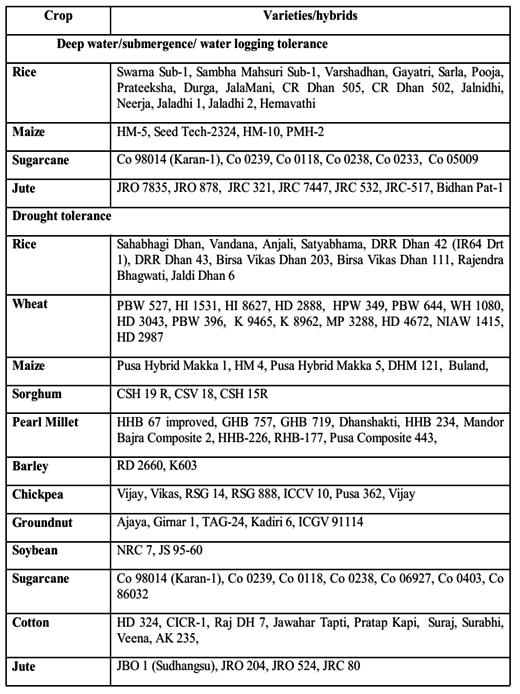 Surprising, though in a good way, to see a Government of India press release listing newly-released flood and drought resistant varieties of a number of staple and crash crops. What I’d like to know is how many of them owe their existence to material that breeders sourced from genebanks, either India’s own national system or the international genebanks of CGIAR. I see the famous flood-resistant Swarna Sub-1 rice is there, which was developed at IRRI. Maybe there are others.
Nibbles: Barley domestication, Apple pie, Mexican food & drink, CABI, Old seeds, IT
- Secret of barley brittle rachis revealed. In other news, there’s a Centre of Excellence in Plant Cell Walls.
- Bramley apple pie filling protected. But from who?
- Participatively bred Oaxacan maize finds a market niche.
- Have some tequila with that participatively bred Oaxacan maize.
- “We can call a government and tell them our data is telling us that a pest is on the way.”
- The coolness of seeds.
- Yeah but “[g]ood seed in the wrong place is no longer good seed.”
Nibbles: Sustainable database, Strawberry breeding, Breeding rice, Nutrition champion, Camel milk, Mike Jackson, Feed the Future, Quinoa prices, Small is beautiful
- A database of how you do sustainable intensification.
- Building a better strawberry.
- New lab helps Bangladesh with high-zinc rice.
- Maybe those guys are you nutrition champions.
- They’re right, camel milk is good, and good for you.
- Useful list of Mike Jackson’s publications.
- Pres. Obama learns about maize in Ethiopia.
- Increased quinoa supply leads to lower prices shock.
- Silly season roundup: tiny watermelons (no, not really), tiny pineapples.
ICRISAT DG on the importance of genebanks
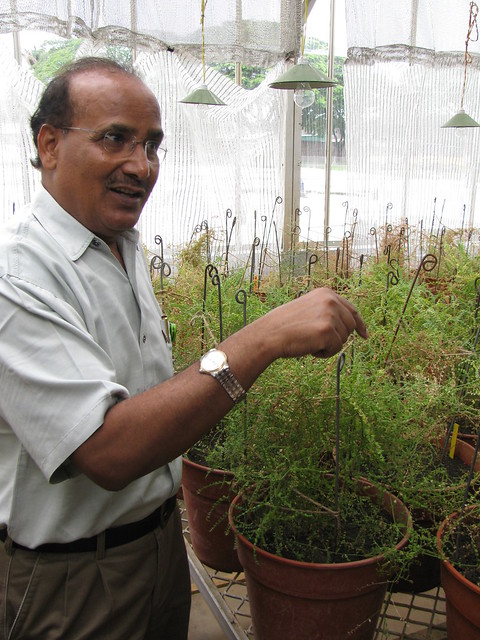
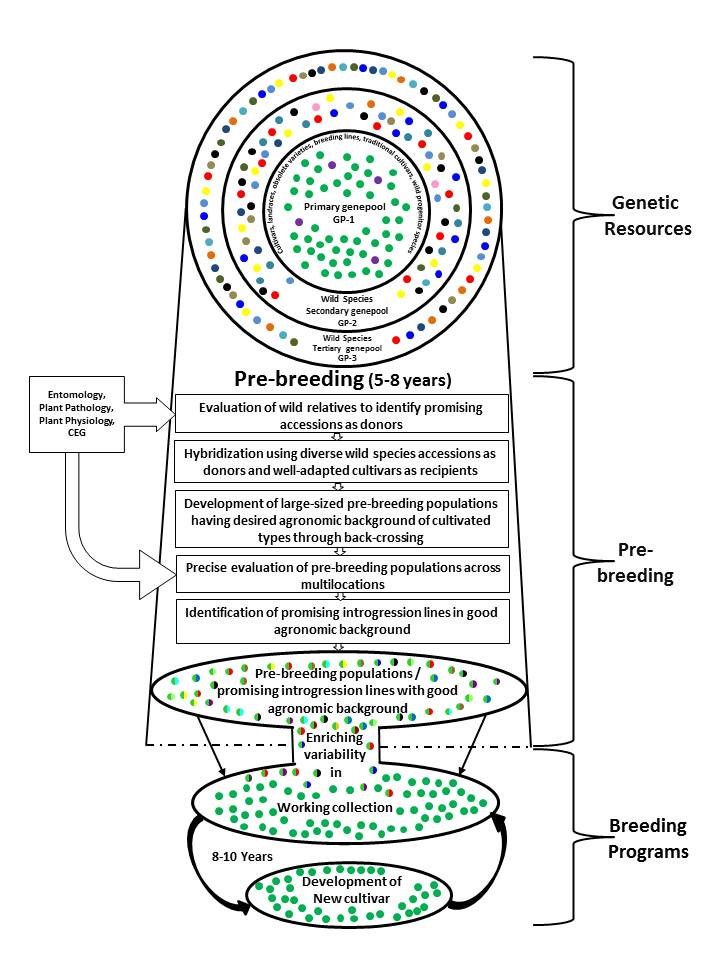 There’s a great blog post up on the ICRISAT website from its new Director General, Dr David Bergvinson. It basically says, though not in so many words, that the centre’s germplasm collections are the foundation of all its crop improvement work. Which is nicely illustrated by this diagram (click to embiggen), from Dr Shivali Sharma, who’s a senior scientist in the genebank. You can see more photos of her (and others’) wide crossing and pre-breeding work at ICRISAT on the Flickr album I put together after my visit there a couple of years back.
Dr Bergvinson closes his post by pointing to ICRISAT’s 100 Voices video series, the first instalment of which is on genomics as a tool to make even better use of genebank collections.