- Gates just gave AGRA $56 million to make new seed varieties available. PASS still not collecting the diversity it hopes to displace.
- Hang on though. Africa needs a “Green renaissance, not revolution”.
- Saving seeds the ancient Egyptian way.
- Eating sweets the ancient Papuan (and others) way.
- Odd to hear an agrobiodiversity dude talking about silver bullets – even with a question mark.
- SeedZoo site offers a space to give and to receive “traditional and indigenous food plants from around the world”.
- Today’s forthcoming genome of agricultural interest: water buffalo.
- Farmer to farmer films – gender sensitive, natch – “fight against striga”.
- Assessing the Potential of Insects as Food and Feed in assuring Food Security, from the FAO document repository.
- Much sound, less light, on black Sigatoka disease, from the BBC (natch).
- Vaviblog rounds up the latest skinny on Pavlovsk.
- And speaking of Vavilov, the latest genome to be sequenced has a VIR connection.
Nibbles: Commons, Tom Wagner, CGIAR, Domestication presentation, Sophisticated urbanites, Vavilov’s potatoes in the news, Perennial crops, African drought, Aegean lathyrism, Heirlooms
- The vocabulary of the commons.
- An interview with Tom Wagner, a great tomato and potato breeder.
- The CGIAR Consortium has a newsletter, with bits in it about what they’re doing on agrobiodiversity, genebanks (such as this one), all that stuff. But I guess news of this big Africa-wide food security project came in too late. Oh, here’s another one, on ICRISAT’s new chickpea.
- Pat Heslop-Harrison on domestication. I am reliably informed he once extracted DNA from a fruit smoothie using nothing but household utensils and cleaning chemicals. Pat, is there a video?
- Urban ag in the Philippines. For some reason, there’s been a ton of this sort of urban food stuff on the tubes lately. Like this for instance. And this (compare current orchards in London with historical ones). I may just have to blog about it. Oh dear, I just have.
- The Glasgow Herald heralds the importance of Vavilov’s potatoes.
- Long post with lots of different bits of info on lots of perennial crops.
- Monitoring drought in Africa via pretty maps. And more pretty maps in search of a use.
- Ancient Aegean lathyrism? Dirk alerted.
- A keeper of seeds does his stuff near Pittsburgh.
Brainfood: Bison on the prairie, Tilapia breeding, AM on banana, Phenomics,Yam collection, Nopales, Arable flora
- Can bison play a role in conserving habitat for endangered sandhills species in Canada? Maybe, hence the recommendation to re-introduce them. Incidentally, there are a few crop wild relatives on the list of threatened plants of Canada.
- Genetic improvement of farmed tilapias: Genetic parameters for body weight at harvest in Nile tilapia (Oreochromis niloticus) during five generations of testing in multiple environments. The 10-year “Genetic Improvement of Farmed Tilapias” (GIFT) project was not a complete waste of time. The GIFT population will respond well to selection for increased body mass, and you dont have to do the evaluation in lots of different environments.
- Mycorrhizal colonization of major banana genotypes in six East African environments. Different banana genotypes had different levels of infection, but environment also plays an important role. Important because arbuscular mycorrhizal fungi may increase production.
- On the use of depth camera for 3D phenotyping of entire plants. An example of this.
- Genetic and phenotypic diversity in a germplasm working collection of cultivated tropical yams (Dioscorea spp.). Should be a good starting point for improvement programmes. Kind of like the GIFT population, then, eh? But starting point? Haven’t people been breeding yams for a while?
- Cytogeography of the Humifusa clade of Opuntia s.s. Mill. 1754 (Cactaceae, Opuntioideae, Opuntieae): correlations with pleistocene refugia and morphological traits in a polyploid complex. The southeastern and southwestern U.S. represent glacial refugia for diploid members of the clade, and a whole bunch of polyploids resulted when the taxa spread out again after glacial episodes. How many of these are eaten is what I’d like to know, and whether ploidy affects that. I suppose climate change will lead to further complications?
- The impact of agricultural intensification and land-use change on the European arable flora. Is significant. Not least because some crop wild relatives are involved, although that’s not really discussed here.
Five peas in a pod
So, just to recap, that Afghan pea accession with resistance to a couple of different strains of Peronospora viciae (which causes downy mildew):
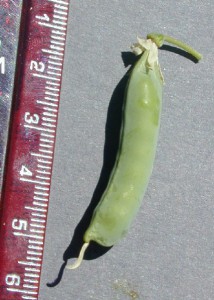 PS 998 = WBH 2126 (Plant Breeding Institution, Weibullsholm, Landskrona) = NGB 102126 = ATC 2432 (Australian Temperate Field Crops Collection, Horsham) = PI 222117 sel.
Thanks to Jenny Davidson, Dirk Enneking, Tony Leonforte, Bob Redden and assorted databases for helping to sort that one out.
Nibbles: NERICA vs landraces, Asian breeding, Wild wheat threats, Indian agrobiodiversity area, GBIF, Ancient Amazonia
- NERICA shmerica.
- Did you know that the Society for Advancement of Breeding Research in Asia and Oceania (SABRAO) 12th Congress from 13-16 January 2012 in Chiang Mai, Thailand. No, neither did I.
- Whither wild wheat?
- Koraput and its agrobiodiversity, including aus rice, makes it on the Globally Important Agricultural Heritage System (GIAHS).
- GBIF has many duplicates. I’m shocked. Shocked, I tell you.
- Amazonia was densely populated. No it wasn’t. Yes it was. No it wasn’t.