- Seven forest myths exposed. And more on the work debunking one of them. Yeah I know we already Nibbled it, get over it.
- And you know what, here’s another one we already Nibbled, on collecting seeds in Central Asia. But I just read it again in the hardcopy version and it’s really cool and I like seeing people I know in funny shorts. Incidentally, the dead tree version has a link to Vaviblog that is unaccountably missing online.
- Will no one buy me this fabulous banana book? (Not if you keep being rude to your reader. Ed.)
- Second installment of that we-farm-because-we-like-beer thing. I’m not sure about the theory, but I like the way this guy writes. Yes, it’s a little look at me, look at me. But sometimes you need that.
- Tales of the cucumber. Does anyone remember if we blogged about this paper?
- More to myrrh than meets the eye. And more than most folk need to know.
- Oxford boffins say a pox on both your houses: “environmentally friendly” farms better than conventional and organic.
- National Geographic tackles the dog. Amazingly, all the photos are of, ahem, dogs.
- What’s with all this stuff about cacao lately? Has someone sequenced another variety or something?
Nibbles: US Farm Bill, Polish chicks, Young Kenyan farmers, Jowar redux, Handwriting, Erna Bennett, Ant mutualism, Horizontal plastid movement, Horizon scanning
- Policy wonks start to worry about the next US Farm Bill and its effects on poor farmers elsewhere.
- Poles start to worry about their endangered chicks.
- The Youth in Agriculture gives agricultural biodiversity some love on St Valentine’s Day.
- “Can jowar ever replace rice?” Question expecting the answer no? (Jowar is sorghum.)
- Can anyone actually decipher what H.G. Wells wrote to FAO Director Lubin?
- A Memorial Service will be held for Erna Bennett, in English, at 12.30 hrs. on Friday, 9th March at Santa Balbina Church, Viale Guido Baccelli, Rome. It’s near FAO. And no, there’s no link.
- Ants help crop wild relative (among other things).
- Plastids move between crop and wild relative.
- Cambridge boffins look into crystal ball and see fully sequenced, N-fixing perennial cereals growing under sterile conditions. In deep ocean vents.
Nibbles: BGCI database, Lathyrus, IRRI CWR photos, Sweet potato manuals, Rosemary lore, Pig farmer success story, Fancy restaurant, Vavilov’s Principle, Forests, Sorghum, Millet, Kenya and climate change
- GardenSearch just got way more complicated.
- Today’s silver bullet is an Australian grasspea variety. Actually the first Australian grasspea variety.
- Our friend Nik goes to town on IRRI’s wild relatives.
- How to breed sweet potatoes. The saga continues.
- Parsley, sage, rosemary and thyme.
- ILRI uses the particular to make points about the general. Clever.
- Californian fine-foraging. I wonder if any of the diners will also read the following piece and be inspired to do their foraging further afield.
- Angelenos learn about Vavilov’s Principle.
- A forester argues for forests in the Rio+20 process. Mandy Rice-Davies applies.
- Tanzanian Regional Commissioner urges farmers to sow sorghum and millet. If necessary, they can learn from …
- Farmers in Tamil Nadu, who helped scientists learn lots more about local millets, and got a publication into the bargain.
- Who’s doing what in Kenya in climate change adaptation and mitigation. Genebank scrapes in, though not by name, under KARI.
Brainfood: Chicken domestication, Financial crisis and conservation, Cucurbit domestication, Tamarind future, Biofortification via bacteria, Cowpea nutritional composition, Roman bottlegourd, Noug, Rice blast diversity, Pearl millet domestication, Cacao genotyping, Organic ag, Marcela, In situ vs ex situ, Artocarpus roots
- Heritable genome-wide variation of gene expression and promoter methylation between wild and domesticated chickens. Domestication was Lamarckian.
- Global economy interacts with climate change to jeopardize species conservation: the case of the greater flamingo in the Mediterranean and West Africa. Financial crisis leads to closing down of Mediterranean saltpans, which is not good news for flamingo. Climate change doesn’t help. Must be similar examples for plants, Shirley.
- Parallel Evolution Under Domestication and Phenotypic Differentiation of the Cultivated Subspecies of Cucurbita pepo (Cucurbitaceae). C. pepo subsp. pepo and subsp. texana underwent similar genotypic and phenotypic changes during domestication.
- Ecological and human impacts on stand density and distribution of tamarind (Tamarindus indica L.) in Senegal. Climate change will lead to an area of currently low density in the NW being a refugium. Connectivity problems will ensue.
- Biofortification of wheat through inoculation of plant growth promoting rhizobacteria and cyanobacteria. Breeders give up.
- Nutritional ranking of 30 Brazilian genotypes of cowpeas including determination of antioxidant capacity and vitamins. Breeders take heart.
- A short history of Lagenaria siceraria (bottle gourd) in the Roman provinces: morphotypes and archaeogenetics. Out of Asia. And more.
- Functional Properties, Nutritional Value, and Industrial Applications of Niger Oilseeds (Guizotia abyssinica Cass.). It has them, in spades, as this paper summarises.
- Sex at the origin: an Asian population of the rice blast fungus Magnaporthe oryzae reproduces sexually. The Himalayan foothills would seem to be the place where to look for resistance.
- Evolutionary History of Pearl Millet (Pennisetum glaucum [L.] R. Br.) and Selection on Flowering Genes since Its Domestication. Bayesian modelling of 20 random genes supports domestication about 4,800 years ago, with protracted introgression from the wild relative, and selection sweeps suggest flowering related genes unsurprisingly underwent strong selection as the crop spread southward. But a single domestication scenario? Anyway, sounds familiar, doesn’it.
- Genome-Wide Analysis of the World’s Sheep Breeds Reveals High Levels of Historic Mixture and Strong Recent Selection. Much like, ahem, pearl millet. For flowering genes, read horniness genes. The bit about an initially broad sampling of diversity sounds a bit like the horse. Who out there is going to synthesize all this domestication stuff? Not that I’m looking for a meta-narrative, mind.
- Ultra-barcoding in cacao (Theobroma spp.; Malvaceae) using whole chloroplast genomes and nuclear ribosomal DNA. Well, sequence the whole thing and be done with it is what I say, why flaff around with ultra-this and super-that?
- The crop yield gap between organic and conventional agriculture. 20%.
- Marcela, a promising medicinal and aromatic plant from Latin America: A review. Achyrocline satureioides, in the Asteraceae. Yeah, I never heard of it either. But these guys say it’ll make you rich and beautiful.
- Comparative genetic structure within single-origin pairs of rice (Oryza sativa L.) landraces from in situ and ex situ conservation programs in Yunnan of China using microsatellite markers. 2-5 times more unique alleles in the in situ version of various landraces compared to the ex situ version, collected in 1980. But same number of common alleles.
- Mutualism breakdown in breadfruit domestication. More recent cultivars have less abundant and less species-rich arbuscular mycorrhizas.
Darwin Day 2012: b’lieve I’m fixing to live
I confess to being somewhat peeved this morning, on several counts.
First, I thought it was the 11th, giving me a day to be ready with a post for Darwin Day 2012.
Then, I couldn’t find any evidence of an online celebration of Darwin Day 2012, which seems to have just gone extinct some time around 2010. There are plenty of meatspace celebrations, it is true, including one that is a source of yet more peevishness.
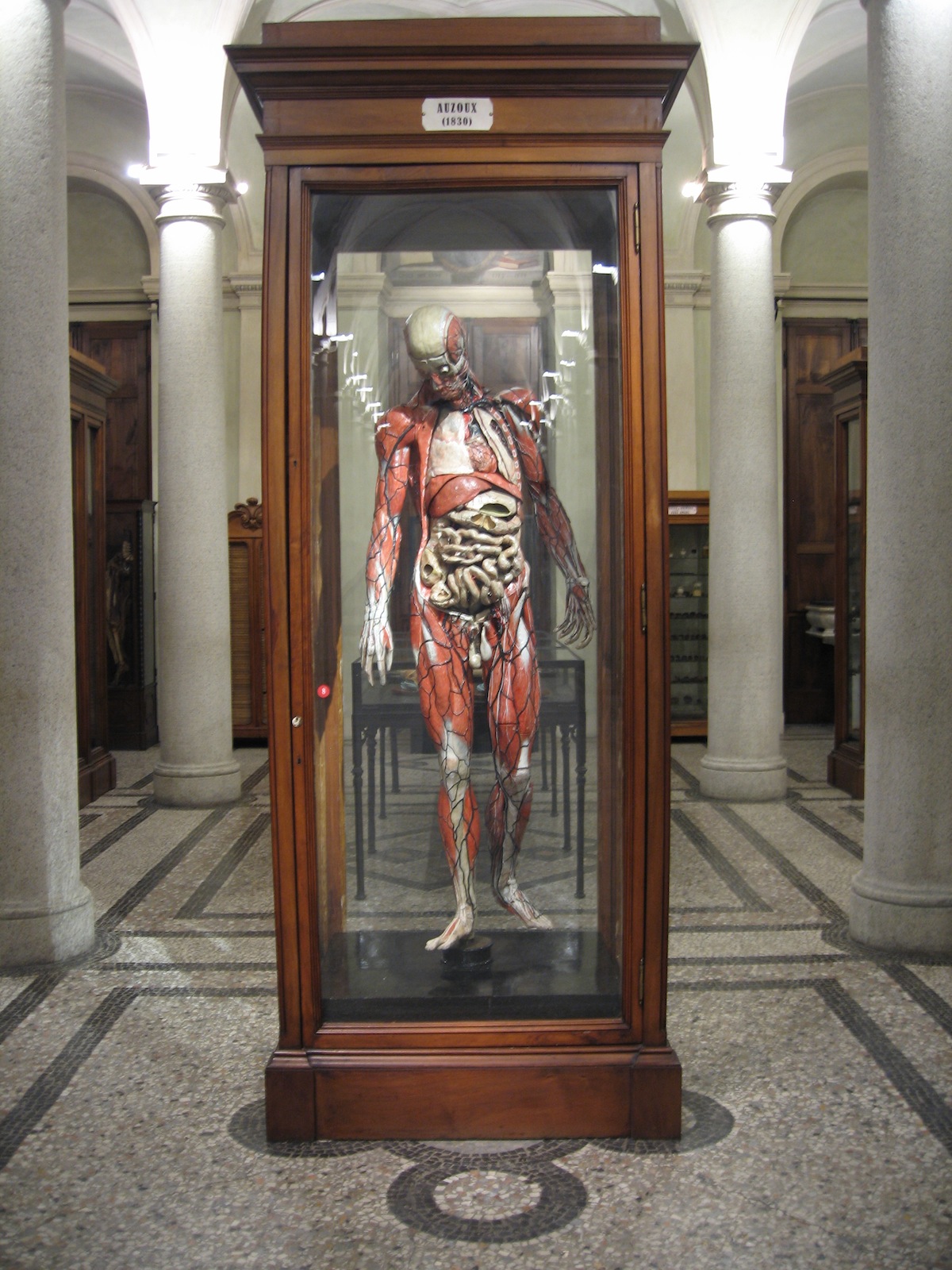 Yesterday, Turin University demonstrated huge adaptability in bending Darwin Day to its will. Reasoning, possibly correctly, that nobody would actually come out for an event genuinely about evolution, the University hosted, instead, a seminar on The Evolution of the Blues. I kid you not. And in the Museum of Human Anatomy, no less, where I snapped that revelatory image in November 2008. Don’t get me wrong; I think that The Evolution of the Blues is an admirable subject for a Darwin Day celebration and I can’t think of a better venue than the Museum of Human Anatomy. In fact, I wish I’d been there. But yet another source of peevishness is that the Museum shares a building with a Museum of Fruit & Veg Diversity. Wouldn’t it be nice (hint, hint) if that were the locus and subject for the University of Turin’s celebration of Darwin Day 2013?
But enough whinging. Fortunately, there is something to celebrate for Darwin Day 2012: an excellent explanation by Ford Denison of some of the mysteries of the relationship between nitrogen-fixing bacteria and their plant hosts, based on a recently published paper by Ford and a couple of his ex-students. Such relationships are often called symbiosis, or mutualism, with the clear implication that both sides benefit. The central mystery of such relationships remains: what prevents cheating?
Previous work by Denison’s group had shown that the host plant sanctions rhizobia that don’t fix nitrogen. The nodules formed by non-fixing bacteria are smaller than those of bacteria that do fix nitrogen, consistent with sanctions of some sort. In keeping with the nature of natural selection, they take pains to explain that:
We have called these plant responses “sanctions”, without any implication that plants are self-aware or that sanctions will change the behavior of rhizobia, except via evolutionary decreases in the frequency of rhizobial “cheaters” over generations.
The latest paper takes things further, asking whether partial cheats, which fix a bit of nitrogen but not as much as other strains, also trigger sanctions. As Denison explains it, other researchers have shown that even though nodules of non-fixing bacteria are smaller, they contain similar numbers of rhizobia. Numbers are more important than size for bacterial evolutionary fitness, so the sanctions may not in fact be selecting against non-fixing bacteria. There’s more to the story, which remains inconclusive for now, and I urge you to head to Ford Denison’s blog to read it in full.
Darwin Day and Denison’s post also offer a timely reminder that in agriculture, based as it generally is on artificial selection, fitness, in the evolutionary sense, is seldom straightforward. Dwarf cereals, for example, are a good thing (for us, and for themselves) only if they are growing in a field of other dwarf cereals. As a spontaneous mutation in a stand of normal-height plants, they would be rapidly out-competed. Denison covers this enormous and important subject in his new book Darwinian Agriculture: How Understanding Evolution Can Improve Agriculture, which I was thrilled to learn from Amazon two days ago might be delivered a week earlier than promised.