Thanks to Paul Bordoni at the Global Facilitation Unit for pointing us in the direction of this illustrated compendium of African recipes, including this one involving egusi, which are the seeds of various cucurbits.
Salute!
A study just published in Nature and reported in The Times here identified the particular class of the polyphenols found in red wine which confers the greatest health advantage, by suppressing production of a protein which narrows blood vessels. There’s been lots recently in the press about the supposed health benefits of moderate consumption of wine, in particular red wine, as part of the “Mediterranean diet.” Known as polymeric procyanidins, these polyphenols turn out to be present in particularly high concentrations in some wines from Sardinia and the Pyrenees. This is due to both the wine-making technique (the compounds are released from the seeds after a long period of fermentation) and variety (the Tannat grape from SW France is rich in these chemicals). The Cannonau wine from Nuoro (Sardinia) and the Madiran from Gers (France) have the highest levels of procyanidins, and it turns out that people from those areas are also of above-average longevity, especially the men.
Rescuing food traditions around the world
Renewing America’s Food Traditions (RAFT) “is a coalition of seven of the most prominent non-profit food, agriculture, conservation, and educational organizations dedicated to rescuing America’s diverse foods and food traditions.” You can download here their great book explaining what these traditions are. There’s also a map of North America’s “totem foods.”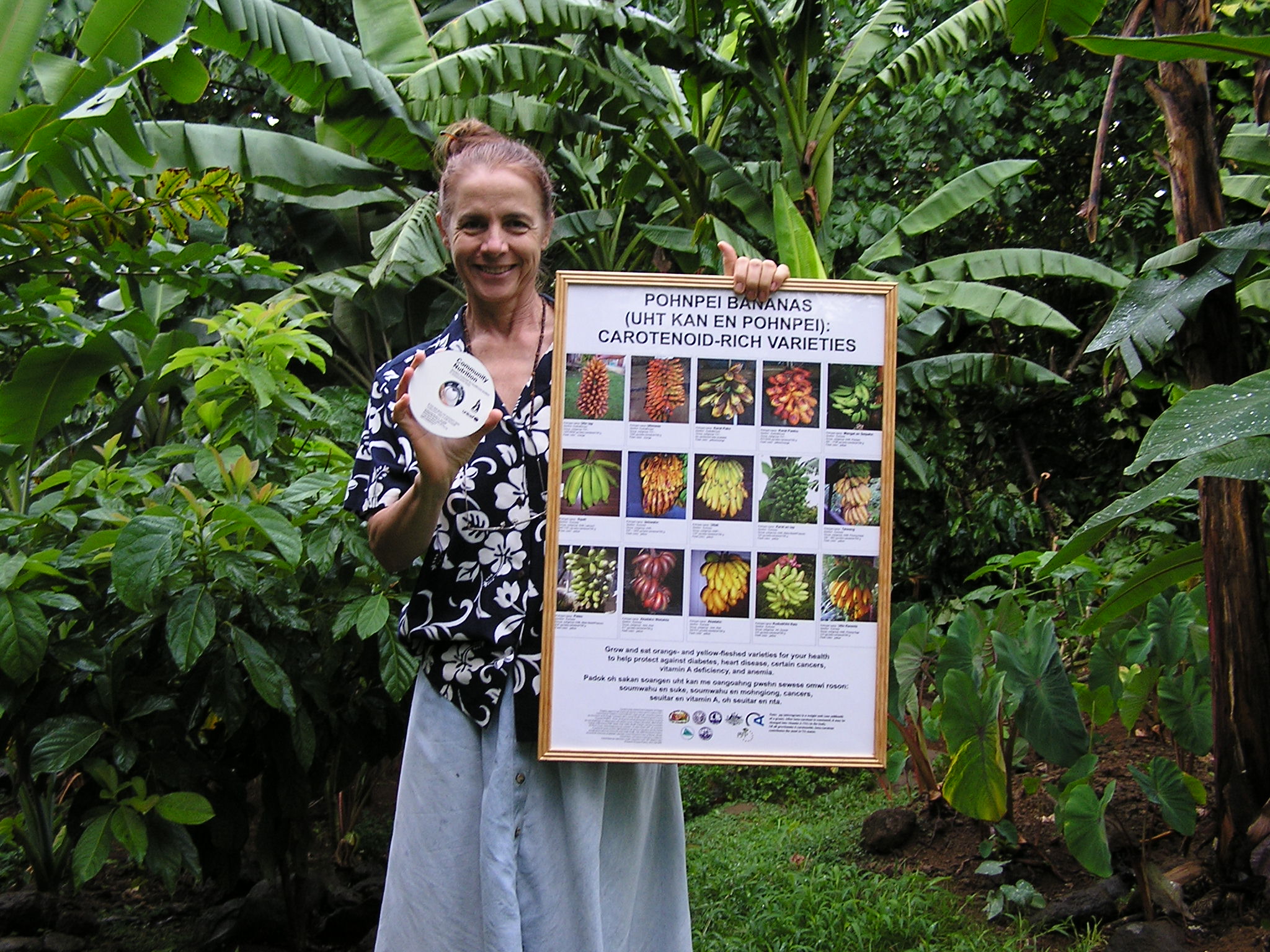
Same topic, different region: Dr Lois Englberger of the Island Food Community of Pohnpei (right, with some of her NGO’s information products) has made Pacific Magazine’s list of “293 Pacific Leaders You Need To Know” because of her efforts to promote local island foods, food crops and food traditions. Congratulations, Lois, and keep up the good work!
Tea threatened?
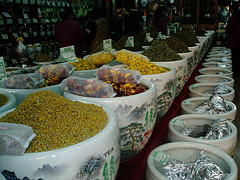 Will the disappearance of the traditional Chinese tea-house lead to a decline in tea diversity? I’m not sure to what extent the diversity of teas we see in supermarkets and specialty shops is due to differences in provenance and processing as opposed to genetic differences among cultivars. No doubt a bit of both.
Flickr photograph by emily_mason_boyd used under a Creative Commons License.
I yam what I yam
I thought that Americans called sweet potatoes “yams,” full stop. But it turns out I’m wrong. Let Pete Petersen, an Oregon produce expert, tell you why, and much else besides.