It’s been a good week for the genomes

Cucumber. Tomato. Pig. Horse. A veritable cornucopia of crops and livestock. And from it will doubtless emerge fascinating scientific insights.

  • “[H]orses have a newly forming part in their genetic make-up which shows the evolutionary process in action in a way that has not been seen before.”
  • “[N]ew research applications and innovations at many points in the pork chain.”
  • “[F]ar more is going on in the phloem than anybody … had previously expected.”

(The tomato is just an advanced map; no giant claims there, yet.)

This is really important science, no doubt about it. But I’d like to see a moratorium on claims that any of this is going to improve anybody’s food security. It hasn’t, yet. And personally I doubt that it ever will, but maybe that’s just me. I bought into the dream along with everyone else. Back in 1982 I agreed that cereals would fix their own nitrogen, that photosynthesis would be rejigged to become more efficient, that seed storage proteins would be made more completely nutritious.

The thing is, cereals don’t need to be engineered. It might help, but it hasn’t happened yet and in the meantime legumes are there to take up the slack. Changing C3 plants into C4 plants hasn’t happened yet either, and one has to wonder how much it will help poor farmers in the hot environments that make C4 more efficient. Seed storage proteins have been rejigged; Monsanto built a high-lysine maize, but it vanished more or less without trace because conventionally-bred high-lysine maizes are far cheaper and more attractive to the small-scale farmers who really need better nutrition. Nobody back then was too worried about drought or flooding; tolerance to submersion has now been engineered into rice and could be useful.

Overall, though, I wonder how much more progress might have been made had “ordinary” plant breeding been as easy and attractive as messing about with DNA directly. I also wonder how many surprises like this one are in store:

Indirect costs of a nontarget pathogen mitigate the direct benefits of a virus-resistant transgene in wild Cucurbita

Translation: Transgenic squashes — and almost all of them being grown commercially in the US and Mexico are transgenic — are protected from zucchini yellow mosaic virus. Plants that carry the resistance genes suffer considerably more wilt disease as a result. Hey ho, let’s see if we can add wilt resistance to the mix, shall we?

So, farewell then, Claude Levi-Strauss

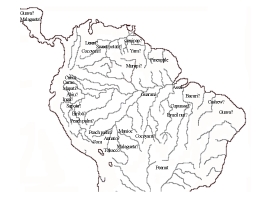
Like the Archaeobotanist, I too was astonished by the news that Claude Levi-Strauss had died today because I was not aware that he hadn’t died many years ago. Rather than explain why a blog about agrobiodiversity should mark the passing of a centenarian and seminal anthropologist, let me just urge you to visit Dorian Fuller’s blog and read his appreciation and the sample myth on the origins of agriculture that Levi-Strauss collected.

It shows that almost all of us are ignorant of the origins of our foods and food-processing technologies. Bonus points if you spot the other ways in which the Munduruku explanation of the origins of their agriculture might be not the whole “truth”.

Revisiting domestication

One of the crucial pieces of evidence in studies of cereal crop domestication is the DNA mutation that keeps seeds attached to their stalk. 2 Staying attached — not shattering — is important because it allows people to harvest the seeds much more easily. You can gather bundles out in the field, carry them back to the village and do the processing there. If the seeds shatter, you have to harvest early, before they are fully ripe, and thus risk not getting their full food value or do all the processing out in the field or else risk losing much of the harvest on the way back to the village.

The loss of shattering is thus a crucial step in the process from cultivation to domestication.

The shattering mutation itself is extremely rare. In rice, for example, all types of rice share essentially the exact same mutation, crucial evidence that in rice it occurred only once, and then spread from Japonica types back into the wild and from them into the Indica types, domesticated a little later.

Now, we (and others) occasionally play the game of why aren’t any new species being domesticated. Sometimes the answer is that too many people are too satisfied with the few crop species that support humanity. Other times, it is that it is just too hard or too time-consuming, especially if one is hanging around waiting for a non-shattering mutation to arise. Mostly, both.

But hey! We know the gene that is mutated in domesticated rice, and wheat, and sorghum, and maize, and other species too, probably. And we know the nature of the mutation. And we know that the more we know, the easier it is to find out about new species. So, what if some smartypants isolated the gene from an as-yet-undomesticated species, say Coix , mutated it so it no longer functioned to shatter the seeds, and stuck it back in? 3 Then just give loads of samples to loads of farmers and let them get on with the business of selection.

Could we engineer a post-cambrian explosion of crop diversity?