- Progress and prospects for interspecific hybridization in buckwheat and the genus Fagopyrum. Not easy.
- Mechanisms for the successful biological restoration of the threatened African pencilcedar (Juniperus procera Hochst. ex. Endl., Cupressaceae) in a degraded landscape. Needs help from local Acacia. Isn’t diversity wonderful?
- Tapping latex and alleles? The impacts of latex and bark harvesting on the genetic diversity of Himatanthus drasticus (Apocynaceae). Tapping latex leads to loss of genetic diversity, but they have a plan for sustainable harvesting.
- Analysis of genetic diversity in berari goat population of Maharashtra state. “Berari is not a recognized breed but a well established local population of goat which is yet to be fully explored for its phenotypic and genetic aspects.” So what would it take to recognize it? This paper?
- Molecular phylogeny of Indian horse breeds with special reference to Manipuri pony based on mitochondrial D-loop. It’s the most different of the 5 breeds of the sub-continent (yes, apparently only 5), and the most similar to the Thoroughbred.
- Estimation of genetic diversity of the Kenyan yam (Dioscorea spp.) using microsatellite markers. Most variation within provinces. And?
- Morphological and genetic diversity of European cranberry (Vaccinium oxycoccos L., Ericaceae) clones in Lithuanian reserves. Enough morphological variation to think about domestication; enough molecular marker variation to think about writing another paper.
- Down deep in the holler: chasing seeds and stories in southern Appalachia. It’s all about the friendships.
- Pepper (Capsicum spp.) Germplasm Dissemination by AVRDC – The World Vegetable Center: an Overview and Introspection. Here come the numbers: 8,165 accessions of Capsicum conserved, 11% of global total; 6,008 genebank accessions (20%) and 23,972 improved advanced lines (80%) distributed in 25 years; 51 open pollinated and hybrid cultivars of hot and sweet peppers commercialized by public and private sectors in South Asia, West Africa, Central Asia and the Caucasus since 2005.
- Genetic characterization of local Italian breeds of chickens undergoing in situ conservation. Breeds are breeds.
Nibbles: Apples, Aussie genebank, Ugandan coffee song, Biodiversity hotspots, CWR inventory, Ancient Amazon, Chestnut recovery, Mainstreaming nutrition
- Yet another blog post about heirloom apples. Why not heirloom, I don’t know, grains?
- Yet another genebank opens.
- On the other hand, can never have too many agrobiodiversity songs.
- Banks? someone mention banks? Biodiversity hotspots are like (some) banks. Too big to fail.
- Even crop wild relative hotspots?
- 1491: Amazon.
- 1493: New England. Hope Charles Mann won’t mind me borrowing his tropes.
- Interesting use of technology to deliver interesting presentation on mainstreaming of nutrition in agricultural development. Anyone know how it was done?
Nibbles: Russian ‘rooms, CWFS, Small farmers and their systems, CABI pest maps, Aussie aid, Seed saving pod, Fiji video, CWR conference, Baobab & peanut festivals, Caribbean meets, Irish food security meet, Potty for pots, Salty microbes, Domesticated stomata, Bayer in Hyderabad
- Normal Russians hunt mushrooms.
- Committee on World Food Security meets. Not many people hurt.
- Normal Indian farmers go back to the future. So, in a different way, do Egyptian farmers. Rikin Gandhi probably knows all about it, and has made videos of it.
- I wonder if they’ve told the folks at the new, very agroecological Berkeley sustainable food institute. Though some would suggest they’re on a hiding to nothing there.
- You want past and future? Historical records used to predict spread of pests.
- When is development aid not development aid?
- Cherfas on Cavagnaro on seed saving. Trifecta.
- Cool ACIAR videos take me back to my stint in Fiji.
- International Conference on Utilization and Conservation of Crop Wild Relative (CWR) and Landrace (LR) Diversity for Crop Improvement. First order of business: think of a new name.
- Eden has a Baobab Festival. No word on the factsheet situation. But maybe you’d rather play it safe and try a peanut festival instead? OK, how about Coconuts of the Caribbean? No? Agrotourists of the Caribbean, then?
- Our Food. Our Future. Sustainability: The Bottom Line. Their presentations. Tell me if you find any agrobiodiversity in there. Well I dunno, maybe there will be some in the upcoming 2020 Policy Consultation on Building Resilience for Food and Nutrition Security, in 2014.
- Can you grow baobabs in a pot, I wonder? Or hydroponics for that matter.
- Salt-tolerant bacteria assist rooting in degraded soils. Easier than breeding, I guess.
- No consistent effect of domestication on stomata. Worth a try.
- Bayer goes to Hyderabad. To be near ICRISAT?
Brainfood: Wild maize diversity, Bacterial test, Rice diversity, Marginal biofuels, Rice roots, Farm diversification and returns, Sorghum shattering, Thinking conservation, Ethiopian peas
- Complex Patterns of Local Adaptation in Teosinte. It’s down to the inversions and the intergenic polymorphisms.
- A Stringent and Broad Screen of Solanum spp. tolerance Against Erwinia Bacteria Using a Petiole Test. The best genotypes are all in one, easily-crossed series.
- Genetic diversity, population structure and differentiation of rice species from Niger and their potential for rice genetic resources conservation and enhancement. Both cultivated species, plus hybrids. More diversity within ecogeographic areas than among them.
- Use of DArT markers as a means of better management of the diversity of olive cultivars. Some potential duplicates found. But will anything be done about it?
- “Marginal land” for energy crops: Exploring definitions and embedded assumptions. Whether it’s a good idea to relegate biofuels to marginal land to protect food crops depends on what you mean by marginal.
- Coconuts in the Americas. They came from the Philippines. Well, the ones on the Pacific coast did anyway.
- Control of root system architecture by DEEPER ROOTING 1 increases rice yield under drought conditions. And it came from a genebank accession, no less.
- Landscape diversity and the resilience of agricultural returns: a portfolio analysis of land-use patterns and economic returns from lowland agriculture. You want resilient returns? You need large(ish), diversified farms.
- Seed shattering in a wild sorghum is conferred by a locus unrelated to domestication. But close to it.
- When the future of biodiversity depends on researchers’ and stakeholders’ thought-styles. You have to agree on more than just how you do it when you’re collaborating on a multidisciplinary conservation project. You also have to agree on why you’re doing it.
- Characterization of dekoko (Pisum sativum var. abyssinicum) accessions by qualitative traits in the highlands of Southern Tigray, Ethiopia. Endemic pea diversity arranged by altitude.
Trouble in Lima?
Is there a Pavlovsk situation brewing in Lima? 1 The Sindicato Único de Trabajadores del Instituto Nacional de Innovación Agraria, which is the labour union representing workers at the national agricultural research institute (INIA), which has its headquarters at La Molina, a suburb of Lima, certainly think so. In an article entitled “Ministry of Agriculture wants to convert 30 thousand square metres of orchards into offices” featuring copies of allegedly relevant documents and even a video, the union suggests that the orchards in question are in fact genebanks, collections of mango, avocado and chirimoya.
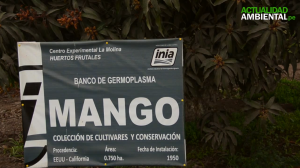 That would certainly be bad. But is it true? It does seem to be true that the ministry wants to build additional offices on its land in La Molina, and that the land in question holds fruit trees. But are the trees part of a genetic resources collection? That is not so clear. WIEWS confirms that Peru does indeed have multiple collections of mango, avocado and chirimoya, but none of them seems to be on INIA land in La Molina. Admittedly, collections are recorded from La Molina for two of those fruits, but they appear to be on the property of the nearby agricultural university, not INIA. The other collections are in other research stations in different parts of the country.
Of course, the information in WIEWS may be out of date. Discreet enquiries with sources in a position to know suggest that the unions may well be overstating their case, but I have been unable to find an official response from INIA. Meanwhile, the institute is busy setting up more genebanks. No, not in La Molina.
If anyone out there can help us get to the bottom of this, let us know. But while we’re on the subject of fruit tree collections, let me link to what I believe is a new(ish) version of the website of the National Fruit Collection of the U.K., which includes a handy database. You may remember that this collection, at Brogdale, also went through a period of uncertainty. Let us hope that the INIA collection, if indeed it is a collection, emerges from its vicissitudes as strongly as Brogdale has.