- The future of rice science. It says here.
- Is Holistic Management the SRI of livestock?
- Another online botanical database to contend with. Eventually.
- NASA maps poleward vegetation shift. I suspect the Progressive Cattleman will be onto that in a flash. See what I did there?
- More fancy aerial science, this time at the service of phenotyping. And more of the same.
- Ghana’s agricultural research system deconstructed. Would have been nice to mention the genebank.
- African food, in Africa and America. And in audio.
- Propagating tropical trees for fun and profit.
- The epigenetics of maternal nutrition, courtesy of USDA.
- Liberians showered in seeds.
- Kim, are you listening? This one’s for you.
- IPK reaches out to India.
Nibbles: Epigenetics, Cacao strategy, B4FN book, Seed systems book, Nutrition conference, Brit Brassica boffins bonanza
- Geographic patterns in epigenomic variation. Yeah, but in Arabidopsis.
- A global strategy for conservation. Yeah, but for cacao.
- That “Diversifying Food and Diets — Using Agricultural Biodiversity to Improve Nutrition and Health” book? You’ll be able to get chapters and case studies from a dedicated website nine months after publication.
- Not to be outdone, the Ethiopian Institute of Agriculture Research lets you download “Defining Moments in the Ethiopian Seed System.”
- New Agriculturist fillets out some contributions to a recent Economist conference on malnutrition.
- The Brassica research community gets together in the UK. Not many people hurt.
Brainfood: Diverse grasslands, More diverse grasslands, Latitudinal meta-gradients, Acacia barcoding, Cryoconserving recalcitrant seeds, Tree tomato, Modeling parasites, Landscape complexity & services, Genomics & breeding
Transgressive overyielding of soil microbial biomass in a grassland plant diversity gradient. Dead link. More microbial biomass in mixtures of plants than in each of the monocultures. Which I guess is a good thing?- Ecosystem function enhanced by combining four functional types of plant species in intensively managed grassland mixtures: a 3-year continental-scale field experiment. That transgression goes for the yield of the plants too. The mixtures were also more resistant to weed invasion.
- Latitudinal gradients as natural laboratories to infer species’ responses to temperature. Meta-analysis shows that many life history traits vary with latitude, but not necessarily with temperature.
- DNA barcoding for conservation, seed banking and ecological restoration of Acacia in the Midwest of Western Australia. Not quite there yet, is it?
- Preservation of Recalcitrant Seeds. We have the technology. Recalcitrance is not an excuse. And may not be as common as advertised anyway.
- Genetic diversity and relationships in accessions from different cultivar groups and origins in the tree tomato (Solanum betaceum Cav.). It is variable. It originated in Ecuador. Even the press release struggles to say much more than that. They should have asked the mother-in-law.
- Metabolic approaches to understanding climate change impacts on seasonal host-macroparasite dynamics. Fortunately, and yet suspiciously, it is easy to estimate the model parameters even when you don’t have much data.
- Flow and stability of natural pest control services depend on complexity and crop rotation at the landscape scale. You need complexity in both space and time to get the most out of your landscapes.
- Improving fruit and wine: what does genomics have to offer? A lot. But you have to be ready for it.
Pisang Seribu in the limelight
You know those websites which do nothing but reproduce photographs of weird and wonderful things, usually as a way of getting you to buy something, often weird but probably not very wonderful? Well, sometimes images get posted from there to Facebook or whatever, and indeed some go viral, no doubt resulting in huge profits for someone or other. The image I saw yesterday didn’t go viral, but it was certainly weird and wonderful enough to do so. It’s of a hugely long bunch of tiny bananas, and you can see it in the original place I saw it, but I’ll reproduce a better photo below.
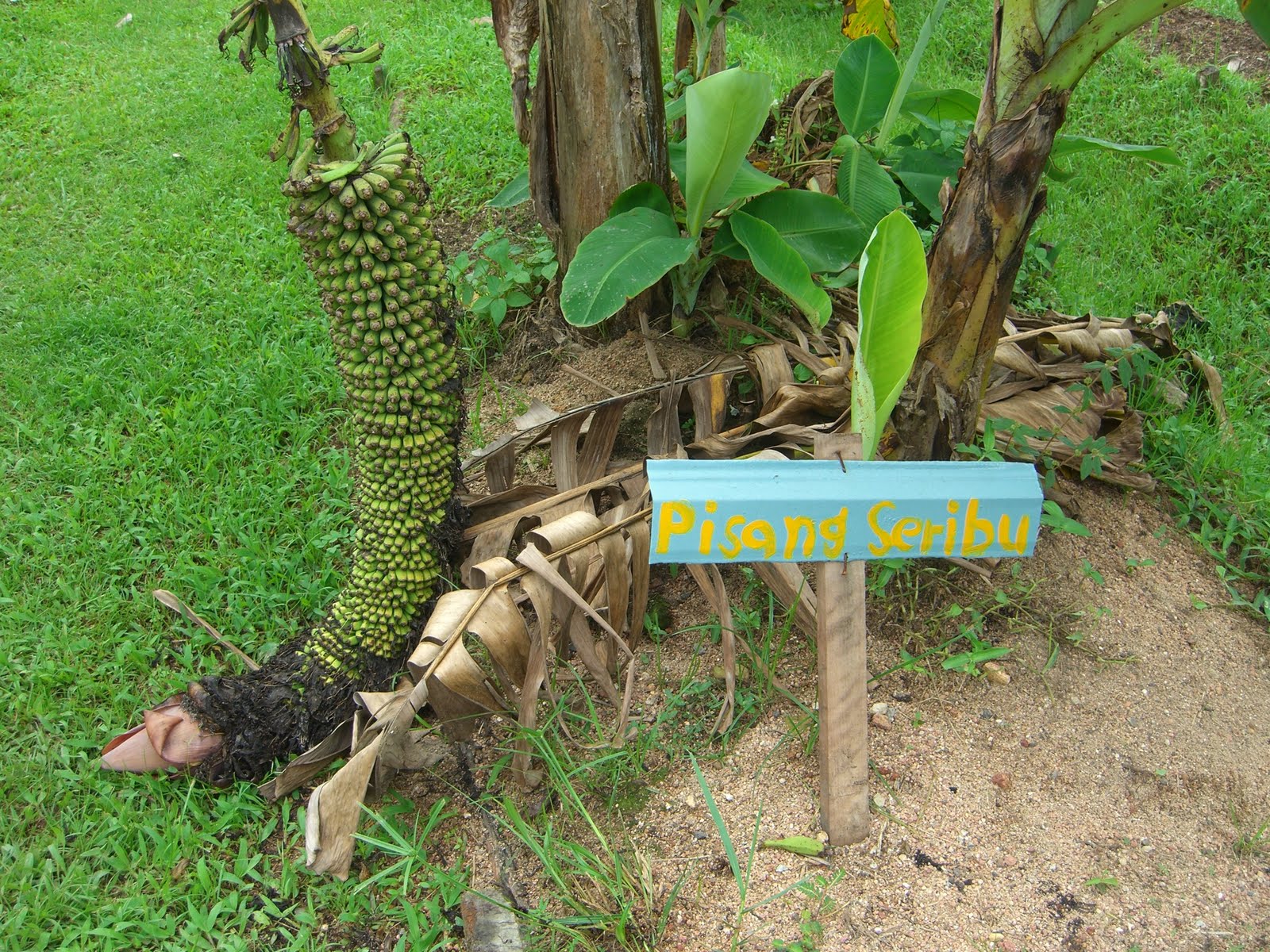
I was able to find it, 1 at a blog called Smell the Coffee, thanks to our friends at ProMusa. I posted the original link on their Facebook page, and also on Twitter, and within minutes I heard back with the full monty on our strange banana.
The cultivar is called Pisang Seribu in Malaysia and Indonesia, pisang being the Malay word for banana and seribu meaning a thousand. We have it on good authority that the fruit are ‘delightfully edible’. The other unusual thing about this cultivar, besides the high number of fruit, is that the latter didn’t develop from female flowers but neutral flowers, which usually wither away and do not develop into fruit nor produce pollen. Pisang Seribu doesn’t have a Musapedia page yet, but it is featured on the Cultivar Diversity portal… In Vietnam, it is called Chuoi Tram Nai. Chuoi is the Vietnamese word for banana, Tram means 100, and (I think) Nai means hands.
So maybe now the thing will go viral in the agricultural biodiversity community at least. Thanks to ProMusa.
Nibbles: Cornish pasties, Rice and fish, Wheat breeding, Diatribe, Hops, Bean-To-Bar, Geographic indications
- Yes, because the world desperately needs a map of “handheld, filled snacks from around the world.”
- Paddies and aquaculture go well together. But didn’t we know that already? And wait, synergise is a verb?
- Article with interesting-sounding title about the use of IT to monitor wheat diseases has nothing to do with using IT to monitor wheat diseases.
- Oh that’s enough for today, I’m just not in the mood. As you might have noticed.
- No, wait, I feel better now. Ah, the restorative power of beer and genebanks.
- And of chocolate.
- Which does not feature among the first three African PGIs.