- The land sparing vs sharing debate encapsulated in a controversy over San Francisco oyster farming.
- Bitter is good.
- BBC’s Farming Today on saffron in England, among other things.
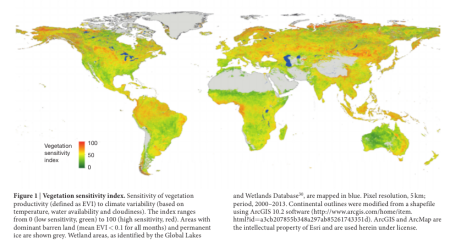
- Want sustainable development? Invest in agriculture.
- Growing weed: here comes the science.
- “When you chew on a Camembert rind, you’re eating a solid mat of mold.” And probably GM to boot.
- Why do I sound so totally unprepared?
- Breeding better blueberries.
Parsnip seeds of success
Whatever the ICRAF genebank can do to get germplasm out there, the Warwick Crop Centre can also do, though admittedly these seem to be improved varieties, developed in collaboration with the private sector:
Seed packs to celebrate @warwickuni50 – and highlights @WarwickLifeSci @WarwickCrop and @Elsomsseeds partnerships pic.twitter.com/Y4mukYZ7RQ
— UKVGB (@WarwickGRU) September 24, 2015
Nibbles: Nepal earthquake, Vavilov visit, Conservation strategies, Insects & markets, Hydrid breeding, Women & agrobiodiversity, Indian minor crops, Wes Jackson, Drought tolerance, Wheat shindig, Industry support
- Getting the right seeds to Nepali farmers.
- An organic farmer visits the Vavilov Institute.
- Conservation: beyond hotspots, beyond markets.
- Letting the market deal with insect foods.
- Hybrids 101.
- Tamil Nadu women millet farmers show us all how it’s done. In Milan.
- Climate change? Let them eat rice bean.
- End of an era at the Land Institute.
- And the biggest environmental footprint goes to…lamb.
- Drought tolerance: a geneticist explains.
- International wheat meeting in the news.
- How does the European seed industry support crop diversity conservation and use? Let me map that for you.
Brainfood: Cowpea evaluation, Varietal mixtures, Eragrostis core, Nigerian cassava diversity, Turkish alfalfa, Italian wild grapes, Cleome veggie, AnGR history
- Genotypic difference in salinity tolerance during early vegetative growth of cowpea (Vigna unguiculata L. Walp.) from Myanmar. 3 out of 21 seems a pretty good proportion.
- Epidemiological and evolutionary management of plant resistance: optimizing the deployment of cultivar mixtures in time and space in agricultural landscapes. Best to combine with rotations.
- Barnyard millet global core collection evaluation in the submontane Himalayan region of India using multivariate analysis. Three groups: India, Japan, and everything else.
- Determinants of on-farm cassava biodiversity in Ogun State, Nigeria. Experience and size of farm.
- Historical Alfalfa Landraces Perform Higher Yield Under Dry Farming in Turkey. At least at these two locations in Kars. One does wonder why breeders bother, though.
- Identification and characterization of Vitis vinifera subsp. sylvestris populations in north-western Italy. Was thought to be lost in Piedmont, but 5 small wild populations found, in danger of contamination from the crop.
- Cleome viscosa: a promising underutilized minor crop. Worth a try, though the name is hardly promising.
- Changing values of Farm Animal Genomic Resources. From historical breeds to the Nagoya Protocol. Everything is political now. Welcome to my world.
Innovating in the Andes
Transferring the Potato Park’s potato collection to the Svalbard International Seed Vault (collaborative innovation). The transfer to the International Seed Vault in Norway, near the North Pole will protect the varieties in the event of a global crisis. While this is seen as a largely symbolic action, the transfer serves also to strengthen the Potato Park’s membership of the FAO Treaty multilateral system, raise international awareness of the growing concerns of Peru’s potato farmers and promote a balanced relationship between in situ and ex situ conservation strategies. ANDES and CIP have supported the application and the production of botanical seeds by the farmers (as opposed to seed potatoes).
Coudn’t have put it better myself. So I’m glad IIED did, together with lots more on other biocultural innovations coming out of the Parque de la Papa.