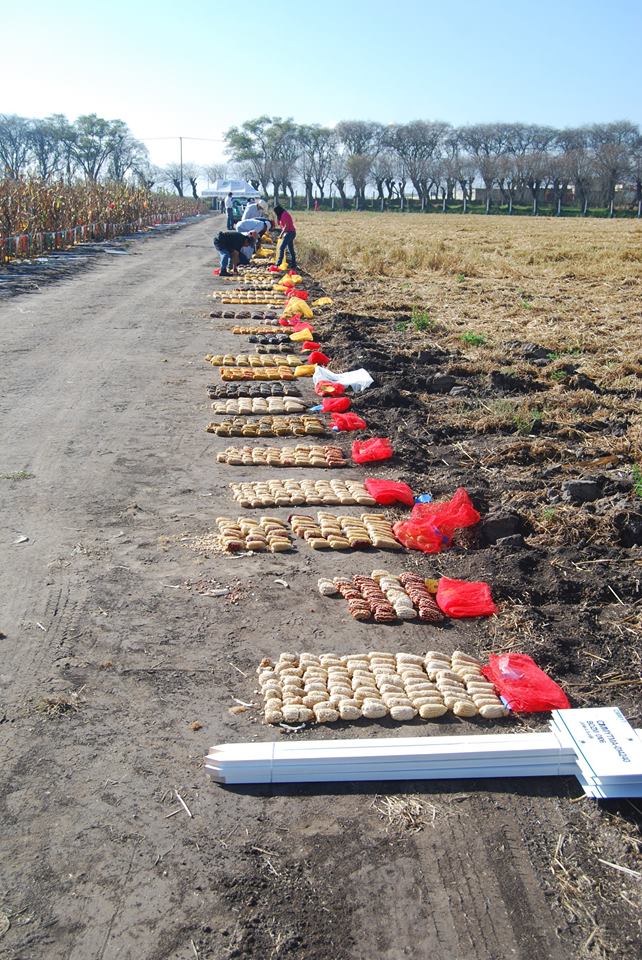
 Readers may remember that last Friday was the day to be in Toluca, Mexico to see high-latitude Andean maize varieties being multiplied up by the CIMMYT genebank for the very first time. Well, Dr Denise Costich, who is in charge of that genebank, now tells us that it all went off without a hitch. I hope she won’t mind me reproducing her post and one of her photographs here for any maize aficionados who are not on Facebook.
By all accounts, our “Day of High-Altitude Maize” was a success! It was a bit crazy, with our catalogs arriving at the field just before our participants, but, they turned out well in the end. It was great to have Tom Payne and his team from the CIMMYT Wheat Bank there, and also Darell Sison, whom I really appreciate for his enthusiasm and interest in what we do. Tremendous thanks to my team, who worked really hard getting everything ready, and participated fully in the activities on the day–answering questions, acting as guides setting up the displays, taking everything down (very rapidly) as the rain clouds rolled in, etc. That includes Marcial Rivas, Cristian Zavala, Eduardo Velázquez and Paulina Gonzalez, among many others! A special shout out goes to Alex Velazquez, who helped out on so many different things–the invitation, the catalog, all were improved because of his dedication. We had a great discussion afterwards, making lists of what we did well, and what we need to improve…we’re already planning the next field day! the only thing we are really sad about is that we were so busy, we didn’t remember to take a photo of the Maize Bank staff–for the first time ever we had the whole permanent staff, from all three stations, in one place…here are a few photos to capture a bit of the action…
By the way, the maize genebank at CIMMYT does have a Facebook page, so if you want to follow their activities, go and “like” it.
Talking of the genebanks of CGIAR and their fieldwork, the week before last I was in Morocco seeing at first hand how another centre, ICARDA, is organizing itself now that access to its buildings and fields at Tel Hadya near Aleppo is so problematic. ICARDA now has a North Africa Platform, based in Morocco, bringing together most of its breeders as well as the genetic resources section. The Institut National de la Recherche Agronomique (INRA) has given the centre 100 hectares at the Marchouch Station for use by these programmes. Here’s what the fields looked like about a week ago, ready for use for upcoming breeders’ trials and various genebank activities.
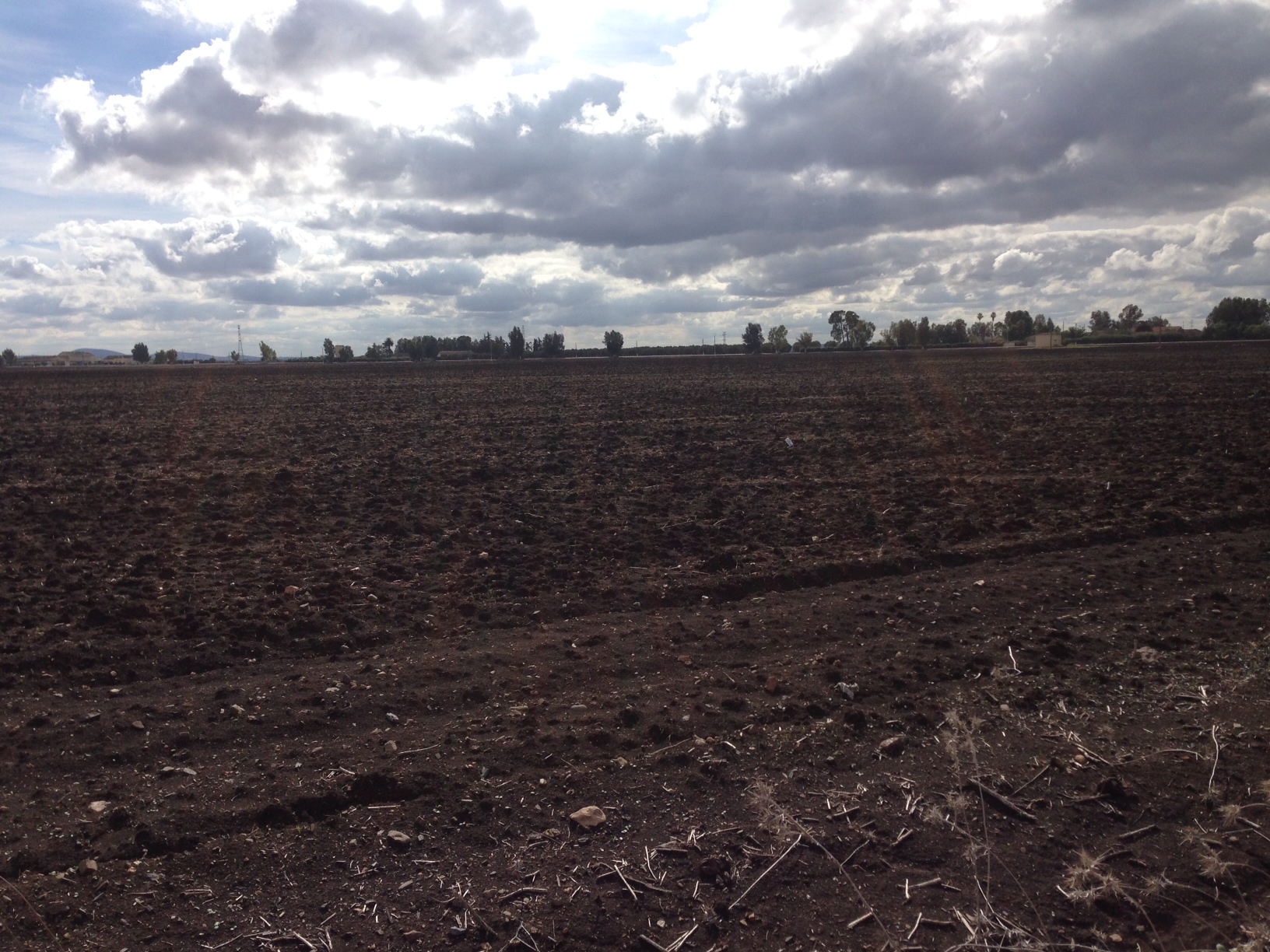
The actual station is in the distance, among the trees. Staff there were busy preparing seed when we visited.
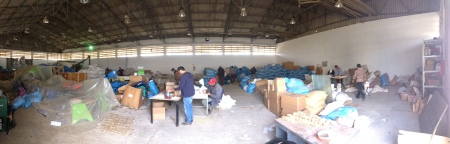
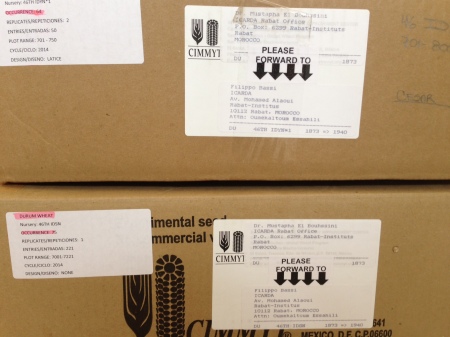
Those seeds included international nurseries from that other CIMMYT genebank, the wheat one, mentioned by Denise. 1 Here’s proof, if any were needed, that collaboration among CGIAR centres, and especially their genebanks, is alive and well.
Best wishes to ICARDA in general, and the genebank in particular, on its strategic decentralization, and its exciting new relationship with the national programme in Morocco. And congratulations to CIMMYT for what sounds like a very successful outreach activity in Toluca last week.