- Food sovereignty — or lack of it — in the Pacific.
- That should probably start with taro.
- Could the banks help?
- Or blockchain?
- How about an international year?
- And better seed laws?
- Let’s change the subject…
- ICARDA durum breeders run towards the problem, use wild relatives, win prize.
- Wild relatives are good for chickpea improvement too.
- Don’t worry, if we lose an animal breed, we can always get it back. Kinda sorta.
- Source of information on heirloom varieties. Yes, there’s probably something similar for pigs.
Nibbles: Problematic edition
- That claim of Neolithic Georgian wine is, ahem, problematic.
- Yam cultivation can be, ahem, problematic.
- Neglecting women in breeding programmes can be, ahem, problematic.
- Khat cultivation is, ahem, problematic.
- Post-conquest depictions of the cacao plant were, ahem, problematic.
- Imperial plant collecting was, ahem, problematic. But the BBC doesn’t care.
- I find the claim that the potato saved Europe from war, ahem, problematic.
- No problem at all about cooking taro.
Vavilov everywhere
A couple of weeks ago, the N.I. Vavilov Institute of Plant Genetic Resources (VIR) held the IV International Vavilov Conference “N.I. Vavilov’s Ideas in the Modern World.” I don’t know if the presentations will go online at some point, but I do have a hardcopy of the abstracts volume and could send a scan if anyone is really interested I suppose. 1 I hope that that doesn’t turn out to be a hostage to fortune.
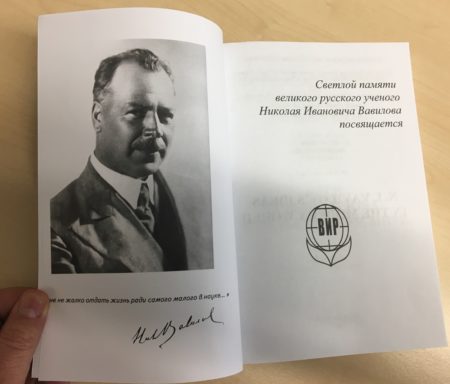
And let me take the opportunity of thanking the Biological Journal of the Linnean Society for making the contents of the N.I. Vavilov Centenary Symposium from 1990 freely available.
Nibbles: Orphan edition
- The Economist jumps on the genomics-for-orphan-crops bandwagon.
- But is phenomics more important?
- And seed systems, don’t forget seed systems…
- Some of those orphan crops may get an International Day, if India has anything to do with it.
- Immortelle is as orphan as they come, but maybe not in Croatia any more.
- Amaranthus never really went away, not in Mexico.
- Persimmon, meanwhile, is being adopted by the snack industry in the US. But the Japanese are way ahead.
- Some think yerba mate is not orphan enough.
- Is yam an orphan. It depends on what your definition of is is.
- Avocado is the opposite of orphaned in Mexico. It is spoiled rotten.
- Many orphan crops are women’s crops. Case in point: enset.
- Orphan is a relative term, and reversible.
- Exhibit B: sweet potato.
- People often take their orphan crops with them. Even in antiquity.
- Coconut is fast becoming an orphan in Tanzania.
- With 32 cultivars available to grow in Louisiana alone, nobody can say lettuce is an orphan.
- Mexico and Brazil collaborate on crop diversity conservation. Including orphan crops?
- One thing that is probably not a huge priority for orphan crops is their wild relatives. Just saying.
- Anyway, we’re going to need all the orphan crops we can get if James Cameron’s titanic vegetarian utopia is to come true.
Nibbles: Joanne Labate, Gebisa Ejeta, David Spooner, Strawberry 101, Mad honey, First figs, Agrobiodiversity maps, School project, Takesgiving, Private investment
- USDA vegetable crop curator tells it like it is.
- $5 million to find more Striga resistance genes in sorghum.
- Wild potato herbarium specimens find good home.
- How two New World strawberries got together in the Old World and then spread all over the world.
- Hallucinogenic honey: what could possibly go wrong?
- First farmers gave a fig.
- The other of all agrobiodiversity map mashups.
- Cool school project on crop diversity in Europe.
- In other news, “Columbusing” is a thing.
- Private sector investment in conservation: Turning “small and new” into “big and familiar.”