- Environmental health impacts of feeding crops to farmed fish. Wild fish is being replaced by plant-based food, which is both good and bad.
- Traditional Banana Diversity in Oceania: An Endangered Heritage. Pacific starchy bananas are all AAB, but fall into 2 genetic subgroups and 3 morphotypes. Persistence of diversity is linked to persistence of traditions.
- Gene-based SNP discovery in tepary bean (Phaseolus acutifolius) and common bean (P. vulgaris) for diversity analysis and comparative mapping. Two groups in domesticated teparies, plus the even more distinct wild. Close similarity with common bean means genes could be moved between the two species.
- Unlocking the genetic diversity of Creole wheats. Wheat has had long enough to adapt to different Mexican environments.
- Enhancing Legume Ecosystem Services through an Understanding of Plant–Pollinator Interplay. Legume breeders should consider functional floral traits.
- Genetic Relationships among Tall Coconut Palm (Cocos nucifera L.) Accessions of the International Coconut Genebank for Latin America and the Caribbean (ICG-LAC), Evaluated Using Microsatellite Markers (SSRs). The Brazilian material came from Africa.
- Characterization of Natural and Simulated Herbivory on Wild Soybean (Glycine soja Seib. et Zucc.) for Use in Ecological Risk Assessment of Insect Protected Soybean. If transgenes conferring insect protection were to escape to the wild soybean in Japan, it would probably not have any effect on its weediness.
A tomato comes back home
The return to its native land of an historic tomato variety developed by the famous wheat breeder Nazareno Strampelli is making a splash in Italy. Originally published in the rather specialized organ L’Iformatore Agrario, the news has now been picked up by the more mainstream media, at least regionally.
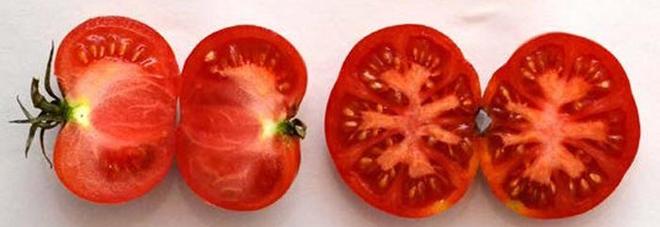
What’s particularly interesting to us here is that Varrone, as the variety is called, was eventually found in the genebank of the Vavilov Institute, in St Petersburg, Russia.
“It is a small tribute to the memory of Strampelli on his 150th birthday: from tomorrow it will be possible to eat spaghetti Cappelli-Varrone, 100% Strampelli, not only for the durum wheat but also for the tomato sauce,” says Roberto Papa, professor of agricultural genetics at the Università Politecnica delle Marche, who coordinated the research in collaboration with Sergio Salvi, biologist and biographer of Strampelli, and Giovanna Attene professor of agricultural genetics at the Università di Sassari.
The durum wheat variety Senatore Cappelli was also bred by Strampelli in the 1910s, and remained popular for decades. I’m sure Strampelli would have been pleased that his tomato has been found. Not so sure what he would have thought about losing it in the first place.
Nibbles: CC & death, GBIF enhancements, Killer fungi, Lion trees, Old oaks, Gourmet ganja, Wild horses, Resistant cassava, Contested agronomy, p-values
- Climate change is going to hit us where we live. Or die.
- How to make GBIF more relevant for agrobiodiversity: a 10-point plan.
- Killer fungi on the loose? ‘Twas ever thus. But genomics will save us?
- Planting trees is good for lions too.
- There are still medieval oaks in England.
- “…where sommelier-like ‘budtenders’ sell gourmet ganja in a designer showroom.”
- Rewilding the wild horse.
- More about the cassava variety Kasetsart 50, poster child for CGIAR impact.
- It’s not just genetic resources that are contested. Yep, agronomy too.
- “Scientific conclusions and business or policy decisions should not be based only on whether a p-value passes a specific threshold.”
Nibbles: Variety names, Biotech infographic, Satoyama, Wendell Berry, Eating bugs
- Mike Jackson wants to know how many crop varieties you can name. Please tell him. My number is 42.
- This is what CRISPR looks like. In an infographic, that is.
- Japan’s rice terraces were better for biodiversity when they were, you know, full of rice.
- A Wendell Berry biopic?
- Yep, more on eating insects. It’s definitely a thing now.
Nibbles: Salumi, Skirret, Bananas, Potatoes, Cotton, Aurochs
- How to tell your prosciutto cotto from your crudo.
- How cotton got to be cotton. Or cottons, actually.
- How to grow skirret.
- How to save bananas and potatoes.
- How to bring back the aurochs.