- If you can map neglected diseases by phone, can you map neglected crops? I bet you can.
- It’s the turn of Samoans to be chided for not eating enough leafy greens.
- I had no idea AfricaRice had a podcast.
- Now we gotta worry about G&T too? Enough, already.
- Video on the wild yams of Sri Lanka. Not just yams, though, by the look of it.
- 100 recipes to understand the history of food? Count me in.
- More on the Polymotu Concept from our friends at SPC. Great gig if you can get it.
Nibbles: Dog genome, Ancient beer, Ancient bread video, Breadfruit funding, Chilean plum yew, Quinoa at FAO, Nutrition & ag, USAID policy, Tea diversity
- Dog domestication explained. In a bunch of different, mutually incompatible ways, but what the hell.
- But don’t worry about that, revel in this ancient beer infographic. Ancient beer, not ancient infographic. And more: can never have enough about ancient beer.
- And speaking of ancient foodstuffs, how about bread? Jeremy unavailable for comment.
- Bread too mainstream? Why not support breadfruit planting for food security? You can. But make sure you tell them to plant lots of different varieties.
- Or how about the Chilean plum yew tree, for that matter.
- Breadfruit and Chilean plum yew tree not mainstream enough? FAO not losing faith with good old quinoa. Oh no siree. There’s even a series of tasting events here this week.
- You want more nutrition, I’ve got more nutrition: here’s how to improve nutrition through agriculture in 10 easy steps, and here’s how we’re doing in monitoring how well we’re doing in improving nutrition through agriculture.
- Which is comprehensively ignored by USAID’s new Biodiversity Policy. Agriculture, that is. USAID handles support to the CGIAR, so they should know about agrobiodiversity and its conservation. Not really good enough. But hey, you can send in your comments.
- Nice pics of how people drink tea around the world. Could do with some myself just now actually, after that little lot…
Nibbles: Indigenous conservation, Rice and conservation, Amazon medicines, Organic products, Sustainable oysters, Cherfas at Seed Savers, Calestous Juma, Cassava website, Israeli agritech, Fragaria breeding, Catacol whitebeam, Weather sensors, FAO Commission & Conference, Amartya Sen
- A toolkit to help indigenous communities do conservation. Should they need one.
- On the other hand… Half of Japan’s endangered species hotspots are found in satoyama, which are under pressure. Compare and contrast with rice farming in Thailand.
- Learn all about some medicinal plants of the Amazon, minus their scientific names. Not including runa tea. Lots of other opportunities out there, though.
- Maybe even including oysters.
- Jeremy no doubt to feast on the mollusc after spilling the beans on the EU seed regulations at the Seed Savers jamboree.
- Wonder what Calestous Juma thinks of those regulations.
- But I bet he (and his father, who introduced the crop to his region of Kenya) would like this cassava website to rule them all.
- The Volcani Institute‘s gifts to the world…
- …probably include new strawberries, but not this one.
- Scientists straining, failing to find plant to meaningfully compare to the giant panda.
- Bioversity does up its iButtons.
- And gets a namecheck in a paean to the FAO Commission on GRFA on its 30th birthday. All this FAO stuff is because its Conference is on this week. I don’t suppose any of it will be more important than Amartya Sen’s speech.
The state of chickens
Luigi pointed me to a nice graphic poster of the officially approved bird for all 50 of the United States. Among them, I noticed two chickens, for Delaware and Rhode Island. Rhode Island might seem obvious enough, the Rhode Island Red being almost the canonical farmyard bird.
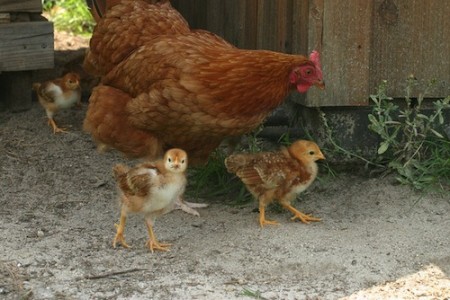
But Delaware, not so much.
In fact Delaware was one of the biggest poultry and egg producing states in the Union. Sussex County DE, where the modern broiler industry began, still holds the record for egg and poultry sales, “with $707 million, or 1.9 percent of the total U.S. value” in 2007. That’s almost 2% of the value from 0.024% of the land. But Delaware’s state bird – the Blue Hen Chicken – is not one of the squillions (many of them carrying Rhode Island Red genes, I’ll warrant) that contribute to Sussex County’s top cock status. It isn’t even a real breed. 1
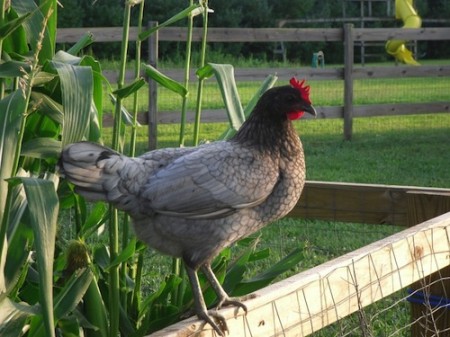
Nope; apparently Delaware’s blue hen chicken is a reminder of the Revolutionary War. Exactly how remains uncertain. Cock-fighting was common there at the time, and the Delaware Regiment may or may not have carried feisty blue gamecocks into battle, may or may not have been as feisty as a blue gamecock, and may or may not have looked like a flock of feisty blue gamecocks in their natty uniforms. There is a flock of blue hen chickens at the University of Delaware, whose mascot is the blue hen chicken, but it was created in the 1960s by H.S. Hallock du Pont, and has not been recognized as a proper breed, perhaps because it does not, in fact, breed true. Yet.
Nibbles: Pretty, Peak soil, Wine history, Ancient foodways, Offal, Durian, Exotic plant foods, Cassava, Mozzarella, Nutrition report, Superfoods
- Jules Pretty meditates on the impermanence of things.
- Like soil. And bumblebees.
- Ah, well, let’s not get maudlin. Pass the bottle. Well looky here. The French got wine from the Italians. I feel better already.
- And Canadians had clam gardens a thousand years ago. Probably still do, actually.
- Along with offal, no doubt. Which did not, however, seem to play any role in a recent Mesolithic dinner. Though French wine did. Which is weird.
- The best fruit in the world gets the Kew treatment.
- And is included in a weird list of the 100 weirdest food plants.
- Cassava‘s pretty weird too.
- The best cheese in the world is not French either.
- All of which foods no doubt feature in FAO’s new report on nutrition. Which is really important, so don’t let the flippancy fool ya. The Lancet agrees. And you can do your bit too.
- Ah, but does quinoa feature in that FAO report? The backlash continues…