- Touring the world’s coffee processors.
- Liquorice next? Starting in the UK?
- India has 30% of the world’s cattle. Which you might not be able to guess from these very cool ILRI maps. Including one on chickens, in which the Nordic countries feature perhaps less than they should.
- The Global Nutrition Report will have these indicators at country level. Some stuff there on fruit and vegetable consumption, but why nothing specifically on dietary diversity? Anyway, if you’d like to make suggestions, you can.
- Wait, why is there nothing on alcohol consumption? And is diversity in alcohol-producing plants a good thing? I mean, nutrition-wise.
- Uhm, nothing on urban agriculture either. I bet you that’s an indicator of something or other, nutrition-wise.
- Maybe Amy Ickowitz of CIFOR will suggest some indicators. She has interesting data on forest cover and child nutrition.
- How to make cacao cultivation more sustainable.
- Andy Jarvis on how to scale up climate-smart agriculture without necessarily sacrificing goats. Nor, presumably, nutrition.
- Model says environment can support subsistence hunting and agriculture only up to a point, and no more. Still no cure for cancer. But did someone tell the Mapuche?
- Well, what do you know, genes come, and genes go.
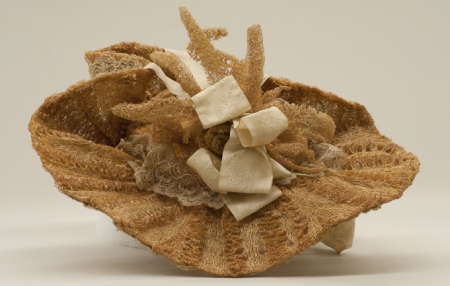
What does a bonnet gourd look like?
Tucker on 'Bonnet Gourds', 1874: "the women in the Southern States split it and made up very pretty and useful head coverings or bonnets"
— Kew Gardens Library and Archives (@Kew_LAA) July 14, 2014
This 1 seems to refer to Luffa, but does anyone have photos? I’d love to see what these bonnets look like, but unfortunately Google is not being very helpful. Gourds are inevitably much on my mind after my trip to PNG…
LATER: And here it is, thanks to Eve Emshwiller:
Brainfood: Landscape preferences, Livestock selection, Romanian conservation, Nordic Horseradish, Social structuring, Darjeeling tea, ZFarming, Pineywoods cattle, Cotton breeding, Neglected veggies
- Public preferences for ecosystem-enhancing elements in agricultural landscapes in the Swiss lowlands. People don’t like complex agricultural landscapes as much as they should. Well, in photos anyway.
- Some traditional livestock selection criteria as practiced by several indigenous communities of Southern Ethiopia. The selection methods of elders are based on characters that correlate with production and reproduction efficiency. Now there’s a shocker.
- Needs and gaps in the conservation of wild plant genetic resources for food and agriculture in Romania. 4 out of 300 useful wild species may need better protection. Sounds like a pretty good score to me.
- Genetic diversity in Nordic horseradish, Armoracia rusticana, as revealed by AFLP markers. Each Nordic country has pretty much its own.
- How social organization shapes crop diversity: an ecological anthropology approach among Tharaka farmers of Mount Kenya. Diversity of crops and of sorghum landraces is structured socially, with neighbourhood groups being an important organizing principle.
- The labor of terroir and the terroir of labor: Geographical Indication and Darjeeling tea plantations. GI has worked because marketing has convinced people that industrial plantations are also idyllic gardens, but the workers know better.
- Urban agriculture of the future: an overview of sustainability aspects of food production in and on buildings. You need to work at it.
- Long in the Horn: An Agricultural Anthropology of Livestock Improvement. “Livestock as landscape” in the southern US.
- Usefulness and Utilization of Indian Cotton Germplasm. Need to try chemical and physical mutagenesis as well as bring in new diversity from abroad. Do I detect a slight whiff of desperation?
- Potential and biodiversity conservation strategies of underutilized or indigenous vegetables in Himahal Pradesh. Improve provision of planting materials, management practices, harvesting methods, post-harvest , marketability, nutritional status and policies and legal frameworks. Really? Is that all? I suspect anyone into NUS could have told you that before you even went into the field.
Brainfood: One Thai rice landrace, Adding value to coffee, Dairy cattle in Mexico, Sugarcane core, Bermudagrass salinity, Developing the Tibetan plateau, Amazon oil palm, Pollinator diversity
- Natural and human-mediated selection in a landrace of Thai rice (Oryza sativa). There is selection, but that’s counteracted by exchange and diverse agronomic practices. The result is diversity, but structured.
- Trademarks, Geographical Indications and Environmental Labelling to Promote Biodiversity: The Case of Agroforestry Coffee in India. Adding value locally is the only way to stop a really lucrative cash crop destroying the forest.
- Characterization of dairy cattle germplasm used in Mexico with national genetic evaluations in importing and exporting countries. Bringing in diversity from another country is not always the best approach.
- Phenotypic characterization of the Miami World Collection of sugarcane (Saccharum spp.) and related grasses for selecting a representative core. 300 accessions will do. That’s a bit more than 10% of the total.
- Genetic variation of salinity tolerance in Chinese natural bermudagrass (Cynodon dactylon (L.) Pers.) germplasm resources. There is some. Good for all those golf courses.
- The sustainable development of grassland-livestock systems on the Tibetan Plateau: problems, strategies and prospects. There are 19 things to do, and genetic resources are important across the board.
- Status and prospects of oil palm in the Brazilian Amazon. On already deforested land, for biofuel. What could possibly go wrong?
- Bee Species Diversity Enhances Productivity and Stability in a Perennial Crop. That would be the highbush blueberry (Vaccinium corymbosum). Can we take this for granted now?
Nibbles: Dryland agroforestry, Parmigiano DOC, Killer tomatoes, Purslane salad, Breadfruit $, Community seedbanks, Kiribati under water, Landscapes
- At the risk of annoying Dave Wood again, here’s something on agroforestry in Africa.
- A podcast on what it takes to make parmigiano reggiano.
- Speaking of Italian agricultural products, it’s not all sweetness and light.
- But can you put purslane on pizza?
- Funding breadfruit.
- Community seed banks take off in India.
- Kiribati will need some too. But in Fiji.
- The Landscapes for People, Food and Nature Initiative is on Slideshare. Not much comfort for Kiribati, I suspect.