- Community local knowledge confirms scientific findings on climate change. (Or vice versa?)
- A CIAT video on “the potential of particular forage crops for improving guinea pig production, improving rural nutrition and incomes, and empowering women” in DRC.
- Sustainable eel label. Like that’ll help. h/t The Tracing Paper.
- The small scale farmer who is also Director of Communications and Public Affairs for AGRA runs into a seed shortage. So she plants an unsuitable maize variety and hopes for the best.
The Pahiyas festival
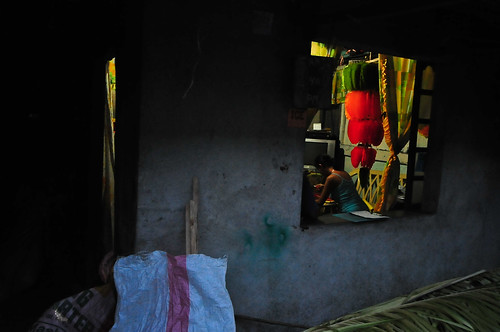
“Pahiyas is a Filipino term that means precious offering and predates the Spanish colonial period of the country by several centuries. This celebration was originally an animistic ritual practiced by the pre-Christian Filipinos to honor their rice god, Ampo’t Paray, and to ask for bountiful harvests in the coming year.”
Nibbles, Menu edition: Garlic, Potatoes, Meat, Tomatoes, Ramps, Bananas, Chocolate, Coffee, Pepper breeding, Local cattle in RSA
- Chicago, Chicago, it’s an edible town. Major urban centre named for edible wild species shock.
- Drought-resistant potatoes! At least 1000 genes involved.
- Test-tube burgers? 1
- Wild tomatoes and climate change. A meeting round-up from our chums at CIAT.
- The appeal of fair trade bananas. A good read.
- Technical Guidelines on the Safe Movement of Cacao Germplasm updated.
- Coffee, please. A cup of your finest specialty variety.
- Caribbean pepper breeders getting hot under the collar.
- Gotta love the way Farm Radio Weekly not only has great stories about agrobiodiversity, but also handy background notes.
Well, that was fun.
Nordic chefs exploring Nordic foods with Nordic genebank
I was intrigued by a reference to a genebank in a restaurant review in the Wall Street Journal. Not just any restaurant, but the best restaurant in the world, Noma in Copenhagen, which is “is best known for its fanatical approach to foraging.” Here’s the reference:
Noma helped found a Nordic Food Lab, which has a gene bank that is collating information about the wild products in the region.
Nordic Food Lab does indeed sound interesting (especially its fermentation trials):
Nordic Food Lab is a non-profit self-governed institution established by head chef of Noma, Rene Redzepi and gastronomic entrepreneur, Claus Meyer with the purpose of scientifically exploring the New Nordic Cuisine and disseminating results from this exploration.
But they’re not really establishing a genebank, as suggested by the WSJ piece.
We are collaborating with Nordgen, the amazing bank of genetic material, to evaluate the gastronomic potential of bygone varieties of Scandinavian produce. We will publish our sensory evaluations as they are completed. This promises to be an extremely interesting project; many modern species are produced on other merits besides flavor, and we expect intriguing findings.
Much more sensible.
Bananas on TV and the blogosphere
In Africa, political parties must stop using real banana leaves as their symbol at rallies or on buses…
Why? Pat Heslop-Harrison explains the reason, and much more, in a great new post at AoB Blog. The occasion is the 13 May edition of the BBC TV programme The One Show, which included an interview with Dr Heslop-Harrison by journalist, food critic and TV personality Jay Rayner. With links to a couple of freely available Annals of Botany papers and a presentation too.
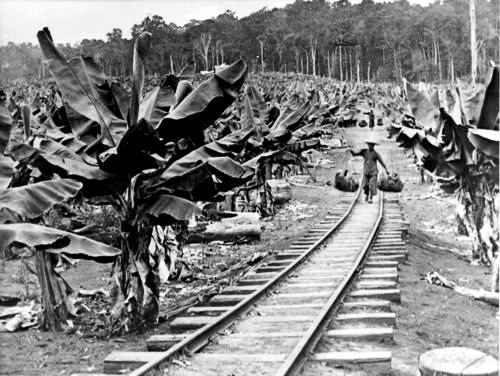
LATER: Let’s not forget the importance of banana for brewing beer in parts of Africa.