The “AgKnowledge Africa Share Fair” is off and running at the International Livestock Research Institute (ILRI) in Addis Ababa, and will continue until 21 October. You can follow proceedings in all sorts of web 2.0 ways, detailed on the blog. There’s no specific “learning pathway” on agrobiodiversity, but that’s ok, there’s still plenty of interest to us here. Including a “food fair” which will focus on “sharing the indigenous/local content embedded in African food.” Wish I was there for that!
Nibbles: Milk-drinking, Diversity and stability, Indian sheep, Development of the African savannah, Teaching rice, Silk, Diverse diet, Huge phallic inflorescences
- Der Spiegel does its usual impressive number, this time on the Völkerwanderung. Via.
- Diversity and stability in grasslands. Yes, there’s a connection.
- Sheep breeds in India deconstructed.
- The future of the Guinea savannah. Probably not that great.
- IRRI teaches Singaporean cityslickers to grow rice.
- Silk beginning to fade where it was born.
- The diverse benefits of an agrobiodiverse diet. Should someone tell rich Indians?
- Tales of two giant inflorescences. What are the odds?
Nibbles: Abalone, Yak, Forests, Mountain plants, Yams, Ulmus, Apple, Banana
- We now know how to harvest abalone sustainably. Is there anything we cannot do?
- Wild yaks get assessed. Wait, there are wild yaks?
- “…forests played a central role in the rise of the modern state.” Not as flaky as it sounds.
- Andean plants at risk from, well, everything.
- Yams in Nigeria, from festivals to in vitro.
- London’s elms.
- “[L]ike biting into a perfume bottle, but without shards of glass piercing your tongue.” A knobbed russet.
- Banana evolution just got more complicated.
Bananas in the Solomons Islands
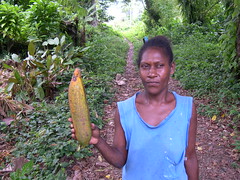
The Solomon Islands is one of the birthplaces of bananas – plants that grow only by human hands, for they have been bred to lack the ragged, rock-hard seeds of their wild ancestry – and there are more kinds of bananas here than there are types of breakfast cereal in an American supermarket.
Giant southern curled mustard in the Traditional Croplands
I couldn’t identify one of the plants in the Traditional Croplands exhibit at the National Museum of the American Indian, but a quick post on their Facebook page solved the puzzle. Here’s the plant.
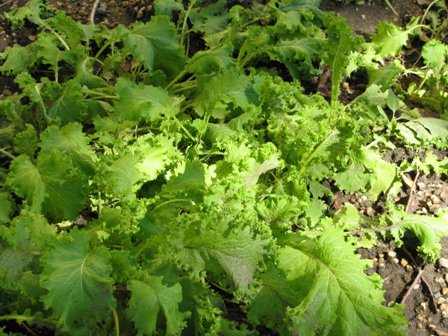
It turns out to be Giant Southern Curled Mustard, which GRIN suggests is Brassica juncea subsp. integrifolia var. crispifolia. This is described as an “old southern favourite,” or words to that effect, by many of the heirloom seed merchants I consulted online. There is also an ethnobotanical record online of the species being used by Native Americans, but only as a medicinal, at least in the book I was able to consult. Perhaps it is a relatively recent adoption.