- No more mopani worms in Zimbabwe. Luigi distraught.
- More tosh on Svalbard. Nobody distraught.
- Chestnut blight threatens UK chestnuts. Castanophiles distraught.
- The oily charms of West African cuisine. Did someone say “oily”?
- Another big panel of the great and the good has issued a deafening report; Gordon Conway, panellist, tells us “How to create resilient agriculture“.
- DFID fertilises Vietnamese mushroom farms. Kept in the dark and fed manure?
- Yacon spotted in Malaysia. Just ask for snow lotus fruit.
- The World Bank has published a Sourcebook on Agricultural Innovation. So can we all go home now?
- Step inside the Millennium Seed Bank. A video.
- ProMusa disentangles Pacific bananas, the better to conserve them.
Chatting about agrobiodiversity
Everybody all ready for their close-up? Only a few days to go…
Nibbles: Cassava value addition, African food project, ITPGRFA, Filipino bananas, Plant Cuttings, Seed schools, Refugee gardens, Fisheries double, Cherry blossoms
- Projects I should probably know about but had never heard of, no. 37: Cassava: Adding Value for Africa (C:AVA).
- Projects I should probably know about but had never heard of, no. 38: African Food Tradition rEvisited by Research (AFTER). Mopane left unvisited, though, alas.
- More from the ITPGRFA Secretary Down Under.
- From genebank to farmers: bananas in the Philippines.
- Things are looking up: there’s a new Plant Cuttings out.
- We should all go back to seed school. Hey, just tell me where.
- Family gardens for refugees. And for urban folk in Ethiopia.
- Learning from the past in order not to repeat it, Vol. 88: Sustainble fisheries. Repeating it anyway, Vol. 565543 coming all too soon. No, wait, here it is…
- It’s that time of year again, isn’t it. Spring. Bah, humbug.
Nibbles: Musa, Millennium Seed Bank, Cassava conference & blog
- The banana in the Pacific. Including those orange ones…
- Swapping seeds at Kew. A genebank reaches out.
- Gosh is that all today? Looks like it. You guys out there have anything?
- No, wait, here’s something else. Huge cassava conference coming up, with its biodiversity on the agenda. These guys will probably be there.
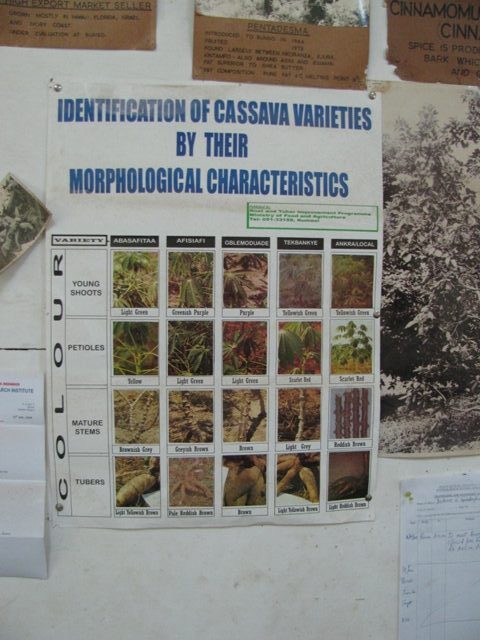
Cassava varieties in Ghana
Call me old-fashioned, but I have a soft spot for this kind of poster. This particular example was at CSIR’s Plant Genetic Resources Institute, Bunso, Ghana. Beats an SSR dendrogram thingie any time.