An online home for sweet potato information

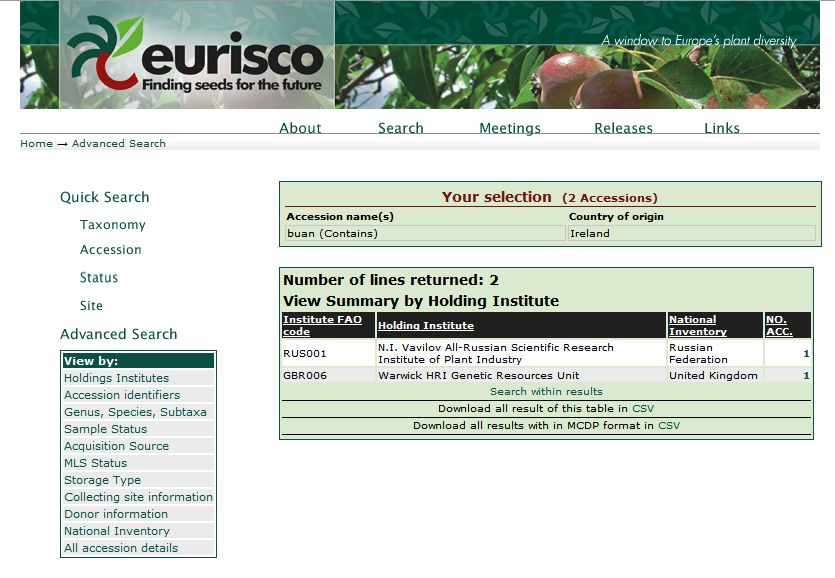
There’s a new online Sweetpotato Knowledge Portal. Lots of stuff on germaplasm conservation, breeding, seed systems, value addition etc. It really does look quite interesting, but, frustratingly, I have no idea who’s behind it. Institutionally, that is. There’s not a logo in sight anywhere. Seems to be driven by sweetpotato researchers themselves, many, but by no means all, at CIP. I shall be watching it closely, via its RSS feed.

If they can do it in LA, why not in Kibera?

I’m gobsmacked by something that’s happening in Los Angeles. Here’s the idea:

Document your food purchases. Every 2 weeks, we’ll be asking you to record your purchases of a different food type. We’ll send you an email to let you know what it is. So, during the fortnight that the food type is bananas, every time you buy a banana, whether you’re at the supermarket, filling up at a petrol station, or grabbing breakfast to go at a coffee shop, we want you to whip out your phone, open Foodprint LA: Bananas in Kullect, 1 take a quick photo of your banana(s), enter the price, choose from a list of vendors, and contribute your individual banana purchase data to help create a bigger picture of the Los Angeles banana-scape. Repeat step 3 as many times as you buy bananas during that two-week banana-data Kullection.

Why?

We’ll take the data (anonymised, of course), analyse it for patterns and insights, and create data visualisations — infographics, maps, and charts — that we can share with everyone who wants to understand the city’s foodscape a little bit better.

The resulting data won’t replace a rigorous foodshed study in the city’s planning process, of course. Nonetheless, we think that crowd-sourcing the data-gathering process and then mining the resulting information to tell stories and ask new questions will be a fun way to build awareness and encourage conversation about where the Los Angeles’ food actually comes from.

That has to be doable in Kibera, or anywhere that people are struggling to access good food. And think of the insights. My head is spinning …

Australian interest in Food Security

The Crawford Fund in Australia supports a lot of good work on agricultural biodiversity and more sustainable agriculture, but its website is a bugger. No RSS feed. And sometimes no way to link to an interesting story. Or at least, none that I can see. Nothing for it but a spot of copy and paste.

There has been a renewed focus on food security in the media of late with a range of national and metropolitan papers focusing on the topic. And the most recent AusAID “Focus” magazine is themed on food and food security, with an article by The Crawford Fund focusing on the rewards of research. Following a Crawford Fund ‘seeing is believing’ visit to Vietnam, ABC TV Landline producer Kerry Straight has been working on a special feature for the program on food security, which Crawford Fund, ACIAR and CSIRO has been assisting with through this year. The feature has now gone to air focusing on a broad range of issues related to food security from both the developing country and Australian perspectives. The feature includes a range of speakers who were part of the Crawford Fund’s State Parliamentary Conference in Brisbane in April this year. In late June, the 35min feature went to air on Landline on “The Future of Food” including Kanayo Nwanze, Julian Cribb, Rick Roush, Michael D’Occhio, Peter Carberry and others. The story can be found here. The feature provides a good overview of the complexity of the food security issue, stressing the importance of R&D. Visits to East Africa and to Aceh are currently being supported as the next Crawford Fund ‘seeing is believing’ visits.

I love the idea of “seeing is believing” tours.

What’s wrong with Commons anyway?

The abstract of a new paper in PNAS is fascinating. The paper is called Risk of collective failure provides an escape from the tragedy of the commons, and what it seems to be saying is that a small group, which will pay dearly for failure, is more likely to manage a commons successfully. This seems deeply obvious. Garrett Hardin himself said that one of his biggest tragedies was the failure to call his ground-breaking 1968 Science paper The Tragedy of the Mismanaged Commons, for there is nothing inherently tragic in the idea of a commons. 2 Exclusive community rights, and shame, he reckoned, were usually enough to keep a commons sustainable. So I’m probably missing the point, and I currently don’t have access to the full paper to find out what Santos & Pacheco, authors of the paper, are saying in full. Take this bit from the abstract, for example:

We also offer insights on the scale at which public goods problems of cooperation are best solved. Instead of large-scale endeavors involving most of the population, which as we argue, may be counterproductive to achieve cooperation, the joint combination of local agreements within groups that are small compared with the population at risk is prone to significantly raise the probability of success.

Does this mean that we should leave it to politicians or professional negotiators to hammer out global agreements? Surely not as long as they require our approval, or (financial) support. And how might the conclusions of Santos & Pacheco apply to, say, negotiating access to the global “commons” of genetic resources? Answers on a postcard please.