We who are stuck at headquarters, trying to inject a little life into our organisation’s activities, envy the scientists whose activities they are. What adventures they must have! What people they must meet, whose lives they touch and whose lives touch them! What material they must be storing for their anecdotage! What stories they could tell!
Except that they can’t. Because they are researchers. Doing research.
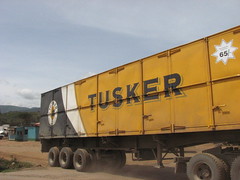 It’s not that they don’t have the skills. Some of them can tell great stories over a Tusker, baridi sana, and many take wonderful photos and even videos. It’s that they don’t have time when they’re in the field, precisely because they are doing the activities we are trying so hard to breathe life into. And when they get back here, there’s more work to be done. But what if there’s someone tagging along whose de facto job is not to do the stuff but to record the stuff others are doing? You get a rich set of impressions that can really help to bring a project to life, often unintentionally.
Bioversity’s recent field visit to some of its nutrition research in Kenya benefitted from just such a presence, resulting in a fascinating report from “the unofficial video guy”. What’s so nice about it is the immediacy of the impressions. The people were welcoming and gracious. There’s something called “African rice” that is “split and processed” maize. Muù, a “strange fruit that tasted like bittersweet marzipan”. The bus breaking down across both lanes of the road home, giving everyone a chance to learn a grain grinding song, all caught on video.
This is not a plea for jolly outings. It is a plea to recognize two things. That much of the time researchers have more important things to do than think about how to gussy up their work for wider consumption. And that someone whose job it is to do such gussying may stand a better chance of bringing a body of work to life.