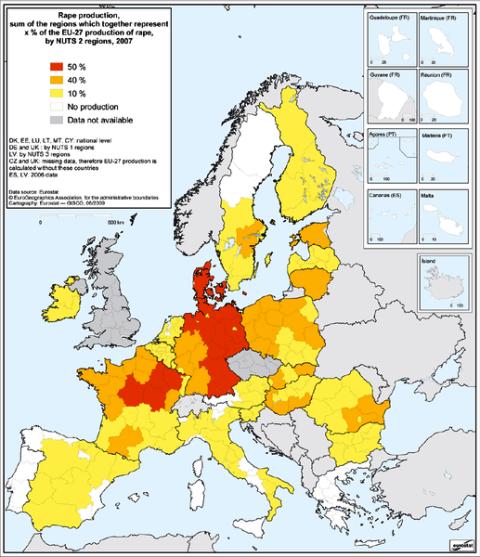
 Just a quick addendum to the recent discussion of maps of crop production statistics. I’ve found a source of geographical data on crop production for Europe. And also one on yield forecasting in Europe (and elsewhere) based on satellite imagery.
Nibbles: FAO newsletters, Spanish fowl, Jamaican cattle, Food composition database
- New Plant Breeding News and Non-Wood Forest Products.
- Nice pix of Spanish chicks.
- Jamaican cattle in trouble, man.
- FAO/INFOODS Food Composition Database on Biodiversity will be published on 15 December 2010. Put out more flags.
What is biodiversity?
You know what? This video is really rather good. Hats off to the team at the Vancouver Film School.
Nibbles: Cancun, Wine, Zambia, Bees
- Just in time. Agriculture and Rural Development Day 2010 now has RSS.
- “It wasn’t debilitated in any way.” World’s oldest beer and wine drunk.
- Zambian farmers buy seeds, fertilisers and herbicides by mobile phone. What could possibly go wrong?
- Red bees! A little too much biodiversity to blame? h/t Tasting Cultures
Mystery plant; can you help?
To Ferrara for the weekend, and two plant ID mysteries.
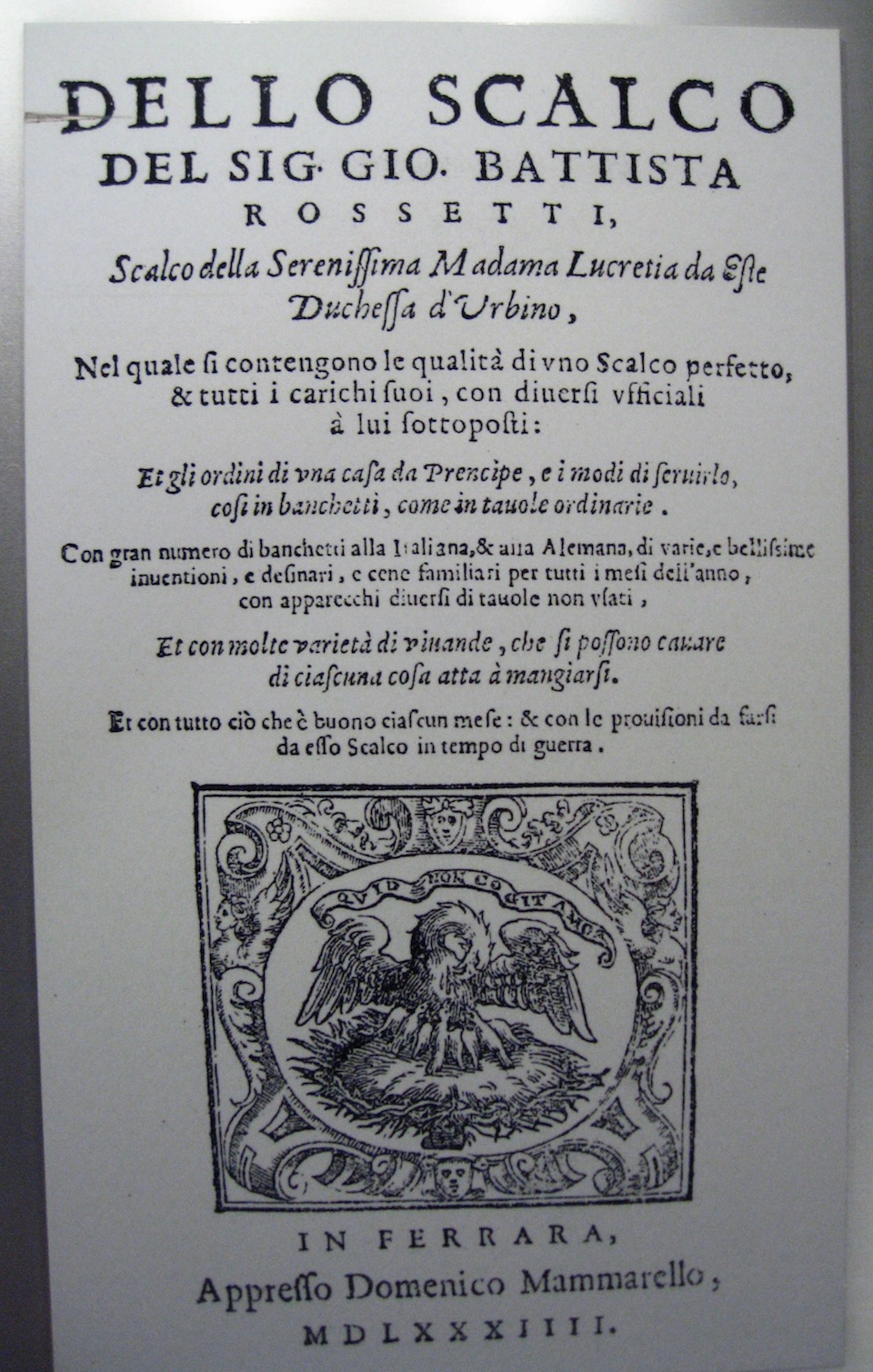 In the Castello di Ferrara — a wondrous building — is a room dedicated to court banquets and the like. It featured extracts from an early how-to guide, Giovanni Battista’s Dello Scalco, published in 1584. There were also enlargements of images to do with food and banquets. Actually, the entire castle exhibit made great use of enlarged images, which worked rather well, I thought. But I digress. Among the images was the one I reproduce below.
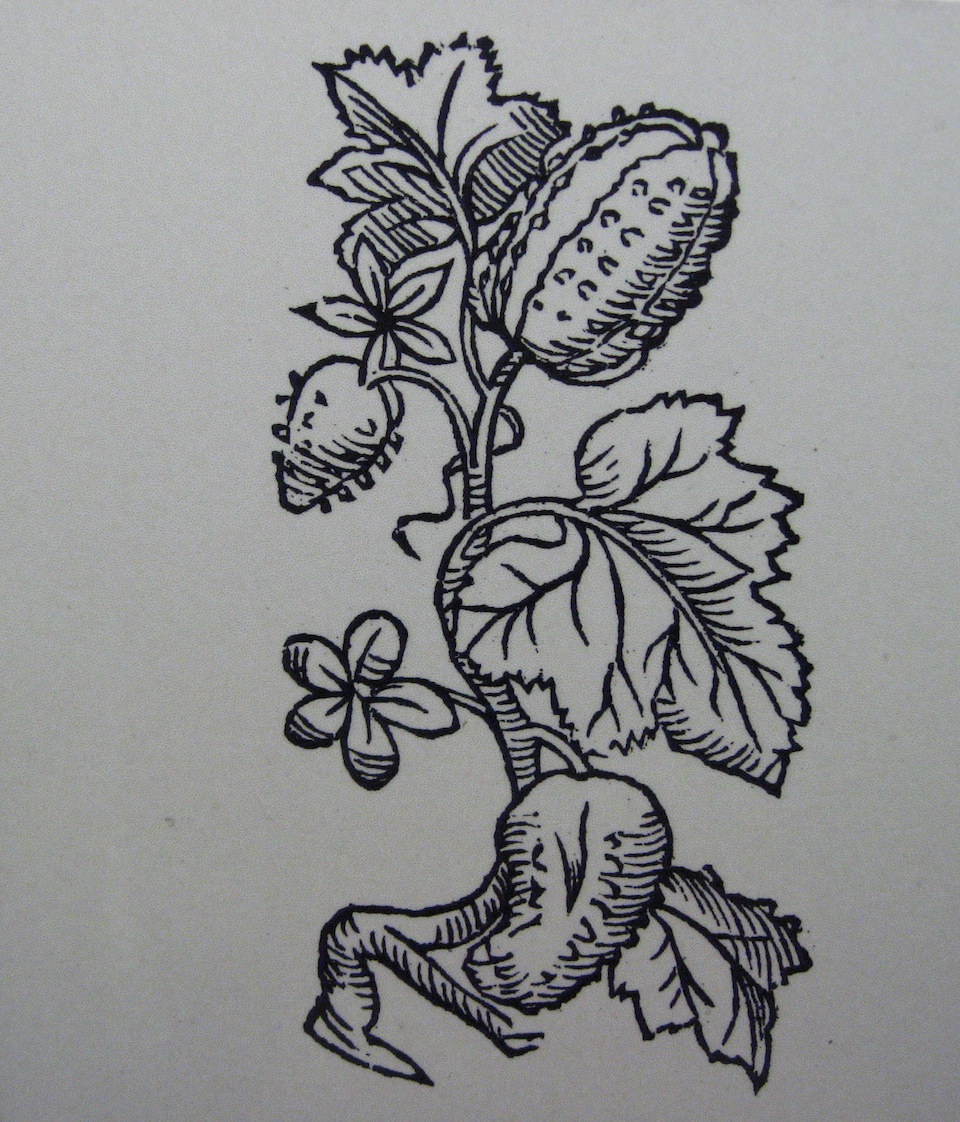
“Whisky foxtrot tango,” I thought to myself. What is it? Could it possibly be a horned melon, kiwano, or Cucumis metuliferus? Hard to say. But having taken a snap of that and the frontispiece of the book, I figured I’d be able to find out later. 1 It was not to be. Despite finding a gloriously usable scanned copy of the book, I couldn’t see any plates. And if it wasn’t from that book, I wasn’t sure where to look. Another manual from the same time didn’t have any plates either.
Of course I sent it to my friend Mr Peanut, who sent it to some of his cucurbit friends, and an answer may yet arrive. In the meantime, however, what can you tell me about it?