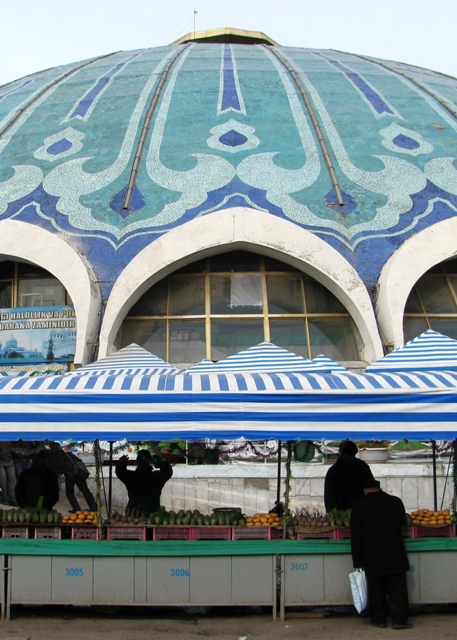
 If you’re interested in Central Asian biodiversity and its products you might enjoy some recent photographs of mine from Tashkent’s central fruit and veg market. And if you recognize something interesting, and know its local name, do please leave a comment.
Nibbles: Climate Change, Blogs, 1492, Grass, Beers
- Head of Convention on Biological Diversity says nothing to Reuters about climate change and agriculture.
- Link farm lists Top 50 Botany Blogs. We reciprocate.
- “[M]ost of us are the beneficiaries of millennia of acclimatization“. Rachel disses the Columbian Exchange.
- “Men didn’t grind, let alone gentlemen.” Rachel disses Iberian explorers.
- Back40 has a beef with supermarket nonsense. There is grass-fed beef in America.
- The Naked Pint: beers gone wild
Nibbles: LEISA, climate change in the US and India, Cocoa
- ILEIA celebrated 25 years with a conference yesterday. Reports to appear on the blog. h/t Danny
- Summary of the big ag bash in Copenhagen.
- US fruits and vegetables most at risk from climate change, says USDA.
- Wine and corn (maize) too!
- Perhaps they could learn from Indian farmers?
- Cocoa price highest for 32 years. Good news for cocoa farmers? I doubt it.
Turkey making the most of its agrobiodiversity
I’m off for a few weeks’ holiday soon, but I couldn’t go without some reflections on my recent trip to Uzbekistan, via Turkey. I’ll post some photos from the main market in Tashkent later, but in the meantime, here’s a very rapid agrobiodiversity trifecta from a day’s transit in Istanbul.
First, I haven’t been in Turkey for a while, and I don’t remember vişne, or sour cherry, juice been available so readily commercially in cartons a few years back, along with more common staples like orange and apple juice. It’s delicious. Has anyone seen it in Europe?
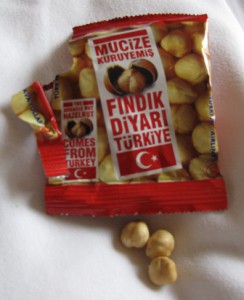
Secondly, I was intrigued and impressed by the marketing work being done on the hazelnut. Turkish Airlines doesn’t give out peanuts with its drinks. It gives out attractive packets of dry hazelnuts. Again, very tasty, and a nice way of promoting local agrobiodiversity.
And finally, good to see salep, a traditional drink made from ground up orchid bulbs, on sale at the airport, and indeed featured in the in-flight magazine. Great to warm up after a morning wandering around Istanbul in a rainstorm.
CIP to provide way out of root and tuber genebank database hell?
The International Potato Center (CIP) has announced the launch of two databases. One is on its potato and sweetpotato genebank holdings, and the other on advanced potato varieties and clones. Will their usability and content satisfy Jeremy? Do they satisfy you? Check them out and let us know what you think, we promise to pass the message on.