- “…the world’s first environmental health index to be based on long term historical data” not actually as interesting as it sounds.
- Data porn. Aggregated. There oughta be a law… Speaking of infoporn, though, check out the third one here.
- AlertNet site on Solutions for a Hungry World pretty but broken. Media alerted, so by the time you read this they may have fixed it and you won’t get Haiti no matter what you click.
- Warwick meeting to look at vegetables and food security. You going? Will you tell us about it?
- Farmer field schools in El Salvador. Diversification seems to be on the curriculum. But diversity?
- And are they using — or being taught — ICTs?
- ILRI reprises a high-impact article. And why not. Nice idea, actually. I may steal it.
- Devil’s claw: weed or NUS? Both!
- Cassava not such a Rambo after all? Heading for a quagmire in SE Asia.
- Greek seed savers met a couple of weeks back. Where you there? Would you like to tell us about it?
- Speaking of seeds, would you like to help save the D. Landreth Seed Company?
- More social dolphins more likely to help humans fish. I wonder if the same for, say, ancient wolves.
Nibbles: Hula skirts, Livestock at Rio, Sea buckthorn, Kenyan ag-blogs
- Grass skirts not made of grass shock. Nope, they’re made from cabbage palm. Ah common names.
- Farm animals set off on the road to Rio, kinda, sorta.
- Enthusiast cracks sea buckthorn (Hippophae rhamnoides) propagation.
- The Bloggers Association of Kenya announces shortlist for Best Agriculture Blog.
Indian animal genetic resources institute sets its priorities
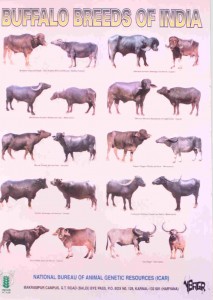 While looking for something else 1 I came across the news on the website of India’s National Bureau of Animal Genetic Resources (NBAGR) that the genome of the water buffalo has been sequenced. I also found out that you can buy attractive calendars featuring native breeds such as the one you see here. And that NBAGR has a catchy song. Alas, the Information System on Animal Genetic Resources of India does not seem to work.
Nibbles: Scuba rice, Climbing beans, Bees, Forests and food security, New avocados, Land grab, Homogenocene, Drought, Fibre, Organics, CBD, Bean breeding, Rice record
- The CGIAR Consortium finds a CGIAR success story. While the Guardian does another.
- Talk on honeybee diversity at UC Davis. Hopefully Robert will be available for comment. Meanwhile, across the Pond…
- Seeing the food security for the trees.
- Yeah I’m just not sure it’s such a good idea to name a new avocado variety Uzi, no matter how good it may be.
- Deconstructing the global land rush. And here’s the data… Jatropha everywhere.
- The deep roots of globalization. Move over jatropha.
- More on that paper on how to recognize a relatively drought-tolerant species.
- All tangled up in natural fibres.
- How to read organic agriculture debates. Just in case you actually want to read them.
- An Indian prepares for the Convention on Biological Diversity‘s meeting in Hyderabad in October. Not too early, is it?
- Bean breeders! Funding alert! You have nothing to lose but your diversity.
- India posts world record rice harvest — using System of Rice Intensification. Take that, doubters.
Nibbles: Fungi, Pastoralism, Climate hoofprints, Ancient farmers, Pineberry, Yellow Rust, Rio+20
- Mushrooms in Art: why, and what good has it been.
- Keep moving that livestock; it’s more profitable.
- And … noted promiscuous communication expert confuses cow and elephant in search of livestock’s climate hoofprint.
- Best blog account of those Swedish farmers from Cyprus.
- Back to the strawberry’s future: meet the pineberry.
- Too late for Robigalia, yellow rust threatens triticale.
- Lecture of Dr Maurits van den Berg – “The future of land”. You’ll get nothing from the link, but the presentation made me wish I’d been there.