- Coffee: variety or varietal?
- Malloreddus: from Campideno or Campidano?
- Wheat: annual or perennial?
- Landrace conference: to go or not to go?
- Garum: to be or not to be?
- Potato: but blue?
- Microbial collections: to charge or not to charge?
- Agrobiodiversity: use it or lose it?
- Apples: but seedlings?
Brainfood: Wild rice double, Paspalum evaluation, Industrial cassava, Intercropping meta-analysis, Chinese cotton, Power of words, Sampling, Biodiversity threats, Mung bean diversity, Chestnut core, Olive double, Durian genome
- Unlocking the genetic diversity of the undomesticated rice relative Oryza longistaminata. Natural hybrids discovered in IRRI genebank can accelerate breeding.
- Evidence for mid-Holocene rice domestication in the Americas. Another rice domestication?
- Evaluation and strategies of tolerance to water stress in Paspalum germplasm. A species for every purpose.
- Evaluation of Cassava Germplasm Accessions for High Tuber Yield and Starch Content for Industrial Exploitations. Watch Me681 take over. At least in India.
- Does intercropping enhance yield stability in arable crop production? A meta-analysis. Yes.
- Collection, Evaluation and Utilization of Cotton Germplasm. Over a thousand accessions!
- Treasure in the vault: The guardianship of ‘heritage’ seeds, fruit and vegetables. “Treasure” is a loaded term.
- Will the same ex situ protocols give similar results for closely related species? Yep.
- Global Hotspots of Conflict Risk between Food Security and Biodiversity Conservation. Madagascar is particularly worrying.
- Genetic diversity assessment of a set of introduced mung bean accessions (Vigna radiata L.). Germplasm from USDA genebank could be useful in China.
- Database of European chestnut cultivars and definition of a core collection using simple sequence repeats. Not sure you can call it European when 96 of 118 accessions are from Spain, but anyway.
- Genome of wild olive and the evolution of oil biosynthesis. Two genes explain all that oil…
- Did Greek colonisation bring olive growing to the north? An integrated archaeobotanical investigation of the spread of Olea europaea in Greece from the 7th to the 1st millennium BC. …which would have been intensely interesting to early Bronze Age elites.
- The draft genome of tropical fruit durian (Durio zibethinus). “Transcriptomic analysis showed upregulation of sulfur-, ethylene-, and lipid-related pathways in durian fruits.” You don’t say. Let’s engineer them into olives. Paleopolyploidizations here too, as in olives.
Occasional Osage orange occurs in Rome
The Osage orange? Yeah, I didn’t know it either, but Maclura pomifera apparently “has a long and interesting history of use by both Native Americans and early pioneers.” I heard about it for the first time when Jeremy sent me a little piece this morning about Jared Rydelek, a YouTuber who goes around the world tasting unusual fruits. Which is a really nice gig if you can get it. Though somewhat disappointing in the specific case of the Osage orange, it seems. Sometimes there’s a reason why neglected species are neglected. Anyway, Jeremy did know about Maclura, it turns out, albeit mainly as a hedge, and because he occasionally walks under some specimens when wandering around Trastevere, of all places.
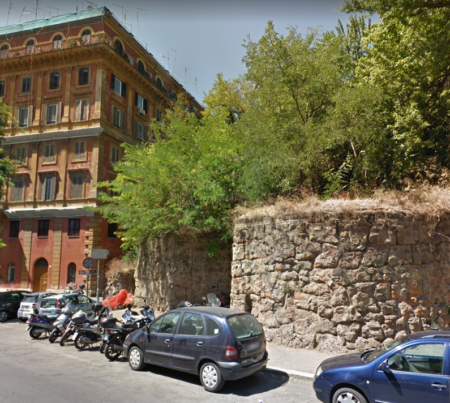
LATER: Corrected spelling mistake in name of the damn thing.
Nibbles: Digital lettuce, Dutch seeds, Durian genome, Jackfruit 101, Ag origins, Palestinian watermelon, Pumpkin evolution, Wine trade
- Dutch lettuce collection to be sequenced.
- Ah yes, the Dutch are real seed visionaries.
- Durian next?
- Maybe jackfruit?
- We should never have given up being hunter-gatherers.
- But then we wouldn’t have watermelons. Or, later in the year, pumpkins.
- Or wine.
Brainfood: Hot seeds, Diet diversity double, Finger millet GxE, Botanical gardens, CWR prebreeding double, Pathogen spread, Dog genomics, Cryo calculations, Biodiversity & productivity double, Movies & conservation
- High-temperature stress during drying improves subsequent rice (Oryza sativa L.) seed longevity. Up to 45°C, because it triggers a stress protection mechanism.
- Agricultural diversification and dietary diversity: A feminist political ecology of the everyday experiences of landless and smallholder households in northern Ghana. Production diversity at the farm level is necessary for dietary diversity, but not sufficient.
- Critical review of the emerging research evidence on agricultural biodiversity, diet diversity, and nutritional status in low- and middle-income countries. Production diversity at the farm level has a small but consistent positive association with dietary diversity.
- Exploiting Genetic Diversity for Adaptation and Mitigation of Climate Change: A Case of Finger Millet in East Africa. Some varieties are good everywhere, others only good in some places.
- Ex situ conservation of plant diversity in the world’s botanic gardens. A third of all known plants, and half of endangered ones, are to be found in botanic gardens, but the tropics are under-represented.
- Prebreeding Using Wild Species for Genetic Enhancement of Grain Legumes at ICRISAT. It’s a drag, but someone has to do it.
- Wide crosses of durum wheat (Triticum durum Desf.) reveal good disease resistance, yield stability, and industrial quality across Mediterranean sites. Not such a drag after all.
- Quantifying airborne dispersal routes of pathogens over continents to safeguard global wheat supply. Incredibly fancy maths says Yemen is the key.
- Demographic history, selection and functional diversity of the canine genome. There’s a lot here, in particular the genes that were involved in early phenotypic differentiation from wolves, and evidence of continuous geneflow with wilds canids. But the thing that really got me is that humans and dogs show parallel evolution in the ability to process complex carbohydrates, associated with agriculture.
- Probabilistic viability calculations for cryopreserving vegetatively propagated collections in genebanks. One Excel spreadsheet to rule all cryo.
- Biodiversity effects in the wild are common and as strong as key drivers of productivity. Meta-analysis of observations in nature supports results of experimental work.
- Biodiversity promotes primary productivity and growing season lengthening at the landscape scale. “…a large species pool is important for adaption to climate change.” An example of the above.
- Considering connections between Hollywood and biodiversity conservation. Conservationists need to get out more.