- Rust continues to never sleep.
- The discussion of whether there were coconuts on the Pacific coast of Panama prior to the Conquista continues on the Coconut Google Group.
- ICARDA and CIMMYT continue to love the Svalbard Global Seed Vault.
- Climate change continues to be implicated in past societal collapses.
- NPR continues to plug those millets.
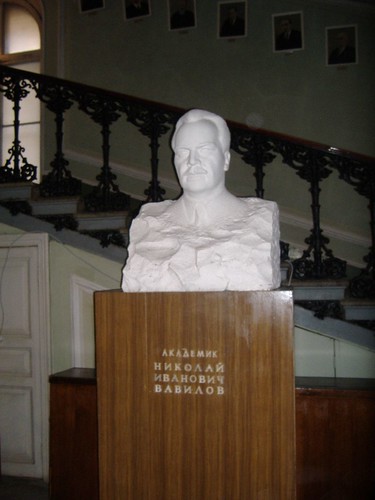
- Cautionary tale of Vavilov and Lysenko continues to be told, thankfully.
- The rise and rise of the drone continues. See what I did there?
- The relentless popular culture journey of citrus continues.
- And that of argan begins.
Coconut history 101
Coconut expert Hugh Harries has sent us this comment on the recent article in AramcoWord entitled Cracking Coconut’s History, by Ramin Ganeshram.
Amusingly illustrated and attractively written, in this article Ramin Ganeshram records that in the last few years coconut production, export and processing have become a multibillion-dollar global industry. In fact, coconut was global from the 1860s to the 1960s. It was the leading vegetable oil on international markets for the best part of a century.
Ramin does not mention Polynesians or the Pacific Ocean, but to them the coconut was more than a source of income. It was the life-support system that ensured their extraordinary survival in locations where coconut palms are routinely decimated by hurricanes and tsunamis or simply washed away by rising sea levels.
The article is not quite up to date as a history, even though Ramin refers to the genetic testing underwritten by the National Geographic Society in 2011. This confirmed that today’s cultivated coconut originated in India and Southeast Asia but, surprisingly, claimed it was taken by boat to the Pacific coast of America more than 2,000 years ago. Yet coconuts would not survive since then without cultivation to control weeds and pests or recover from natural disaster.
There is a general consensus coconuts grow very well on coral atolls but an equally general disagreement as to whether they were dispersed to remote islands by floating and were capable of self establishment, or if not, were carried by boat and planted where they could not float.
This is most clearly recognised where they were introduced in Central America and the Caribbean in the mid 16th century. Indian or East African coconuts carried by Portuguese boats into the Atlantic reached Brazil and Puerto Rico by the 1550s. At much the same time, Southeast Asian coconuts were taken by the first Spanish mariners who found the the Manila-Acapulco route in 1565.
It was only when the Panama canal opened 100 years ago that the differences between the two contrasting types were recognised when those from the Pacific coast were imported to Jamaica for replanting areas devastated by hurricanes.
My thanks to Ramin Ganeshram for giving me the opportunity to add some information that I hope will be useful when a revised second edition of this history is prepared.
Nibbles: Trees on farms, Biodiversity hotspots, Coconuts, Banana genebank, Fiddleheads, Hybrid wheat, Buckler prize, ITPGRFA hatchet job
- Trees are good for African farmers.
- A basic universal income for people in biodiversity hotspots. Agrobiodiversity hotspots too?
- Coconut History 101.
- 30 years of bananas in Belgium.
- Eat up all your fiddleheads.
- Hybrid wheat is coming at last.
- Ed Buckler wins big. Unclear if he’ll be allowed to tweet about it.
- Nonsense piece on the ITPGRFA.
Nibbles: Heirloom collection, Booze, Grape history, CWR training, New perennial wheat species, Brazilian cacao, Smelly durian, CIAT genebank
- “Every heirloom plant seed grown for food has a story…”
- The history of alcohol.
- The history of a particular alcohol-producing plant.
- U. of Minnesota students travel to crop cradle.
- They could just have gone to Washington State University.
- Brazil is back in the cacao game.
- Deconstructing durian’s smell is easier than you thought.
- The CIAT genebank in Scientific (Latin)American.
Nibbles: Agroforestry info, Coffee genome, Citrus family tree, Physalis fossil, Conservation economics, Wild Vicia, African rice history, USDA PGR strategy, Fisheries, Evidence base
- Agroforestry Species Switchboard gets upgrade.
- Arabica sequenzzzzzzz…
- “But what is the point of collecting and preserving this genetic diversity as seed, if it should remain in perpetuity in a seed bank?”
- Citrus untangled.
- 52 million year old tomatillo fossil already had Inflated Calyx Syndrome.
- Faba bean wild relative found, kinda sorta.
- It’s the economics, stupid.
- African rice in the New World. Mash up with peanuts?
- National Program 301: Plant Genetic Resources, Genomics, and Genetic Improvement. Action Plan 2018-2022.
- Communities that catch more diverse fish species are more resilient shock.
- Database of what works in conservation. Not of crop and livestock diversity, though, alas.