- Presence of Zea luxurians (Durieu and Ascherson) Bird in Southern Brazil: Implications for the Conservation of Wild Relatives of Maize. Well there’s a turnup for the books.
- Fruit Phenolic Composition of Different Elderberry Species and Hybrids. Some interspecific hybrids have high phenolics levels.
- Diversity in boron toxicity tolerance of Australian barley (Hordeum vulgare L.) genotypes. There’s variation beyond the 4 known boron tolerance loci.
- Agriculture and the threat to biodiversity in Sub-Saharan Africa. Intensification is good for biodiversity, but not yet.
- Land for Food & Land for Nature? The former, according to modelling. But it depends. See above.
- Wildlife-friendly farming increases crop yield: evidence for ecological intensification. Trifecta!
- Is a Cardio-Protective Diet Sustainable? A Review of the Synergies and Tensions Between Foods That Promote the Health of the Heart and the Planet. Yes, but it will take some work.
- Genetic diversity of Malus cultivars and wild relatives in the Chinese National Repository of Apple Germplasm Resources. The varieties from the former Soviet republics and Japan are different to each other and to the canonical European/North American/Chinese material.
- Genetic and phenotypic variation of Turkish Okra (Abelmoschus esculentus L. Moench) accessions and their possible relationship with American, Indian and African germplasms. Turkish okra comes from all over the place.
- DNA barcoding of the main cultivated yams and selected wild species in the genus Dioscorea. 16/21 species I guess is a start.
- Plant responses to climatic extremes: within-species variation equals among-species variation. For a bunch of European grassland plants, within species variation in response to climate was as high as that among species.
- Biotic and Climatic Velocity Identify Contrasting Areas of Vulnerability to Climate Change. Tropical species can’t move fast enough.
Nibbles: Kiwi breeding, Nagoya Protocol, ITPGRFA, Hablitzia, Eating insects, Patents, European forests, Native American foodways, Plant protein, Broken bread, Apples, Dog cartoon, Climate change & yields, Seed pix
- Building a better Hayward kiwi.
- Adapting to Nagoya.
- But if the Treaty works, maybe you wont need to. And that includes farmers’ rights, of course.
- The Caucasian Spinach is a new one on me, but I’d try it.
- Eating insects is safe. But I suspect that was never the issue.
- What have patents ever done for us?
- Europe’s forests are in a state. See what I did there?
- Yes, it’s time for this year’s seasonal “wild rice” story.
- The non-meat future of protein.
- Does bread even have a future?
- Well, how would you describe an apple? Maybe by use? In the meantime, Tom “The Appleman” Adams is taking the next step.
- Dog domestication explained.
- Nice map of what climate change will do to crops. Spoiler alert: it’s not good.
- The beauty of seeds.
Cary Fowler on Oz TV
Nibbles: Nepal earthquake, Vavilov visit, Conservation strategies, Insects & markets, Hydrid breeding, Women & agrobiodiversity, Indian minor crops, Wes Jackson, Drought tolerance, Wheat shindig, Industry support
- Getting the right seeds to Nepali farmers.
- An organic farmer visits the Vavilov Institute.
- Conservation: beyond hotspots, beyond markets.
- Letting the market deal with insect foods.
- Hybrids 101.
- Tamil Nadu women millet farmers show us all how it’s done. In Milan.
- Climate change? Let them eat rice bean.
- End of an era at the Land Institute.
- And the biggest environmental footprint goes to…lamb.
- Drought tolerance: a geneticist explains.
- International wheat meeting in the news.
- How does the European seed industry support crop diversity conservation and use? Let me map that for you.
Women and agrobiodiversity photo competition “winners” announced
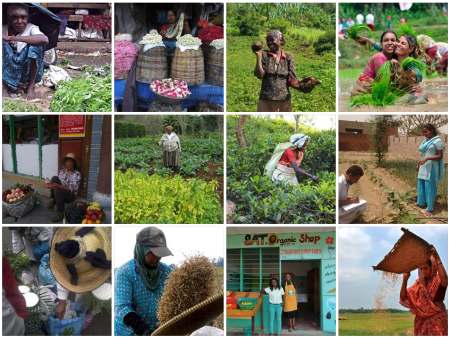
Yeah, well, in the end I didn’t win. But I’m not bitter. Not much.