- ILRI celebrates 40 years with a major conference.
- Keeping the CIAT germplasm collection nice and clean.
- New variety information sheets from the Breadfruit Institute.
- Review of Gary Nabhan’s new book, Cumin, Camels, and Caravans: A Spice Odyssey.
- Buying goats online.
- What would you do with one billion historical biodiversity data points?
- The tools of the seed-saver‘s trade.
- How to stress your beans, and why.
- A place for conservation organizations to hang out and share. You have to register, but this looks interesting.
- Jeremy has a second Twitter home.
- All 115 plant image analysis software solutions…
- Hyderabad’s brinjal obsession.
- A GMO terminator technology?
Nibbles: Old pig, Good old Twitter, Old apples, Old nuts, Crap coffee, Dutch AnGR, Seaweed food, SP breeding, Women and nutrition, Florida peaches, Poisonous plant garden, Botanic gardens, Future climates in Iowa, Edible insect directory, Big Food wakes up to CC
- The oldest pig in the world is Vietnamese-Canadian.
- Why plant scientists should tweet. And draw.
- Trifecta of apples and other heirloom fruit. Make that four.
- And nuts.
- Making civet crap coffee sustainable.
- Dutch animal genebank moves.
- Will the inmates be fed seaweed? There’s a collection of those, you know?
- More money for to make sweet potato more nutritious.
- Or, you could empower women. Or both.
- Trouble with citrus? No problem, grow peaches.
- World’s coolest garden.
- And why we need even the less cool ones.
- Testing present plants in future climates.
- Who’s who in edible insects.
- Big Food suddenly realizes it has a climate change problem.
Unusual nyama to choma
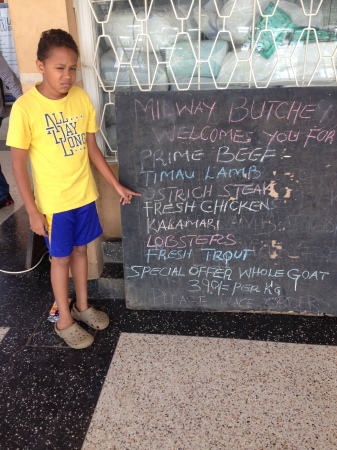
Kenyans do love their nyama choma, and it’s usually goat meat that’s involved. Usually, but not always. There’s also the somewhat offbeat on offer on occasion.
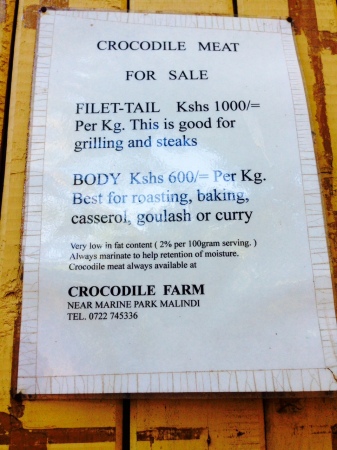
And the downright unusual.
Nibbles: Australian agrobiodiversity, European forests, Eva, Brazil in Africa, Seasons in the sun, FFS, IRC2014, Shiva farrago, Tricky crops, Genome editing, Amish revolution, Thai rat, Disease spread, Coffee culture
- Bush tucker may be viable business proposition. But doesn’t it taste like crap? And do any crop wild relatives qualify?
- Europe mapping its high value forests. No word on whether crop wild relatives come into the assessment.
- Sorghum breeder reveals all.
- Embrapa supporting African agriculture with help from Gates Foundation.
- How many seasons are there anyway?
- Test yourself on Farmer Field Schools.
- Delve into abstracts for the 4th International Rice Congress (IRC2014).
- New Yorker replies to Vandana Shiva reply to her profile in the New Yorker.
- Some crops resist mechanization.
- Editing the horns from cattle genome.
- A young Amish farmer with big ideas.
- Your organic rat, sir.
- Crop pests and diseases are coming to get you.
- Fun reddit with Peter Giuliano, barista extraordinaire.
Nibbles: Palms, Walnuts, Gardening game, Measuring biodiversity, Promoting biodiversity, Restoring land, Honeybee evolutions, Amaranth recipes, Cider communication
- Someone you know might need to know the difference between a coconut palm and an oil palm.
- Or between English walnuts and French walnuts (and much more besides).
- Is an interactive game really the best way for children to learn about organic gardening?
- Canadian Cattlemen magazine shares a woman scientist’s deep insights into measuring biodiversity.
- And Indian priests used Konnsanchem fest to urge the revival of agrobiodiversity.
- Other Indians are restoring their land by getting rid of an interloper crop.
- DNA suggests a new ancestral home for the honeybee.
- Now I know what to do with the amaranth blocking every pavement in Rome: how to cook this prolific leafy green.
- Nominally about cider and apples, Pete Brown downs Strongbow’s communications in a few quick drafts.