- Qataris work out how to sex date palms.
- The National Heirloom Exposition revs its engine.
- World Camel Day is coming up. No, really.
- Latin Americans planning their next congress on the biodiversity of domestic animals. Cuy, anyone?
- The Art of Coconut Craft. Wonderfully kitschy.
- So, you want to breed Alocasia, do you?
- Sweden stops oppressing its main minority.
- High Nature Value farming in Serbia.
- Non-wood forest products are all very well, but…
- Yes, yes, Feidherbia will solve all the problems of the Sahel, now can I go back to sleep?
Nibbles: Genebank, Sweet wheat, Participatory Research, Land “grab”, Yampah, Vegetables, Tea, Chilling, Rainforest products, Asses, Climate proofing, Natural products
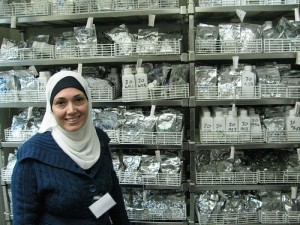
- A look inside the big USDA genebank at Fort Collins. Whatever next?
- Sweet wheat. Whatever next?
- Farmers must participate in agricultural research in Europe. Whatever next?
- “Come and farm our virgin lands, Ethiopia tells India.” Whatever.
- “You may already know that yampah (Perideridia gairdneri) is a North American umbellifer.” Er, no. Tell me more.
- After cloves, vegetables? Zanzibar’s farmers increase productivity.
- More news for Luigi’s MIL: Future Climate Scenarios for Kenya’s Tea Growing Areas.
- Is this the end of trail mix?
- Body Shop uses wins award for using Cameroonian rainforest honey and wax from CIFOR-supported beekeeping project.
- Fancy a glass of ass’s milk? Totally SFW.
- Everybody is climate-proofing crops.
- The BBC looks at medicinal plants.
Useful useful plants set on Flickr
Plants – crop wild relative, a set by Arthur Chapman on Flickr.
“Plants either used for food and agriculture or relatives of species that are so used. Includes images of plant species taken in fruit and vegetable markets around the world.”
Safeguarding tangible agricultural heritage
There’s a great set of pictures of Kenyan traditional crops and food preparation on UNESCO’s Facebook page, in their Documenting Living Heritage series. This is part of an exhibition currently on at UNESCO’s HQ in Paris to raise awareness of the 2003 Convention for the Safeguarding of Intangible Cultural Heritage. I doubt there’s a photograph of the Gene Bank of Kenya, but that surely contributes to that goal too.
German lentils go back home
Before the introduction of the potato, Irish people included grain as a dietary mainstay, particularly oats. Oats were used in breads, desserts, drinks, medicines and cosmetics! Other grains that were grown included barley, flax, rye and some wheats. Unfortunately, many of these grain varieties were lost and we had to turn, primarily to the Vavilov Institute in Russia, the first genebank in the world, to repatriate our native grains. Michael Miklis in Piltown, Kilkenny, working with very small quantities of grain, over many years trialed them and bulked them up so that they could be resown on field scale again.
That reference to the Vavilov Institute on the Irish Seed Savers website reminded me of something similar they told me about the last time I was there.
Dr Margarita Vishnyaova, the head of the legume department, told me that they had recently “repatriated” some “German” lentils to a farmer cooperative in Baden-Wuerttemberg. The varieties in question are labelled “Späts Alpenlinse” (K2106, collected Hungary in 1965) and “Späths Albinse” (K2076, collected Czechoslovakia in 1963) in VIR’s records. Woldemar Mammel, a farmer from near Stuttgart had apparently been looking for these varieties in databases all over the place and eventually happened on them in the VIR online catalogue. They are old traditional varieties from the Swabian Alps which are no longer grown in Germany, or at least his part of them. The handover of the seed to Herr Mammel and a group of 15 other German organic farmers took place in Nov. 2007 at VIR, and was filmed by Slow Food Deutschland (Prof. Dr Roman Lenz, Dinah Epperlein). There are some photographs of the event on the Slow Food website. Sometimes genebank databases are good for something after all.