- Johnny Appleseed basically set up fruit tree genebanks 200 years ago.
- Modern fruit tree genebanks could probably learn something from Mr Appleseed.
- Is there a Mr Lycheeseed, I wonder?
- There are probably some fruit tree collections at the Ethiopian Biodiversity Institute.
- Saudi Arabia is betting on tree genebanks. Maybe even fruit tree genebanks.
- All genebanks need to share their data, according to the guy in charge of helping European genebanks share their data.
- Can you put a value on genebanks? Should you?
The wild bunch
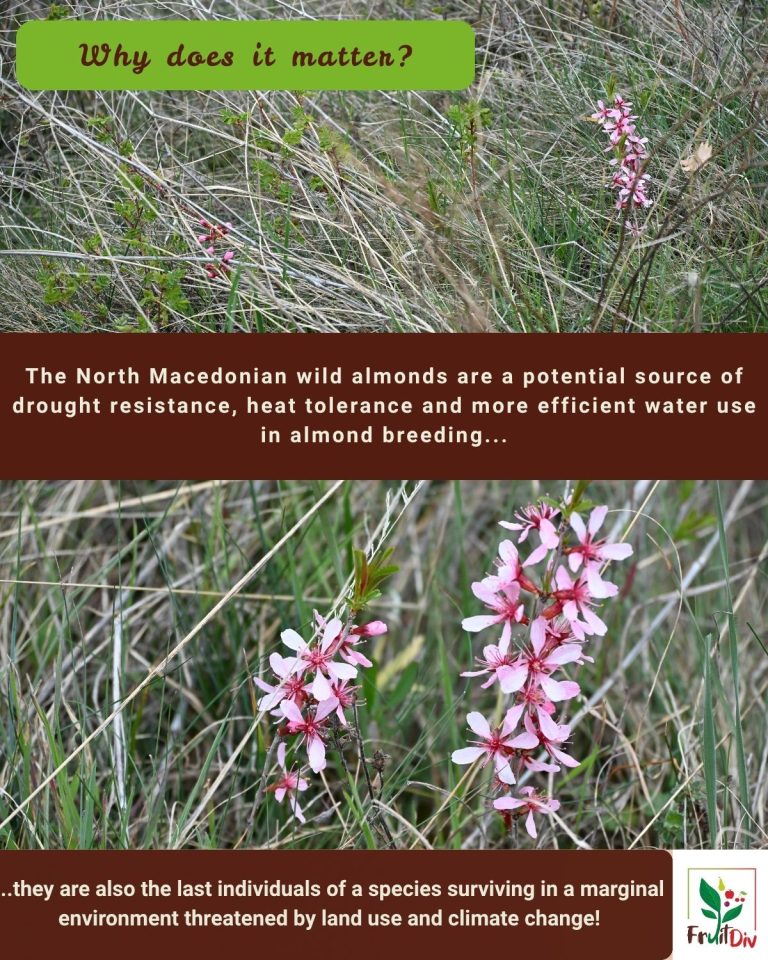
Never rains but it pours. Along very similar lines as the previous post on a fun effort to document people’s favourite breadfruit varieties, here comes the FruitDev project’s Wild Fruit Population of the Month.
Each month, the series highlights one (or more) populations identified by a FRUITDIV partner, illustrating how field exploration, local knowledge, and cross-partner collaboration contribute to a better understanding of wild fruit genetic resources.
By focusing on individual populations, the series aims to make visible the often-overlooked genetic diversity found in natural and semi-natural landscapes, many of which are shaped by environmental pressures such as drought, poor soils, or past disturbances. These populations represent valuable reservoirs of adaptive traits that are increasingly relevant for resilience, conservation, and future breeding strategies.
This month’s featured population is a dwarf almond from North Macedonia. Nice idea.
A tale of many breadfruits
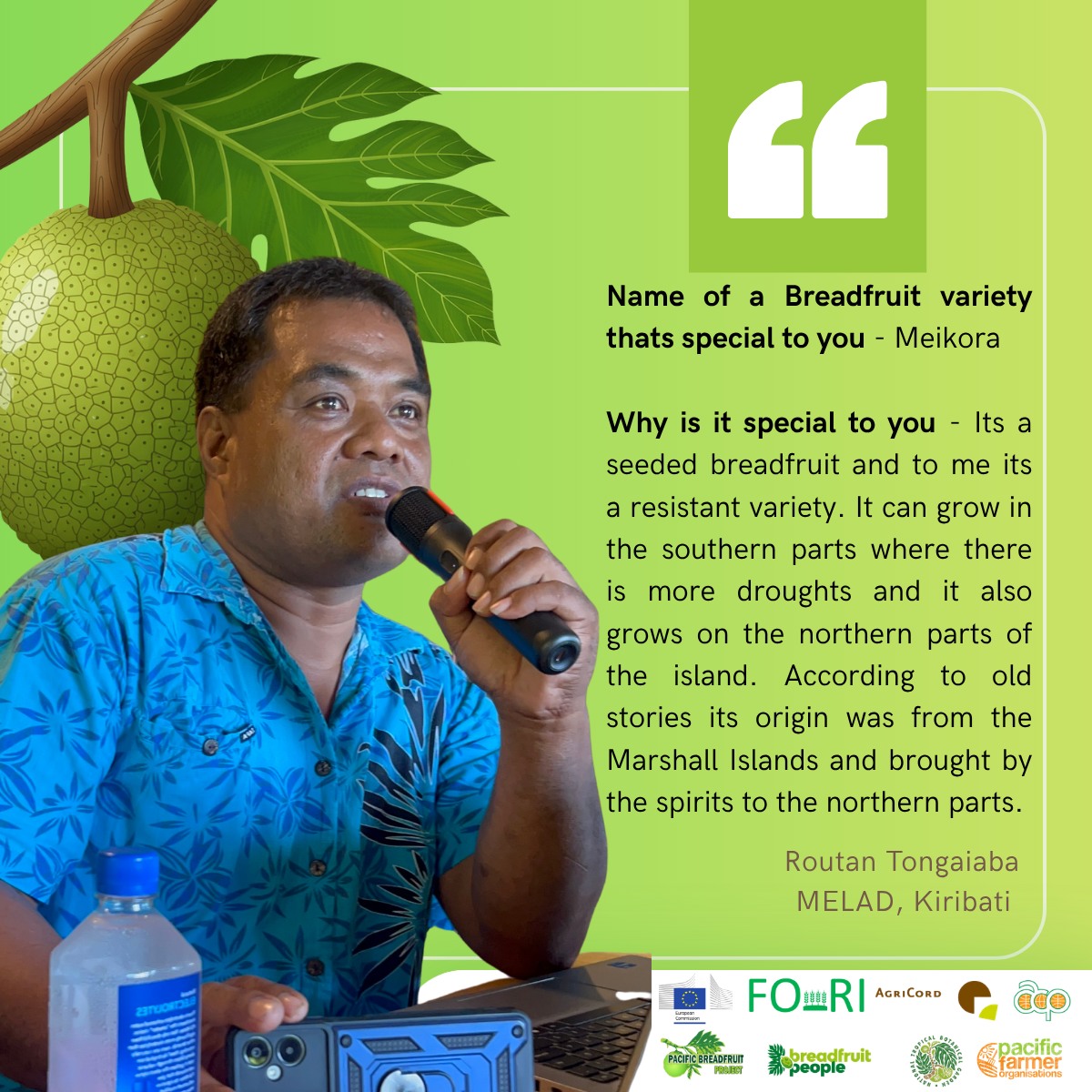
I can’t find anything online about the results of the regional Breadfruit Biocultural Conservation Knowledge Exchange Workshop organized by the Pacific Island Farmers Organisation Network (PFO) at the Tutu Rural Training Centre in Fiji from 27–29 April 2026. Beyond social media posts, that is. But I really like the idea of participants sharing the breadfruit varieties that are special to them.
Nibbles: Fit for Biodiversity, Food value chains, FAO, SeedTracker, Morocco genetic erosion, Pastoralists, Cannabis seedbanks
- A conference on biodiversity in agri-food systems. Including agrobiodiversity?
- A photo essay about food value chains in India. Including agrobiodiversity?
- A few examples of FAO’s work on how agriculture sustains biodiversity. Including agrobiodiversity.
- An app to track seeds. And therefore agrobiodiversity.
- A warning that 75% of the agrobiodiversity of Morocco’s wheat and barley has been lost in the past 50 years. Ah, so that 75% number is true of something after all. Maybe they could use SeedTracker.
- A reminder that pastoralists guard biodiversity. Including agrobiodiversity.
- A Genesys for weed. Well, I guess it’s agrobiodiversity.
Nibbles: Svalbard prize, Rice breeding, Coffee geography, Biodiversity loss monitoring, Spatial data
- The Svalbard Global Seed Vault gets the Princesa de Asturias Prize for international cooperation. Time to celebrate.
- Celebrating Pamela Ronald and scuba rice.
- Celebrating Ohsoon Yun and the geography of coffee.
- I’ll certainly celebrate if the approach of the NATURE-FIRST project can be applied to loss of agricultural biodiversity one day.
- The World Bank is in a celebratory mood with regards to geospatial and Earth observation data. I’ll join them when they fund a NATURE-FIRST for crop diversity.