- Fruit flies facilitated the birth of the hybrid yeast that made cheese possible. Thanks, fruitfly!
- Ah, but an upgrade is coming: precision fermentation.
- How business can track its effects on biodiversity. Should it want to.
- How to make it easier, more profitable and more sustainable to bring healthy foods to market. Someone mash it up with the above?
- How to design policies for countries seeking to provide healthy diets. Someone mash it up with the above?
- 40 years of NordGen. Happy birthday! Then someone mash it up with the above…
- Celebrating poultry diversity through art. No need for mashing, just celebrate the weirdness.
Deconstructing crop TED
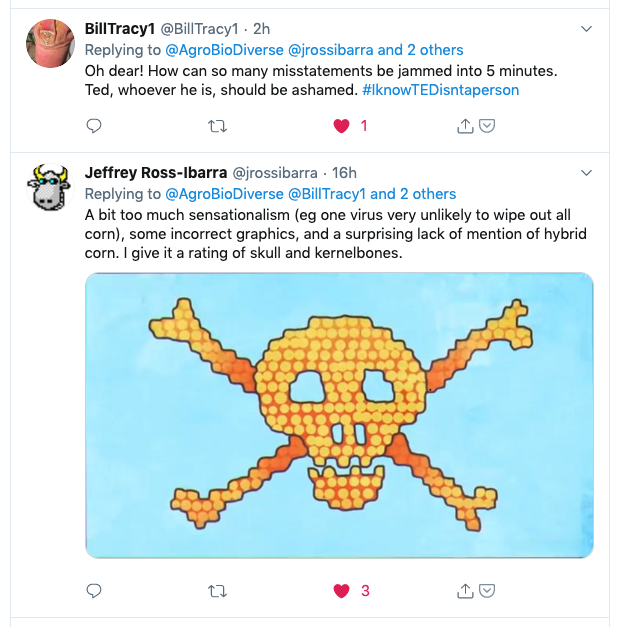 TED-Ed has a bunch of videos on the history of different crops: cacao, tea, and maize for a start. They’re cute, and do provide some interesting information. But a pinch of salt is recommended with your corn on the cob.
Yes, we have plenty of banana information, take 2
A new version of the Musa Germplasm Information System (MGIS) is out. There’s more data, tools for better curation, a way to search for accessions cited in the literature, and re-organized menus. Do check it out. MGIS data eventually makes its way to Genesys.
And since I’m here, it’s worth noting that the banana is uniquely well-endowed with information resources. In addition to MGIS, there’s a whole slew of other databases and assorted information products, thanks to the wonder that is ProMusa.
ProMusa is a network of people promoting scientific discussions on bananas.
In alliance with the International Society for Horticultural Science (ISHS), the network organizes scientific symposia (reported in proceedings) to help its members stay up-to-date on the latest research developments and encourage collaborations within and between disciplines.
When not meeting face-to-face, ProMusa members stay in touch using the network’s mailing list.
This website is the network’s online platform, which offers news, knowledge and information on bananas.
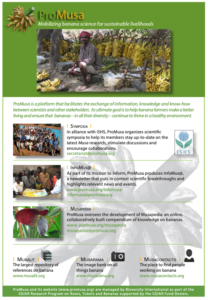 The centrepiece is Musapedia, “an online, collaboratively built compendium of knowledge on bananas.” But there are also databases of scientific literature, images and contacts. And an excellent news area — InfoMus@.
You can follow — and interact with — ProMusa on Facebook and Twitter. I can’t think of a crop that has anything similarly comprehensive. It really should be your first port of call for anything to do with bananas.
Gabe Sachter-Smith laid out in a spiral a sample of the more than 100 types of bananas documented during the collecting mission to West New Britain, PNG. They include the ever mysterious Fe'i banana, photographed next to its possible ancestor, Musa maclayi. pic.twitter.com/HahIXm1P4K
— ProMusa (@promusa_banana) October 11, 2019
BTW, the title of this post refers to a previous foray into banana information resources.
Nibbles: Writing rules, CWR project, Foxes, Agrodealers, Etruscan diet
- Science writing 101.
- Science writing about crop wild relatives collecting.
- The animal domestication syndrome may not be a thing.
- The last rural mile: a survey of agrodealers in E. Africa.
- Eat like an Etruscan.
Old vines in a new catalogue
Who doesn’t love old trees? I, for one, could read about them for days. And, alas, have occasionally done so. Especially if they are cultivated species. The internet is full of old, attractively gnarled olive trees, for example. Old grapevines, not so much. There was recently that piece in The Economist about recreating Leonardo’s vineyard, but that’s not quite the same thing.
So it was a pleasant surprise to come across the Old Vines Register, curated by wine expert Jancis Robinson. Turns out there are some 400-year-old vines out there. Which I’d really like to see some day.
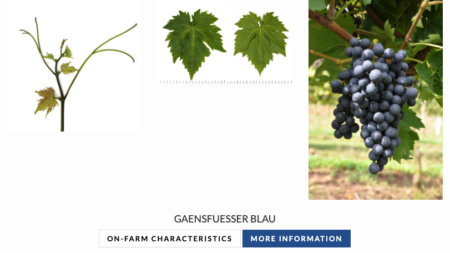
Anyway, since I’m talking grapes, I might as well highlight the work of the Vitis Working Group of the European Cooperative Programme for Plant Genetic Resources (ECPGR). Note in particular their “On-farm inventory of minor grape varieties in the European Vitis Database.” There must be some pretty old vines among those.
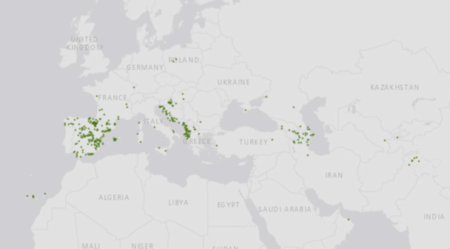
As for genebanks, there are 16,000 accessions of cultivated Vitis out there (plus 2,400 wild relatives), according to Genesys, though only about 1,900 are geo-referenced (see map below). Genesys, remember, brings data from ECPGR’s European genebank database, Eurisco, together with that from genebanks in other parts of the world. There is also a separate European Vitis Database, though I’m not sure of the exact overlap with Eurisco.
What of the future? Well, we’re probably going to need all that diversity given what climate change is already doing to the crop. A recent Twitter thread by Dr Sarah Taber analyzed the depiction of vineyards in an episode of Star Trek: The Next Generation set in the year 2367. We’ll just have to see if her decidedly critical view of twenty-fourth century management practices is borne out in the forthcoming series, which does seem to feature, at least according to the trailer, somewhat better kept, though not particularly old-looking, vines. No word yet on what varieties the Picards grew, and will grow.
https://www.youtube.com/watch?v=Ishyf14_yx0