Readers with long memories who had time on their hands back in January may remember a post we did then on IR80482-64-3-3-3, a new rice tailor-made for Mozambique. There was some discussion at the time about the claims being made in the original SciDevNet piece about the new variety on which we based our post, but what really struck me was this statement:
Work began when the International Rice Research Institute (IRRI), in the Philippines, sent Mozambique 11,200 rice varieties for testing.
That just sounded like quite a lot of varieties, and I remember wondering at the time how long it took the Mozambique national rice programme to get through that little lot. But anyway, I bring this up now not only because someone from IRRI has very kindly left a comment on the original post. But also because IR80482-64-3-3-3 is back in the news, cannily renamed Makassane. The IRRI press release has been widely picked up.
Following the approval of Makassane for release by the Mozambique Variety Release Committee earlier this month, IRRI provided government agencies and farmers “foundation seed” to use in bulking up the seed so that more can be produced and distributed to more farmers.
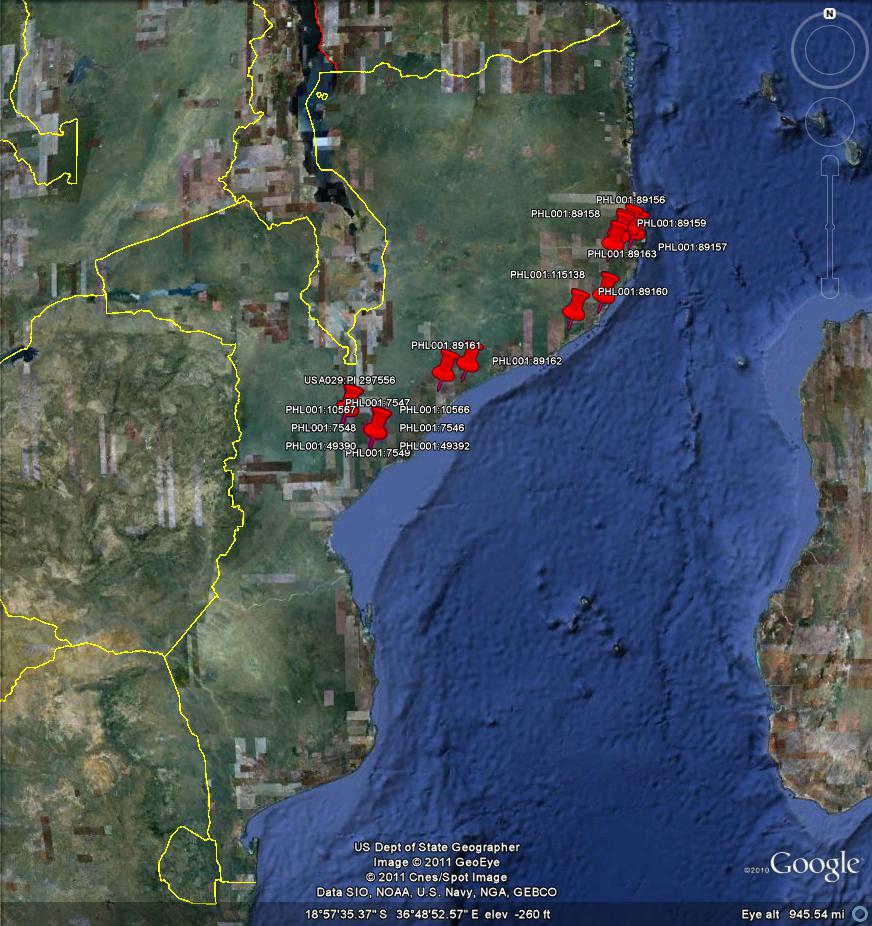 Two things about this. First, I look forward to regular updates on Makassane’s uptake by farmers. And second, I hope the IRRI and Mozambique national genebanks are confident that they already have good representation of the local landraces. Sophie, who left the aforementioned comment, says there are 76 rice types from Mozambique at IRRI. Genesys gives us just over 120 worldwide, between landraces and wild species, but only a few are geo-referenced (see map).
 Wait, it’s