- Is the World Producing Enough Food? The NY Times has the answer(s).
- Aussies trying to get to grips with salinity through breeding. Very cool, but maybe they should just stop growing wheat and think of some other crop?
- Potato Park potatoes to be parked in the Bóveda Global de Semillas de Svalbard.
- You know what those naughty Vikings used to say: “Let there be mirth, mead and fornication!”
- Adding value to peanuts in Bolivia. KIT video.
Effects of looting of Egyptian genebank on film
We’ve heard again from El-Sayed Mohamed El-Azazi, who is Executive Director of the Egyptian Deserts Gene Bank at the North Sinai Research Station. This time it’s a video of the effects of the recent looting, which he sent to our colleagues at Bioversity International. He confirms that the tissue culture and molecular labs have been destroyed, as well as part of the herbarium, and all computers stolen. But also that the seeds are still ok in the cold room, as you can see towards the end of the video. El-Sayed suggests in his commentary, which is for the most part a sad enumeration of equipment destroyed or stolen, that the looters were perhaps afraid to go into the cold room, and that’s why they left it unharmed.
Egyptian Desert Genebank from Crop Trust on Vimeo.
Nibbles: Asparagus, Phosphorus, Goats, Chocolate
- Peru exporting water it doesn’t have, hidden in asparagus.
- P summit takes peak phosphorus seriously; will anyone else?
- Goats are us. New ILRI effort in India and Mozambique.
- Who ground the chocolate? Rachel puts cacao in perspective.
Pavlovsk mainstay passes away
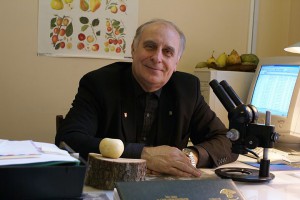 Leonid Burmistrov, Leading Scientist of the Fruit and Berry Crop Genetic Resources Department of the N.I. Vavilov Institute of Plant Industry (VIR) in St Petersburg, has died. From the recent announcement on the VIR website:
Leonid Burmistrov has made a significant contribution to the preservation of the threatened fruit and berry crop collections located at the Pavlovsk Experiment station of VIR. He gave 60 interviews to the Russian and foreign mass media. Thanks to his efforts, the collection continues to exist.
Nibbles: Policy, Nutrition, Education, Svalbard, Plagues
- Looks interesting: Assessing the impact of rural policy on biodiversity: High Nature Value Farming in Italy. Next Thursday.
- Gates Foundation’s Sylvia Mathews Burwell says Fortify Lives with agriculture and Nutrition. In full.
- Ugandans! Grow sorghum, get a scholarship for your child. Win-win. Cheers, Nile Breweries.
- Australian farmer tells all about Svalbard.
- ILRI speaks about climate change, livestock and plagues — The Economist listens. Respect!