- Does it matter who advises farmers? Pest management choices with public and private extension. Yes, at least in Switzerland. Public = prevention, private = cure. Well colour me surprised.
- Ethiopia’s transforming wheat landscape: tracking variety use through DNA fingerprinting. Only 28% of farmers correctly named their wheat varieties, many of which were from CGIAR breeding programmes.
- Analysis of the Similarity between in Silico Ideotypes and Phenotypic Profiles to Support Cultivar Recommendation—A Case Study on Phaseolus vulgaris L. Italian farmers not great at keeping track of new varieties either, but who needs names when you have fancy maths?
- Morphological, Sensorial and Chemical Characterization of Chilli Peppers (Capsicum spp.) from the CATIE Genebank. From 192 accessions to this little beauty from Panama.
- Two divergent chloroplast genome sequence clades captured in the domesticated rice gene pool may have significance for rice production. Rice is from Mars, rice is from two Venuses.
- Identification of Mung Bean in a Smallholder Farming Setting of Coastal South Asia Using Manned Aircraft Photography and Sentinel-2 Images. From 10-m imagery for pity’s sake! Amazing stuff. Soon we’ll be able to distinguish landraces from modern varieties, right? Right?
- Linking biodiversity into national economic accounting. Yikes, biodiversity makes no contribution to agricultural development at all?
- High sink strength prevents photosynthetic down-regulation in cassava grown at elevated CO2 concentration. Could result in higher yields, but effect will vary among varieties.
- Discovery of beneficial haplotypes for complex traits in maize landraces. Landrace diversity for early plant development, robustness and growth form that could be useful in Europe made accessible.
- Understanding the classics: the unifying concepts of transgressive segregation, inbreeding depression and heterosis and their central relevance for crop breeding. It’s the dispersion of favorable alleles between parents.
- Challenges and Prospects for the Conservation of Crop Genetic Resources in Field Genebanks, in In Vitro Collections and/or in Liquid Nitrogen. Everything that can be in cryo should be in cryo, and some things that currently can’t too.
The pangenome is the new genome – Part Deux
1) Today's been a hell of a day for plant #pangenomes.
In https://t.co/FSxNthxoG9 Walkowiak et al analyze up to 16 wheat cultivars to report on the global variation pool accessible to modern breeding pic.twitter.com/xPTtIvEZyC— BContrerasMoreira (@BrunoContrerasM) November 25, 2020
Indeed it was “a hell of a day” (somewhat re-ordered compared to the above tweet thread):
- Multiple wheat genomes reveal global variation in modern breeding. Genomes of 10 cultivars from around the world’s breeding programmes and a few other things added to that of Chinese Spring.
- A haplotype-led approach to increase the precision of wheat breeding. The above and fancy maths used to spot novel, agronomically significant haplotypes in landrace collections. Here’s a Twitter thread from one of the authors with his insights on why the work is important.
- The barley pan-genome reveals the hidden legacy of mutation breeding. Genomes of 20 really diverse barley lines, including a wild relative, used to (among other things) find novel variants in 300 genebank accessions.
- Assessing the regulatory potential of transposable elements using chromatin accessibility profiles of maize transposons. Some transposable elements affect gene expression.
- GreenPhylDB v5: a comparative pangenomic database for plant genomes. Pan-pangenomes, kinda.
LATER: Had completely forgotten I had used that title before :) It’s the zeitgeist for sure. And here’s a nice primer on pangenomes.
LATER STILL: Maybe it’s been a good year for something.
https://twitter.com/PacBio/status/1333429793115803648
Yes, there were lots of pangenomes in 2020:
Brainfood: Covid, Tropical trees, Tree GR, Brazil nut, Fair research, ICARDA, FIGS, Landraces, Evolutionary breeding, Range edges, Central Asia, Mixtures, Taro origins, Nigerian abattoirs, Aquaculture policy
- From biomedical to politico-economic crisis: the food system in times of Covid-19. How to build back better? Food sovereignty, peasant agriculture, territorial markets and agroecology.
- Food for thought: The underutilized potential of tropical tree‐sourced foods for 21st century sustainable food systems. How to realize that potential? Lots of ideas here, including: “Investment in the conservation of tree genetic resources and the development of formal seed delivery systems.”
- Priorities, challenges and opportunities for supplying tree genetic resources. Invest in what bits of conservation and seed delivery systems, though? Read this and find out.
- Genetic threats to the Forest Giants of the Amazon: Habitat degradation effects on the socio‐economically important Brazil nut tree (Bertholletia excelsa). After reading the above, maybe apply to this?
- From texts to enacting practices: defining fair and equitable research principles for plant genetic resources in West Africa. How to make sure everyone understands words the same way? Theater. Of course, darling.
- Safeguarding a global seed heritage from Syria to Svalbard. It took a (global) village.
- Focused Identification of Germplasm Strategy (FIGS): Polishing a rough diamond. Natural selection is not enough. Links both to above and below, but you knew that.
- Göte Turesson’s research legacy to Hereditas: from the ecotype concept in plants to the analysis of landraces’ diversity in crops. “Understanding … landrace diversification assists also on breeding new cultivars sustainably since it provides insights regarding crop evolution across stress-prone environments, and for finding genebank accessions and other germplasm whose allelic diversity may be missing in today’s breeding programs.”
- Yield, yield stability and farmers’ preferences of evolutionary populations of bread wheat: A dynamic solution to climate change. Maybe the problem is with today’s breeding programs?
- What Do We Really Know About Adaptation at Range Edges? Peripherality does not predict degree of adaptation.
- The Central Asiatic region of cultivated plants. 800 species, no less.
- Biodiversity enhances the multitrophic control of arthropod herbivory. Plants lose less biomass to arthropods in mixtures, as compared to monocultures.
- Evolutionary origins of taro (Colocasia esculenta) in Southeast Asia. Not PNG after all, according to chloroplast DNA.
- Abattoirs – A Hidden Centre for Livestock Genetic Resources Loss in Nigeria. Because they slaughter pregnant animals. Did not see that one coming, frankly.
- More than fish: Policy coherence and benefit sharing as necessary conditions for equitable aquaculture development. Regional policies need to be domesticated.
Diversify your landscapes redux
I originally published this post on 29 July, but then Dr Baudron pointed to two additional papers on Twitter, and then later to another one, so I’m re-upping, for the second time, with a sixth bullet point.
There’s a nice series of papers on the benefits of diverse landscapes in Ethiopia from Frédéric Baudron of CIMMYT and others.
Just in case this tweet disappears, or whatever, here are the links:
- Wheat yields and zinc content are higher closer to forests because of elevated organic matter in the soil.
- Diets are also more diverse nearer forests.
- Livestock (but not crop) productivity is higher nearer forests, and smallholder systems generally more sustainable.
- Bird diversity benefits from tree cover too, and that provides important ecosystem services to smallholders.
- Even limited reforestation in the surrounding landscape is associated with higher wheat yields in simulations, and you can potentially measure it from space.
- “More people, more trees.”
Domesticating the podcast
Want to review the state of knowledge on domestication of chickens, sheep and cattle in less than half an hour? Yes? Well then, Jeremy has a podcast for you. It’s an interview with Olivier Hanotte, who teaches livestock genetics at the University of Nottingham.
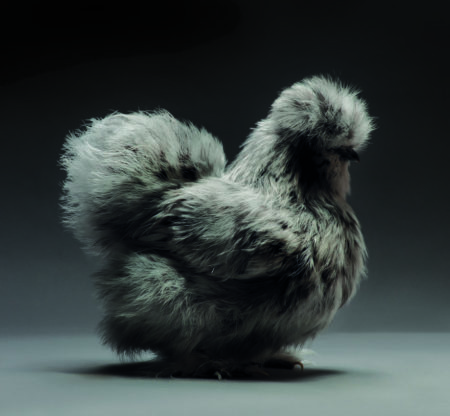
The beautiful chicken pic is from a book by photographers Moreno Monti and Matteo Tranchellini.
There’s also a stunning book on the diversity of African cattle from ILRI, where Dr Hanotte also has a position.