Climate change, you say? The Economist has the answer:
GM crops (such as drought-resistant rice, heat-resistant maize or blight-resistant wheat) have huge potential.
So that’s all right, then. We don’t seem to be getting the message across, do we?
Crops, livestock, microbes, pollinators, wild relatives, agroecosystems, foodways …
Climate change, you say? The Economist has the answer:
GM crops (such as drought-resistant rice, heat-resistant maize or blight-resistant wheat) have huge potential.
So that’s all right, then. We don’t seem to be getting the message across, do we?
If you like orderly and efficient problem solving, the world of plant conservation is not for you.
As you can see, Sir Peter Crane is at his quotable best in his introduction to a Special Issue of Oryx on tree conservation.
Here’s another zinger:
Among the many memorable aphorisms of Roosevelt my favourite is ‘Do what you can, with what you have, where you are.’ This should be the rallying cry for all those interested in securing the future of trees.
Treat yourself to the whole thing. And to the other articles too.
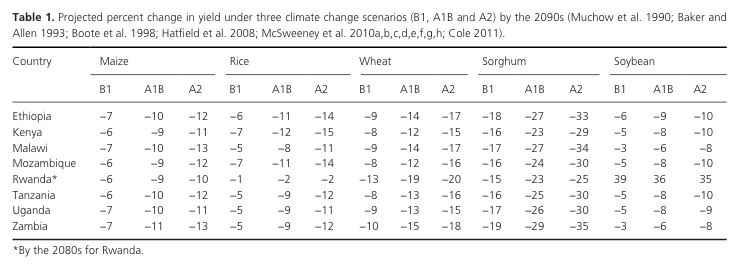
Well, all except soybean farmers in Rwanda.
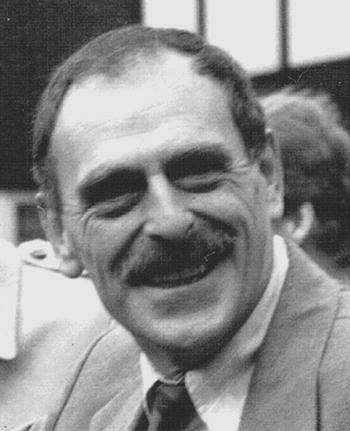 Mike Jackson’s obituary of Trevor Williams is up at Genetic Resources and Crop Evolution, and it’s open access.
 What do you call it when you suddenly notice things you didn’t notice that much before, and wrongly assume that their frequency has increased? Is it apophenia? Observational selection bias? I’m sure it’s a thing, though I can’t remember its name. And I’m sure it’s frequency is increasing. Meta-apophenia is rampant, I tell you. Yesterday there was that bunch of papers on plant-pest co-evolution. Today two papers on cytoplasmic diversity in potato. I mean: what are the odds? 1
Anyway. One paper looked at 1,217 European cultivars and breeding clones, 2 the other at 978 accessions, breeding lines and varieties used or released by the breeding programme of the International Potato Centre (CIP). 3 The potato comes in 6 types of maternally-inherited cytoplasmic genomes: M, P, A, W, T and D. The use of the wild species Solanum demissum and S. stoloniferum in parental line and variety development around the world, due to the fact that they have some good pathogen resistance genes, has led to the prevalence of a couple of these. The papers report that 83% and 87% of the CIP and European material respectively had T or D cytoplasm types. In general, the CIP breeding programme was more diverse than the European, but not by all that much. Neither set of authors did the calculation, but the Shannon-Wiener diversity indeces were 0.42 for Europe and 0.58 for CIP, for what that’s worth.
Does it matter? Yes. Quite apart from the disadvantages of the resulting increasing genetic uniformity, these cytoplasm types are concidentally associated with male sterility. That makes them difficult to use in breeding.
…we found that CIP’s breeding germplasm as many others worldwide has experienced a genetic bottleneck in terms of cytoplasmic diversity and continuous incorporation of D- and W/c-type cytoplasms due to the unintended and continuous use of cytoplasmic-based male-sterile maternal lineages in its breeding program. Presumably, CIP breeding activity has already been hindered to a certain extent by sterility problems… CIP functions as a source for distributing breeding germplasm worldwide. Our results show that most of the CIP material distributed to developing countries has T- and D-type cytoplasm. Breeders in developing countries may experience breeding constraints imposed by pollen sterility associated with these cytoplasm types.
So it matters, but there’s a way out.
Nonetheless, male-fertile T-type breeding lines must have contributed to alleviate the problem, thus enabling progress for multiple traits in CIP breeding populations.
And also, D-type germplasm is not all bad. Both it and the M-type were positively correlated with late blight resistance, according to the Europe paper.
So, as ever, swings and roundabouts. Crop wild relatives can be really useful, but you have to careful not to get carried away.