If we missed reporting the opening of Embrapa’s new genebank, 1 it’s because the news seems only to have come out in the Brazilian press.
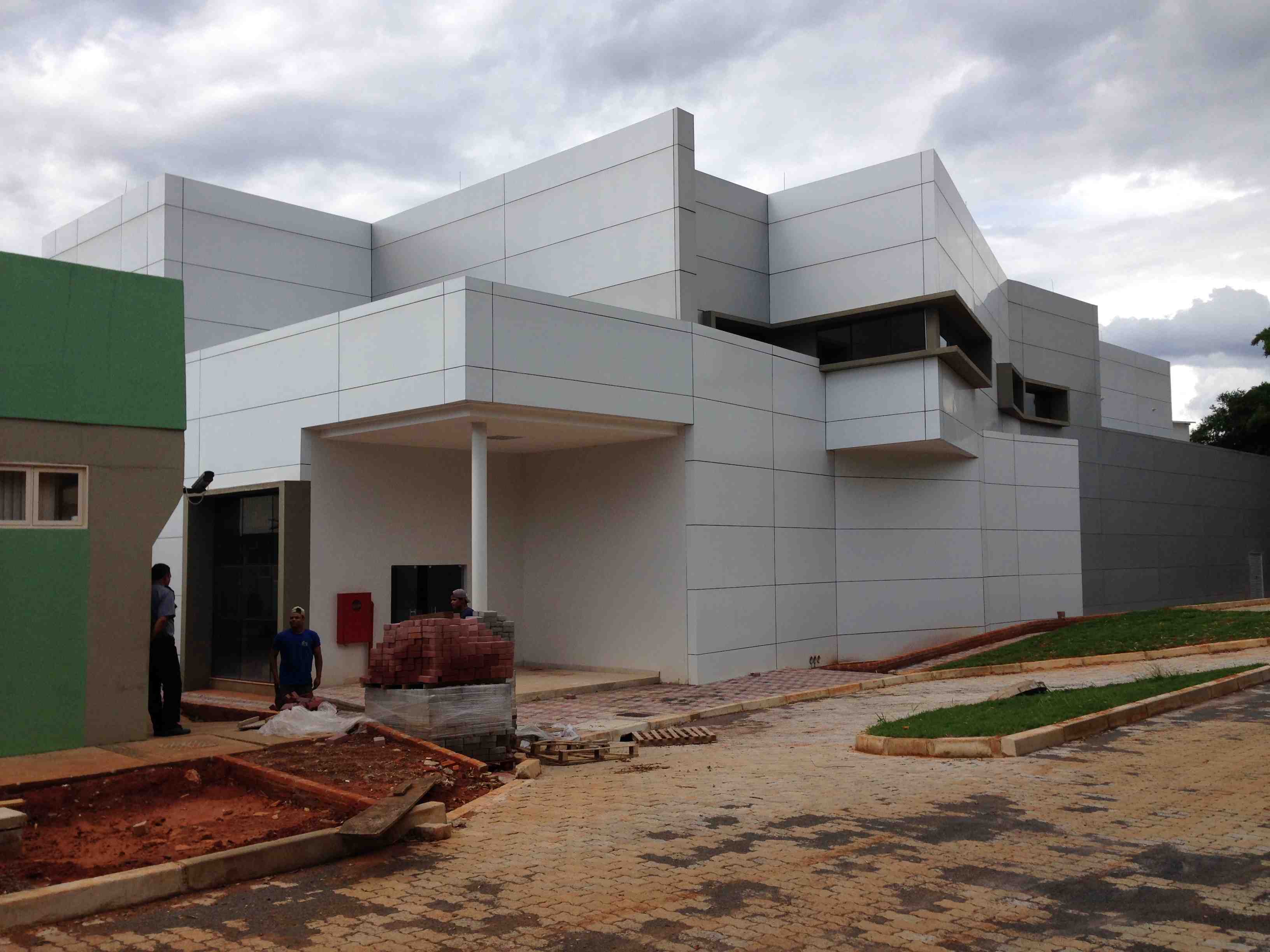
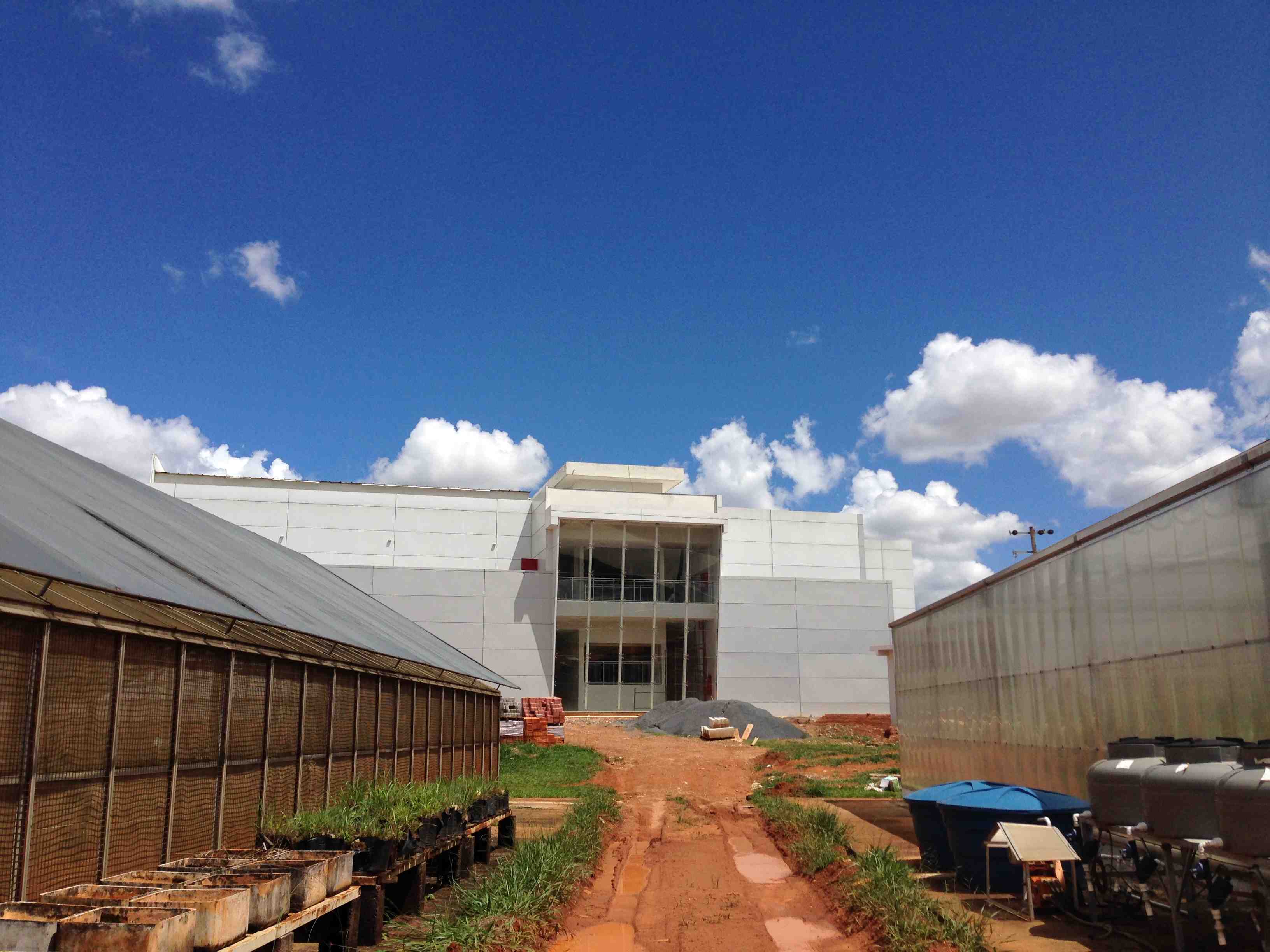
A modern building of over two thousand square feet, divided into two floors, will house one of the largest collections of genetic resources and is the third largest facility in the world in terms of storage capacity. Opened on the morning of April 24, the new genebank started the celebrations of 41 years of Embrapa.
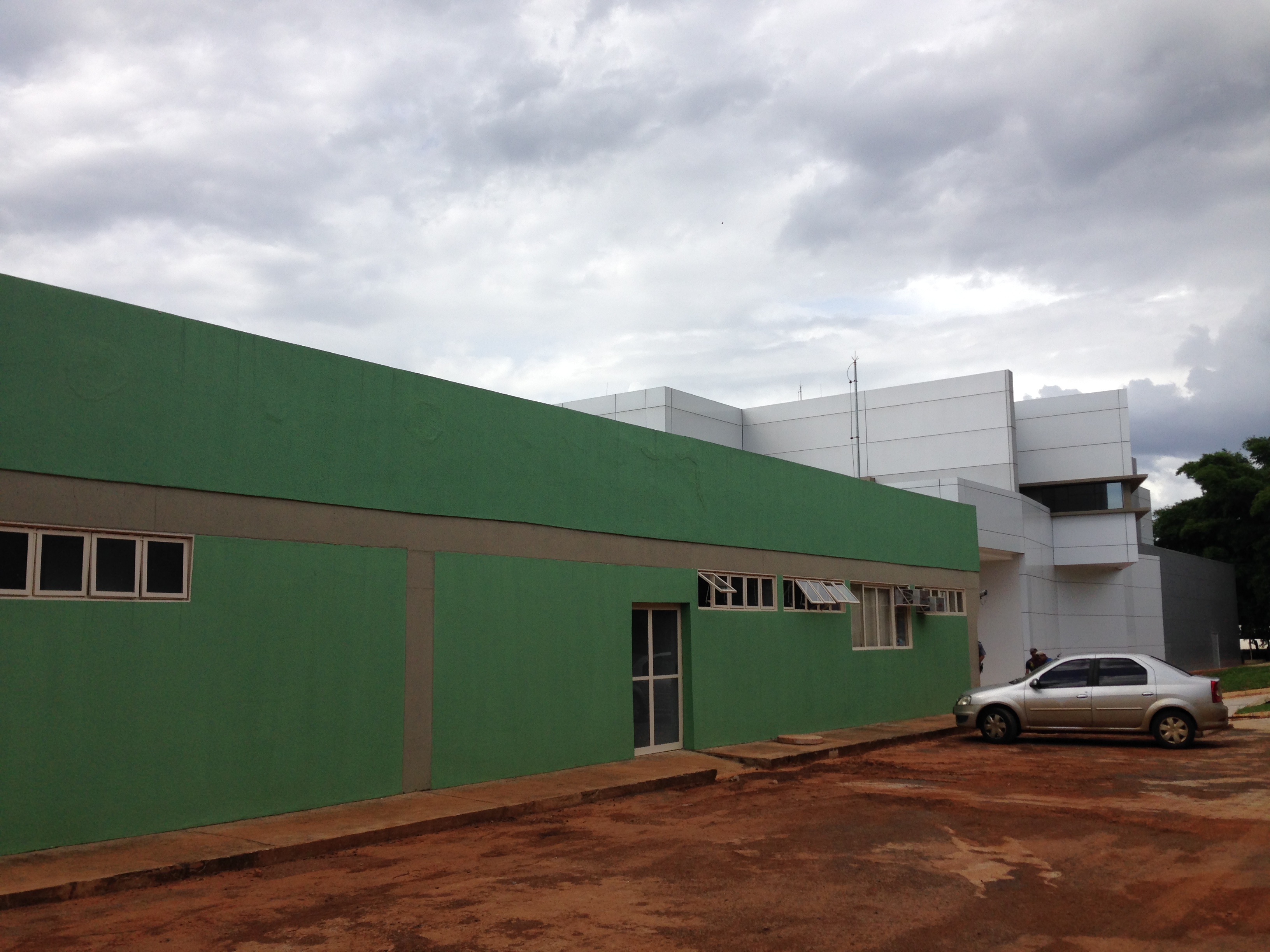
If you search around, you’ll find various photos of the interior of the new building, but I could not find a single one of the outside. So here goes. It was taken a couple of months ago. I expect it’s all tidied up now.
For completeness, the green building in this last shot is the old genebank, which is next door to the new one.
From May through December, FAO experts will provide perspective and data for National Geographic’s food coverage, which includes in-depth articles in the magazine each month and additional features on the NatGeoFood.com website. Both organizations will share content and participate in related events to help educate and promote awareness about hunger and nutrition.
The first such event is a panel discussion today — Food: A Forum — at National Geographic’s headquarters in Washington, D.C. But that’s not all:
The panel discussion will be followed by a two-day Future of Food Hackathon May 3 and 4, during which scientists, data journalists and programmers will develop apps and tools to address solutions for feeding the planet by exploring broad FAO data sets that shed light on food distribution, transportation, costs and environmental legacy over the last 50 years.
Will they talk to Colin Khoury of CIAT, whose recent paper on the globalization of diets was based on FAO data? 3 Would be interesting to know whether NatGeo’s plans for its food series include a bit more collaboration with CGIAR — that is, people like Colin — than the admittedly impressive photo essay on Finding the Faces of Farmers. Finding the Faces of CGIAR Genebankers, anyone?
Theobroma, wild and cultivated, has played and important part in the country’s history and economic development. And the diversity of the crop has been said to be threatened, despite largish collections. So it probably does make financial sense to invest in cacao research. The devil will be in the details. One to watch.
Can’t resist posting this video from my old colleagues at SPC. It ends a bit abruptly, but Centre for Pacific Crops and Trees, and a nice overview of its work.
LATER: This is the full version of the video, without that weird abrupt ending. Some problem with the uploading, apparently.
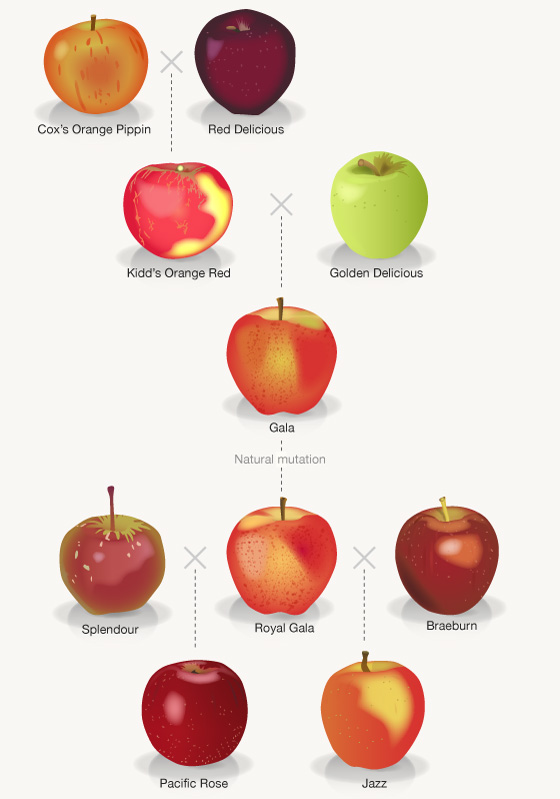
I really like this diagram of the family tree of the Jazz apple, A New Zealand-bred favourite.
This family tree shows how the various popular varieties of New Zealand apples have been bred. They originated with the Cox’s Orange Pippin from the United Kingdom, and the Delicious variety from the United States.
Problem is, I may be breaking some sort of law reproducing it here. The website where I found it, Te Ara, or the Encyclopedia of New Zealand, says, at the bottom of each page, that:
Well, I don’t really want to use the text, certainly not commercially, so that means specific conditions apply. What might they they?
This item has been provided for private study purposes (such as school projects, family and local history research) and any published reproduction (print or electronic) may infringe copyright law. It is the responsibility of the user of any material to obtain clearance from the copyright holder.
It also gives an indication of how to cite the item, which I am happy to do: Ross Galbreath. ‘Agricultural and horticultural research — Advances in plant science’, Te Ara — the Encyclopedia of New Zealand, updated 14-Nov-12 URL.
I left comments on the item on two occasions, asking for permission to use the image. No reply. I then emailed the general address provided on the About page. No reply. So, having waited a decent interval, I’m going for it. Let’s see what happens. I hope someone wanting permission to use the apple for breeding purposes finds it more straightforward than accessing the image in which it features.