Please someone tell us that you’re at the National Heirloom Exposition at the Sonoma County Fairgrounds, Santa Rosa, California, and would like to write about it. More than 20,000 expected to attend, surely one of you wants to blog it for us?
Botanic gardens conserve crop diversity too
We forget sometimes, in our cosy little crop genebank world, that botanic gardens do ex situ conservation of agricultural biodiversity too. 1 Witness the Royal Botanic Gardens Endinburgh and the Really Wild Vegetable Project. I only know about it because they tweeted on it earlier today, and the tweet caught my eye because it mentioned wild cabbage, and had a nice picture too. It turns out, however, that the particular population of wild Brassica oleracea oleracea involved is not in the national UK inventory of crop genetic resources as known by Eurisco, and thus Genesys, which basically just sucks up Eurisco data. 2
@RBGE_Science @BrianFLloyd Map of wild B oleracea oleracea accessions at @WarwickGRU based on Eurisco/Genesys pic.twitter.com/BuADxfcHjF
— AgroBioDiverse (@AgroBioDiverse) September 12, 2013
That only includes material from the Warwick Genetic Resources Unit, which happens to be mainly from the southern part of the UK. So the material mentioned in the Edinburgh tweet, which comes from Fife in Scotland, is likely to add significant diversity to the “national” collection at Warwick. Scope for some closer collaboration between these two institutes? Well, maybe it’s already there and I haven’t caught it. Do let me know if I’m being unfair.
The great quinoa debate: statistics to the rescue
Just when I thought is was safe to ignore quinoa for the rest of its international year, along comes Chris Smaje’s thoughtful piece The Great Quinoa Debate, or Why We Need Social Statisticians and Philosophers. 3 The title riffs on Marc Bellemare’s Quinoa nonsense, or why the world still needs agricultural economists, and Smaje starts with a little whinge.
Perhaps quinoa is not, on the face of it, a very promising topic for an article on social statistics. … It does, in 2013, happen to be the International Year of Quinoa as well as being of course the International Year of Statistics, so at least that’s something in common. Another coincidence, regrettably, is the almost complete indifference of the general public to these important anniversaries, and their invisibility within the media.
I love that “of course”. And he’s right. While well informed about quinoa, I had no idea 2013 was also The International Year of Statistics, so kudos to Smaje for doing precisely what I tell clients to do: ride the news, such as it is. But what have statistics got to do with quinoa, or vice versa? Lots, as it happens.
Smaje points out that much of the debate around quinoa – eat it and you snatch food from the mouths of hungry Bolivians, don’t eat it and you condemn them to a life of want – is, shall we say, short on evidence. It can, and does, go either way, based on the same sets of “facts”. 4 “[W]hich just goes to prove the old statistical adage that data is nothing without interpretation.”
Smaje moves on to interpret the data. He reminds us that, commenting on Marc Bellemare’s piece, “Sergio Nunez de Arco … provided an actual figure (mercy be!) to illuminate the debate, stating that average income per family farm in the quinoa growing areas of the Altiplano increased from $35 to $220 per month over the last five years.”
Setting aside the statistical stickler’s ecological fallacy – incomes went up in quinoa-growing areas, but not necessarily from increased prices at the farm gate – Smaje asks to what extent higher prices will indeed have the consequences forecast: Bolivians eating junk food; soil erosion; evil farmers in the North growing quinoa to undercut the global market; genetic erosion; collapse of Altiplano agriculture and culture. His answer is that we don’t know, and that we need experts of his ilk (social statisticians) if we are ever to find out.
The main normative argument that can be raised against the kind of position adopted by Blythman is the familiar one of who- are-we-westerners-to-bemoan-peasant-farmers-getting-in-on-a-cash-cow-and- trashing-their-environment-in-the-process-just-like-we’ve-done, which doesn’t seem a wholly unreasonable position. But it may be a pretty short-sighted one if we put together current environmentalist presentiments with what we already know about the cycles of economic boom and bust. Nobody can begrudge poor farmers cashing in, but if the result is just a microcosm for the wider malaise of contemporary agricultural economics – short-term economic gain at the expense of long-term economic and environmental pain, then perhaps some of we westerners are in fact well placed to pass judgment on the folly when we see others innocently embarking on the same misguided path we’ve trodden.
And the same goes for the argument that because incomes are higher, the “welfare” of the farmers has increased.
Even if it can be shown … that growing quinoa for western foodies increases the ‘welfare’ of poor Altiplano farmers in the rather technical and ahistorical sense [Bellemare] invokes from welfare economics, there are reasons to resist confounding the positive (can Altiplano farmers achieve financial gain from the current market for quinoa?) with the normative (financial gain equals, by definition, social benefit).
And the answer, as so often, seems to be that we need more research, and not just any old research either.
So perhaps the great quinoa debate suggests that we need social statisticians, because it’s worth gathering and analysing data about social practices such as farming in order to be able to answer the kind of questions that Bellemare poses and therefore to interrogate the often lazy claims of journalists, politicians and thinktanks in support of preconceived notions about social welfare. And it suggests we need philosophers (or at least thinkers) to pose deeper questions about social welfare than is provided by simplistic assumptions about market integration and economic benefit. We need a more nuanced understanding than current economic models typically provide about the benefits or otherwise of global market integration in the food system – and here I suspect that Joanna Blythman’s general line of argument, if not her specific analysis of quinoa economics, may prove fairly close to the mark.
And by one of those happy coincidences that statisticians are fond of puncturing as meaningless, next year is (among other things, I’m sure) the International Year of Family Farming. What better opportunity?
Annnnd … we’re back
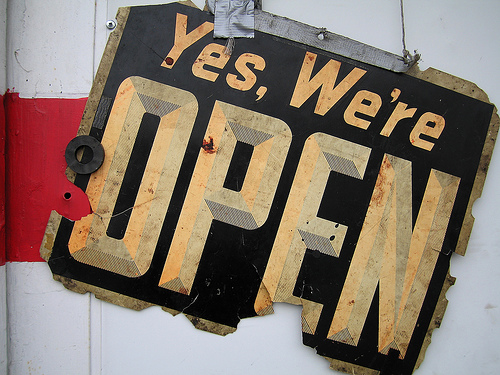
Thanks everybody for your patience. We’re back, and I really hope that all those little niggly things that I never could get to the bottom of will no longer be niggly. So go ahead, poke around, and if you see anything that’s broken, yell.
Also, if you were dying to comment on something and couldn’t over the weekend, now’s your chance. C’mon, somebody defend the Gates Foundation.
Brainfood: PGR commons, Tomato GWAS, Mango pollen, Grapevine cryo, Synthetic wheat diversity, Wild lettuce diversity, Indian homegardens, Ghats agrobiodiversity, Indian cattle, Wild potato genecology, Composite genomics, Conservation targets
- What kind of goods are plant genetic resources for food and agriculture? Towards the identification and development of a new global commons. Exclude non-Parties to the ITPGRFA from access, and get all Parties to make up-front financial contributions are the recommendations that most grabbed my eye.
- Genome-Wide Association Studies Using Single Nucleotide Polymorphism Markers Developed by Re-Sequencing of the Genomes of Cultivated Tomato. Markers for important agronomic traits identified. Now to use the little buggers.
- Low temperature storage of mango (Mangifera indica L.) pollen. Good to know for these recalcitrant things.
- Cryopreservation of grapevine (Vitis vinifera L.) in vitro shoot tips. Another triumph for droplet-vitrification.
- Evaluation of Morphological Traits Diversity in Synthetic Hexaploid Wheat. But is it novel?
- Wild Lactuca species, their genetic diversity, resistance to diseases and pests, and exploitation in lettuce breeding. It is novel, but can be difficult to use.
- Homegardens as a distinct agro-ecological entity in Kerala: Its biodiversity, structural dynamics and environmental significance. They are becoming more and more important as refuges for biodiversity, but need policy support.
- Probable Agricultural Biodiversity Heritage Sites in India: XVII. The South-Central Region of Eastern Ghats. And not a homegarden to be seen.
- Genetic diversity and relationship of cattle populations of East India: distinguishing lesser known cattle populations and established breeds based on STR markers. Just because it’s not officially recognized as such, it doesn’t mean it’s not a breed.
- Reproductive ecology and genetic variability in natural populations of the wild potato, Solanum kurtzianum. Sexual reproduction, insect pollinator behaviour and seed dispersal by storm water channels make for more diversity within than between populations, and more besides.
- Genomics of Compositae crops: Reference transcriptome assemblies, and evidence of hybridization with wild relatives. Self-incompatibility and post-zygotic isolation makes for crops that are generally more different from their wild relatives.
- Consequences for diversity when animals are prioritized for conservation of the whole genome or of one specific allele. Basically, you can’t do both.