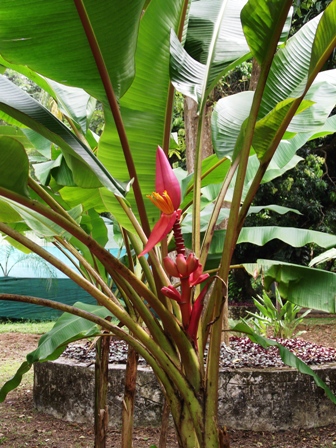
I hope the Indian Council for Agricultural Research (ICAR) won’t mind us reproducing in full a recent post on their Facebook page, entitled Geographical Indications to Elite Agri-Products. It’s just that I don’t know whether if I just point to the URL anyone else will be able to see it.
When you buy Dussehri mango, are you sure you have paid the price for real Dussehri that belongs to Malihabad region of Uttar Pradesh near Lucknow? Same is true for Nanjanagud Banana, Allahabad Surkha (guava), Nagpur Orange, Pokkali Rice from Kerala and many other agri-products belonging to a specified geographical territory. To protect the interest of consumers and producers Parliament enacted the Geographical Indications of Goods (Registration and Protection) Act, 1999, which came into force in September, 2003. Agricultural, natural or manufactured goods originating from a definite geographical territory are registered under the Act and given the status of Geographical Indicator. The specific features or uniqueness is largely due to existing geo-climatic situation in the region of production. By now, more than 150 products have been registered as GIs including some of the renowned agricultural products. A survey by National Academy of Agricultural Research Management (NAARM) found that consumers are willing to pay more for agricultural GIs than non-agricultural GI products, therefore is GI for farmers? And how do we go further prior to registration and after registration?
Having just posted about that new wild banana subspecies from India, I guess it was inevitable that I would decide to take a few minutes to look into the “Nanjanagud Banana” a bit more deeply. It’s unfortunately not one of the case studies described in a very thorough paper on the Indian agricultural IPR system. But the variety known locally as Rasabaley certainly seems to have contributed to making Nanjangud, a town in Mysore district in the state of Karnataka, famous.
The fruit evokes tremendous appreciation for its taste among the older generation of the region. A variety of banana that offers a distinctive taste, “Nanjangud rasabale” has tickled the taste buds of people from far and wide.
However, despite its charms, and high cost, it was until recently described as on the way to disappearing.
The crop that was raised in around 500 acres just three decades ago has come down to around 100 acres now, mostly concentrated in villages of Kaarya, Devarasanahalli, Hullahalli, Kumbarahalli, Tagadur-Hanumanthapura and Hadinaru of Nanjangud taluk, near here. Just around 50 farmers showed interest to grow the crop, and many who tried gave up following losses. Devarasanahalli, which supplied large quantities of this banana variety, today has only 28 acres under “Nanjangud rasabale.”
Which seems to have been the rationale for slapping a geographic indication on it.
To ensure an independent identity that is exclusive to the fruit, the Department of Horticulture applied and registered “Nanjangud rasabale” in the Geographical Indications Registry of the Union Government during July 2005. Incidentally, “Nanjangud rasabale” along with “Mysore Betel” vine, a variety of betel vine and “Coorg Orange” were the first crop varieties in the country to be registered in GI registry.
It’s unclear to me whether this has worked. ICAR is silent on the subject, beyond that enigmatic question at the end of their Facebook post:
And how do we go further prior to registration and after registration?
How indeed. Good to know, therefore, that “Nanjangud rasabale” does seem to be conserved ex situ, according to MGIS, at India’s National Research Centre for Banana. It’s not, however, backed up at the International Transit Centre. Which is a pity, as there would be a pleasing completeness to the story if it were.